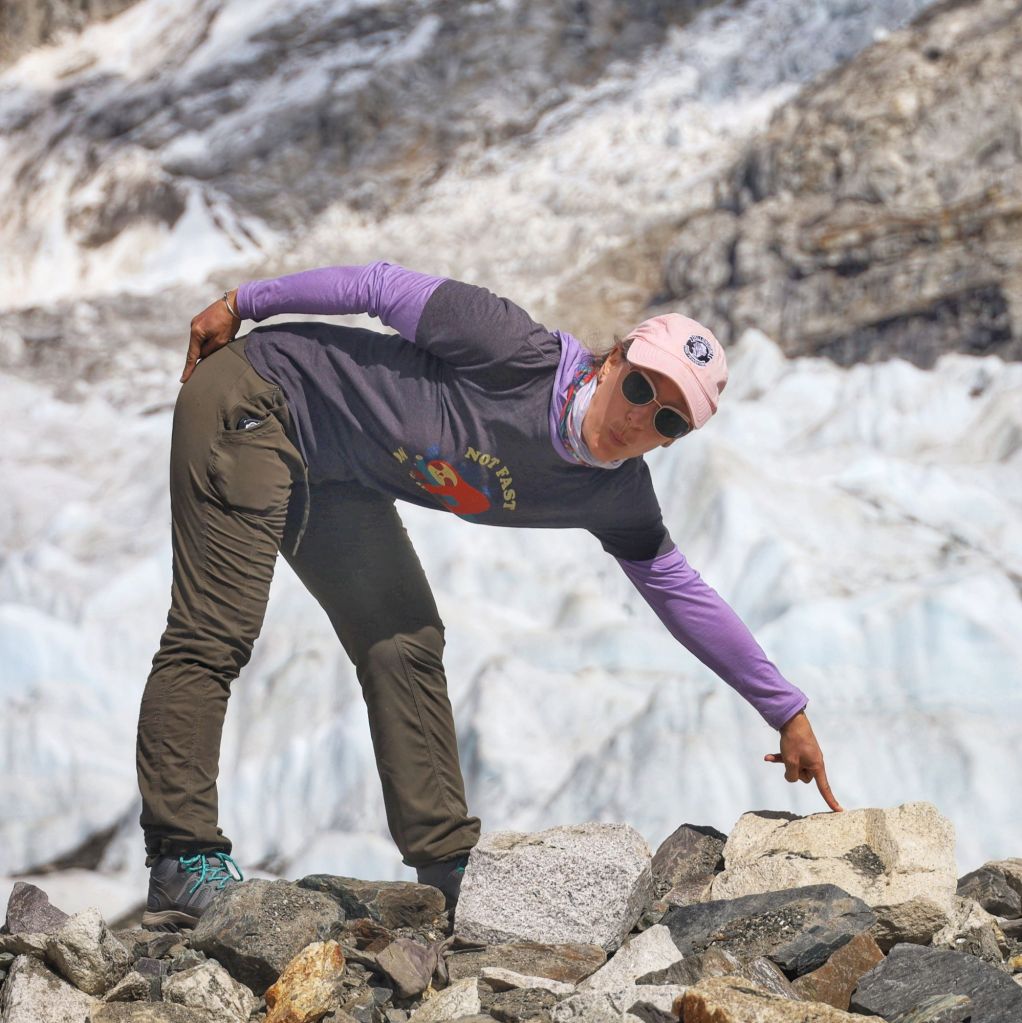
I came, I saw, I poked.
- Starting location: Lobuche, 4,910m (16,109 feet)
- Ending location: Gorak Shep, 5,164m (16,938 feet)
- Max elevation: Everest Base Camp: 5,364m (17,598 feet)
- Elevation gain: 454m (1,489 feet)
- Distance traveled: 7.6 miles in 6:32’39” active time, 8:04’37” total time
- Average pace: 47’40” per mile
- Slowest mile: 1:04’11”
- Oxygen: 87/85
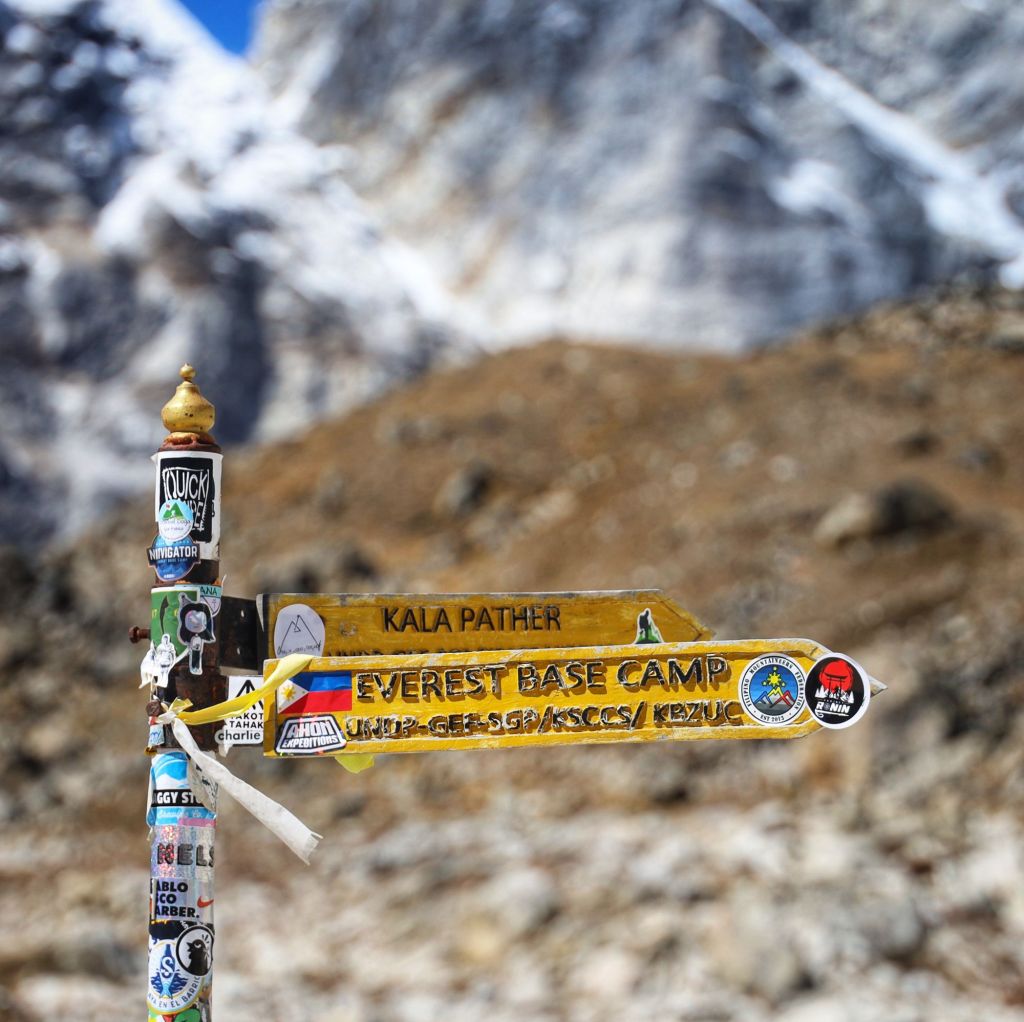
We started our day in Lobuche, along with about six trillion fellow mountain-hunters. We left the guest house around 7:45, somewhat later than the bulk of the crowd. Still, before long, we found ourselves in trekker traffic jams that left me gritting my teeth and questioning how badly I really wanted to see my beautiful mountain.
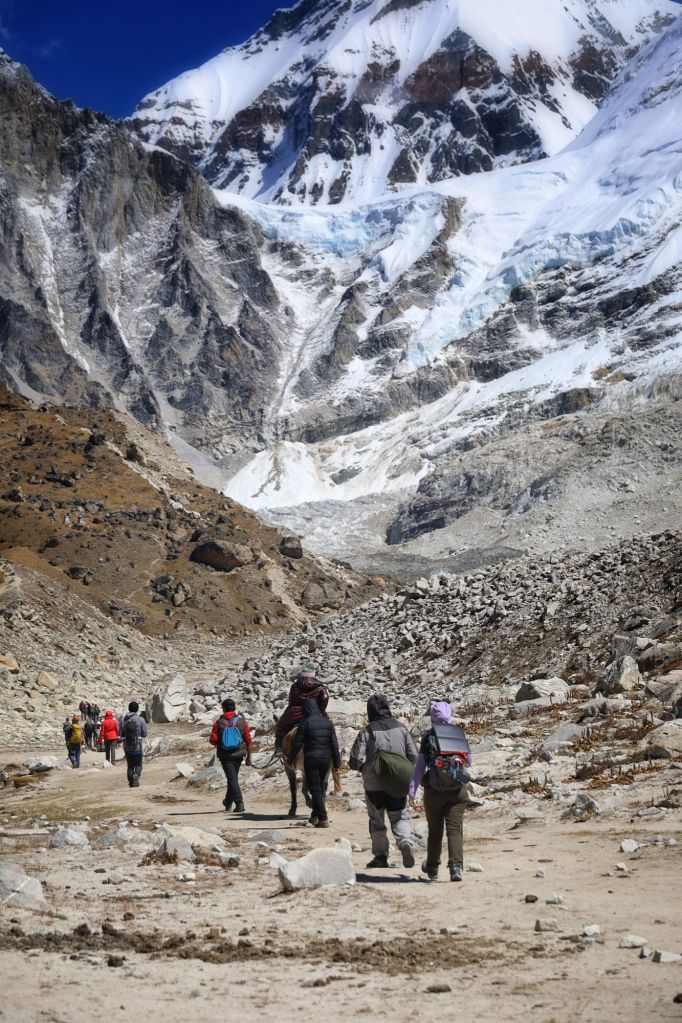
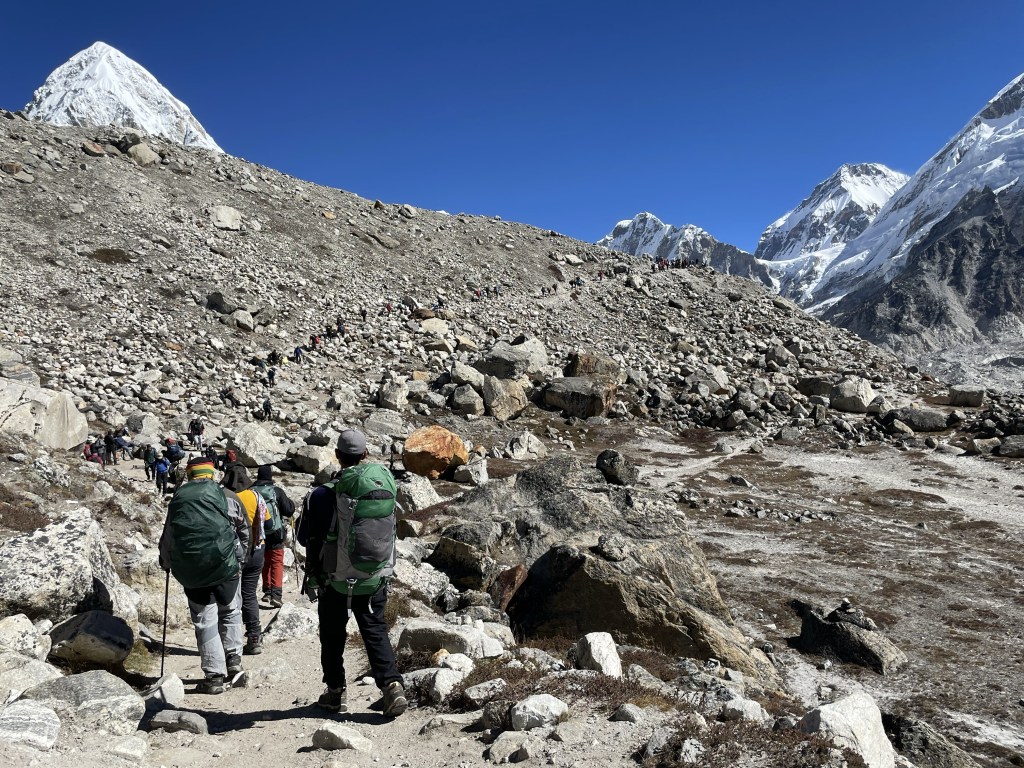
There came a moment when the trail loosened up, dividing into a half-dozen trails that braided around boulders. Now, we slightly less-slow trekkers had a chance to pass the slowest contingent.
As I breezed my way past a group of 30+ people at the raging speed of 1 mile-per-hour, I reflected that the mass of us looked a lot like an army of zombies staging the world’s slowest invasion. People plodded and lurched their way along. I don’t know that you could claim any of us was actually hiking.
The braided trail remained until we crossed Lobuche Pass, at which point we were back to elbowing past people going both directions, or occasionally jumping off the path as a guide came by leading a reluctant-looking donkey on their way to rescue someone who had decided they couldn’t make it back under their own power.
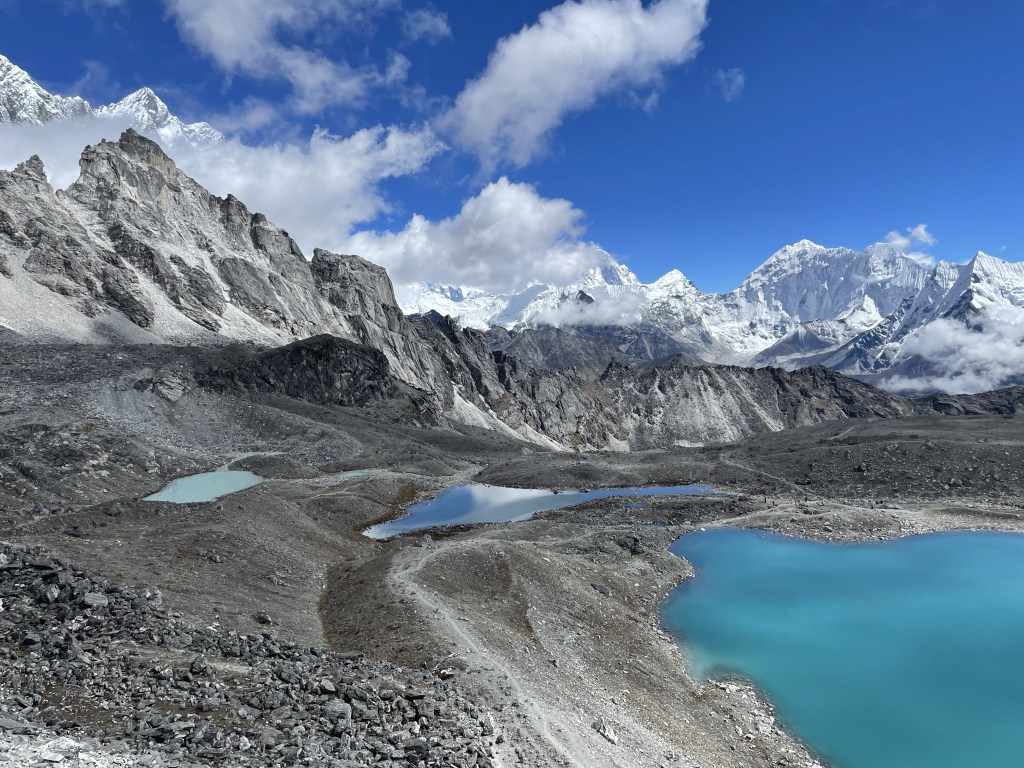
The trail meandered up and down the shoulder of the Khumbu Glacier, which we had crossed with difficulty the day before. It is the largest glacier in Nepal, and the highest glacier in the world. Clambering over the boulders along the side of it was challenging, but not nearly as bad as crossing it had been.
In the spring, base camp would be crowded with tents, climbers, and their support staff. Here in the fall, you only know you’ve arrived by seeing where the line of trekkers ends and pools out on the rocky glacier. I’m a little sorry we missed the excitement of climbing season, but this was already a lot of people.
As we descended onto the glacier’s surface in the location where base camp would be if it were April or May, I growled at all the other people. There were just too many of them. I noted this while fully aware that I was part of the problem, but unable to help wishing they’d go away and let me admire my mountain in solitude.
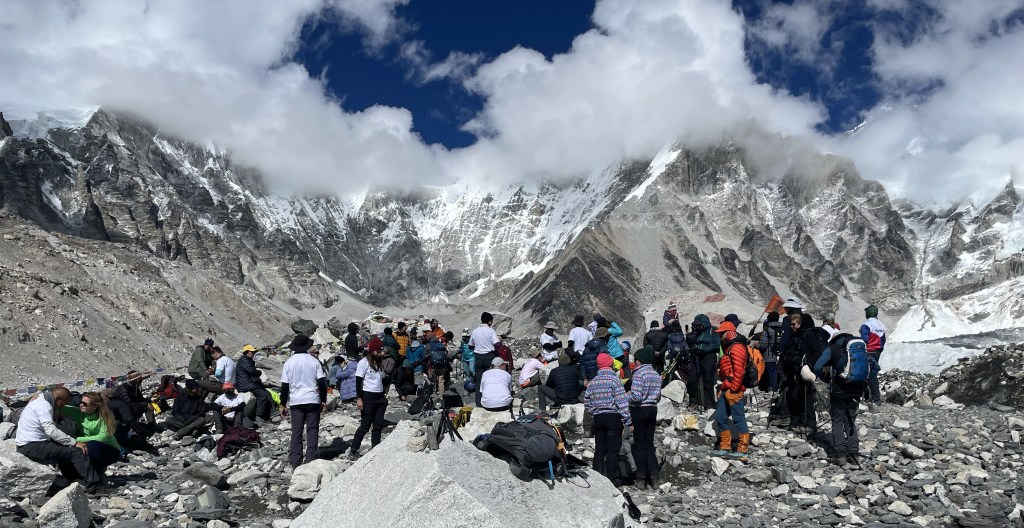
This rocky shoulder of the Khumbu Glacier is about as safe as anyplace on a glacier can be, but glaciers are never safe, so most of the people were clustered in a small pocket where the trail ended. Surya parked on a rock and told us to go explore. “Take your time!” he said.
I know how dangerous glaciers are, but I also know how many people live on this glacier in the spring, so I mounted a bolder attack than most of my fellow trekkers, picking my way with exceeding caution past the traffic out into the rock field. I reeeeeally wanted a closer look at the Khumbu Ice Fall – the most dangerous physical element of any effort to climb Everest, and also an incredibly beautiful natural phenomenon.
(If you’re curious, your-brain-made-stupid-by-oxygen-deprivation is the actual most dangerous element in a summit attempt.)
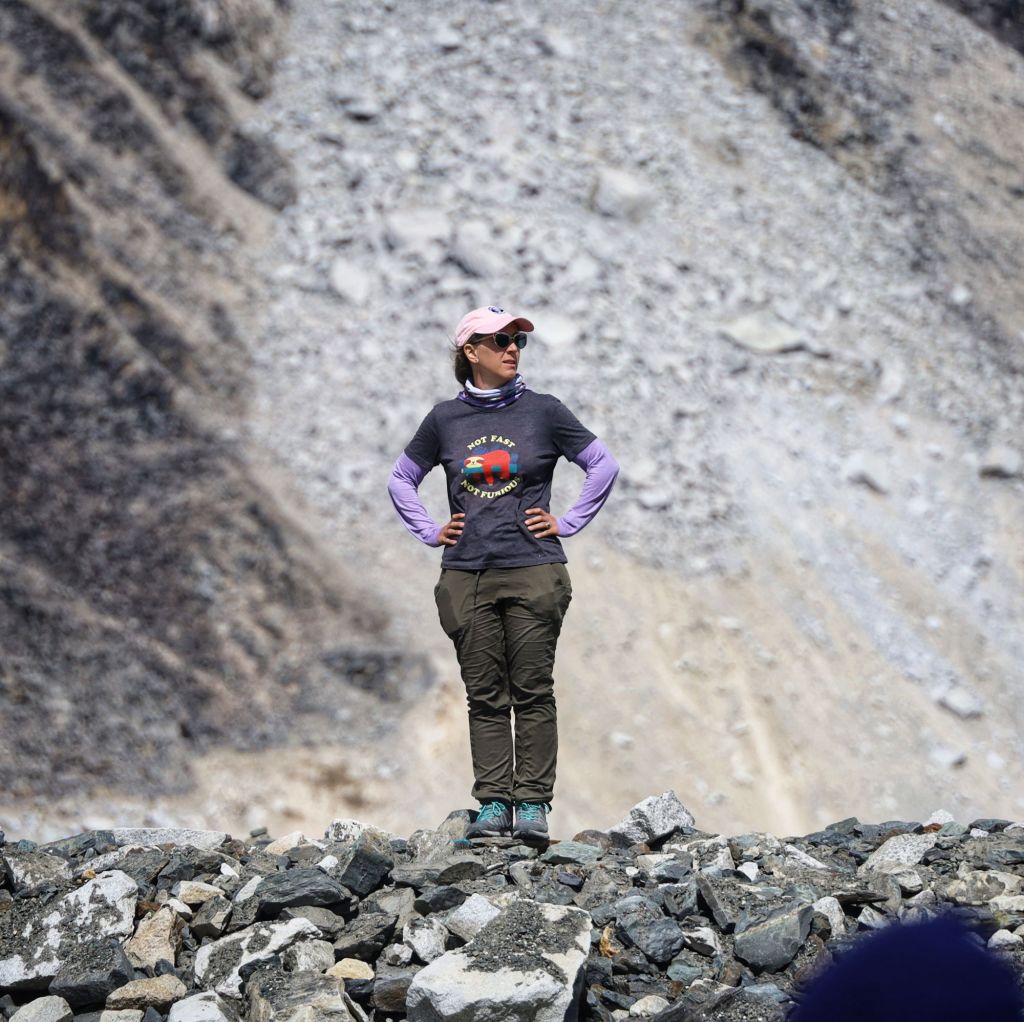
To get the view of the Ice Fall that I wanted, though, I’d have needed to go far enough from the crowds that no one could have heard me scream should a scream-worthy event have occurred. I chose the course of wisdom and parked on a rocky ice mound within yelling distance but far enough away that I could do some solitary contemplation.
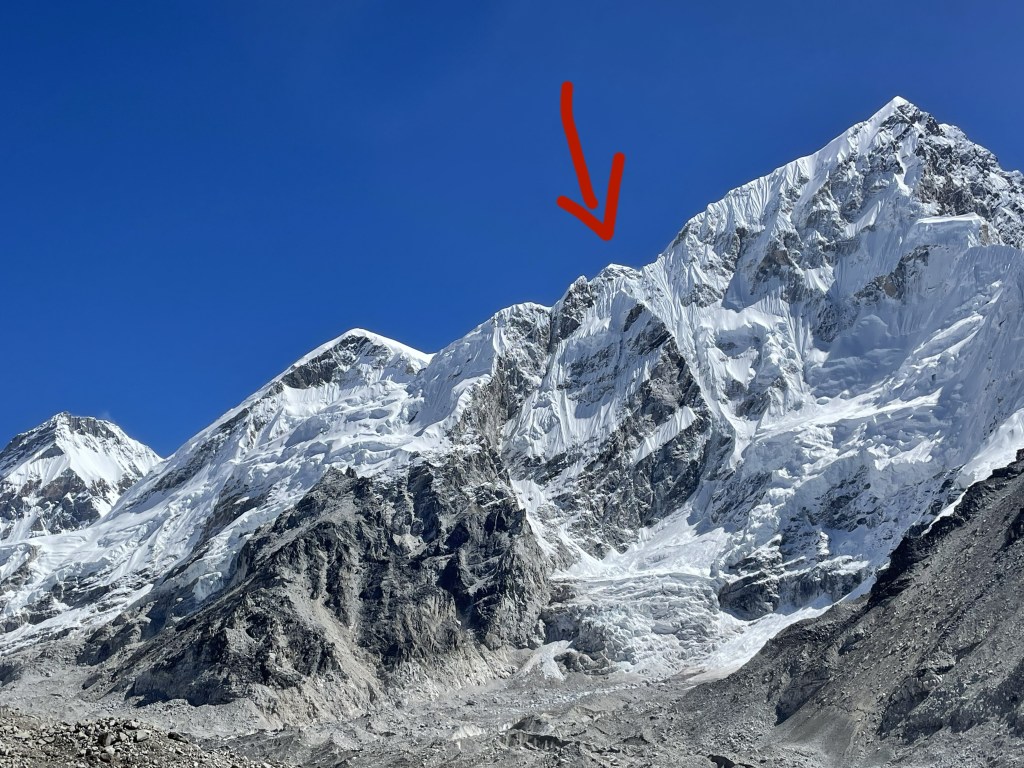
Anyone will tell you that Everest Base Camp is just about the worst place to look at Everest. The bulk of the mountain is obscured by the nearer Nuptse and by Everest’s own north shoulder that, from the ground, blocks most of the view of the summit.
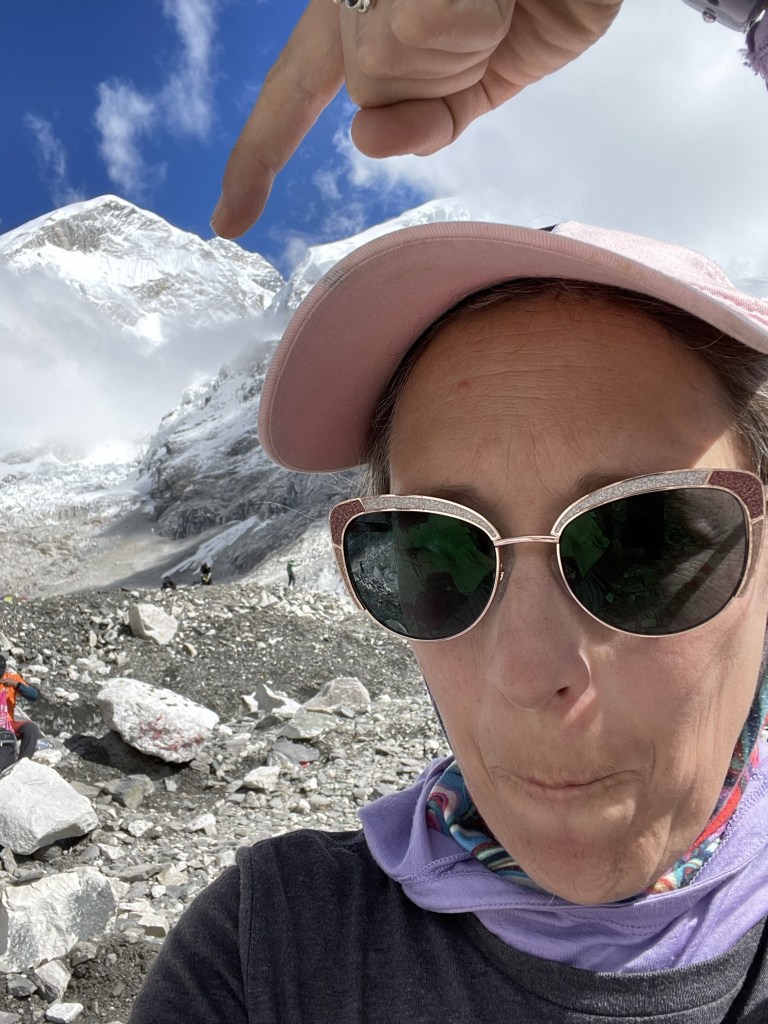
But you don’t come to EBC to look at Everest. You come there to sit on her toes and try to soak in a sense of her enormity.
It isn’t easy to do. As mentioned in some of my previous posts, it’s simply impossible to wrap your mind around the size of these monsters. They are so much bigger and taller than anything you have any experience with.
I suppose that’s one of the reasons I wanted to come here. I thought being here would finally help me figure it out. It didn’t. I remain as baffled and awed as ever I was reading about her in books or looking a photographs.
I kind of love that.
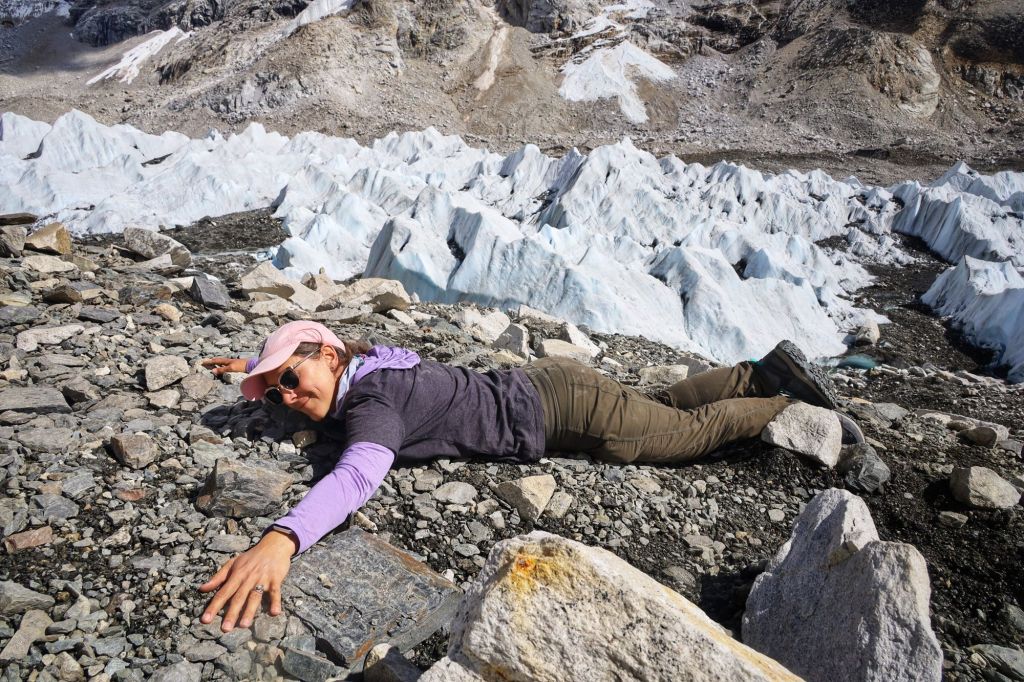
I finally made my way back over to the crowd to find Dustin and make sure we had secured all the mandatory photos.
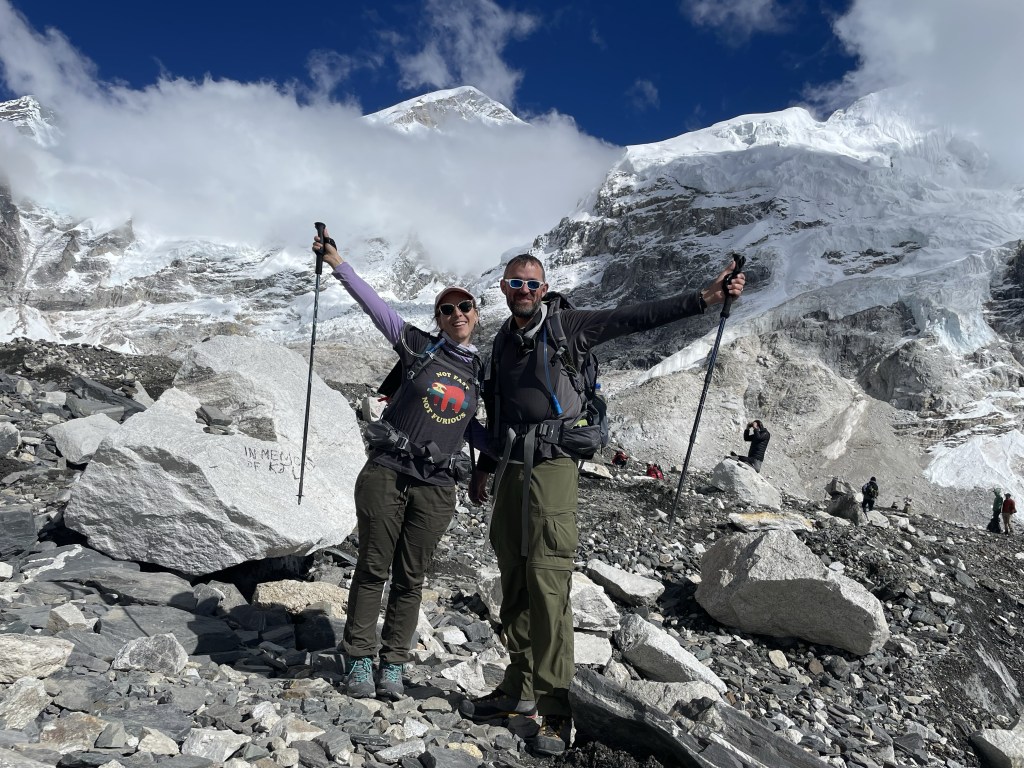
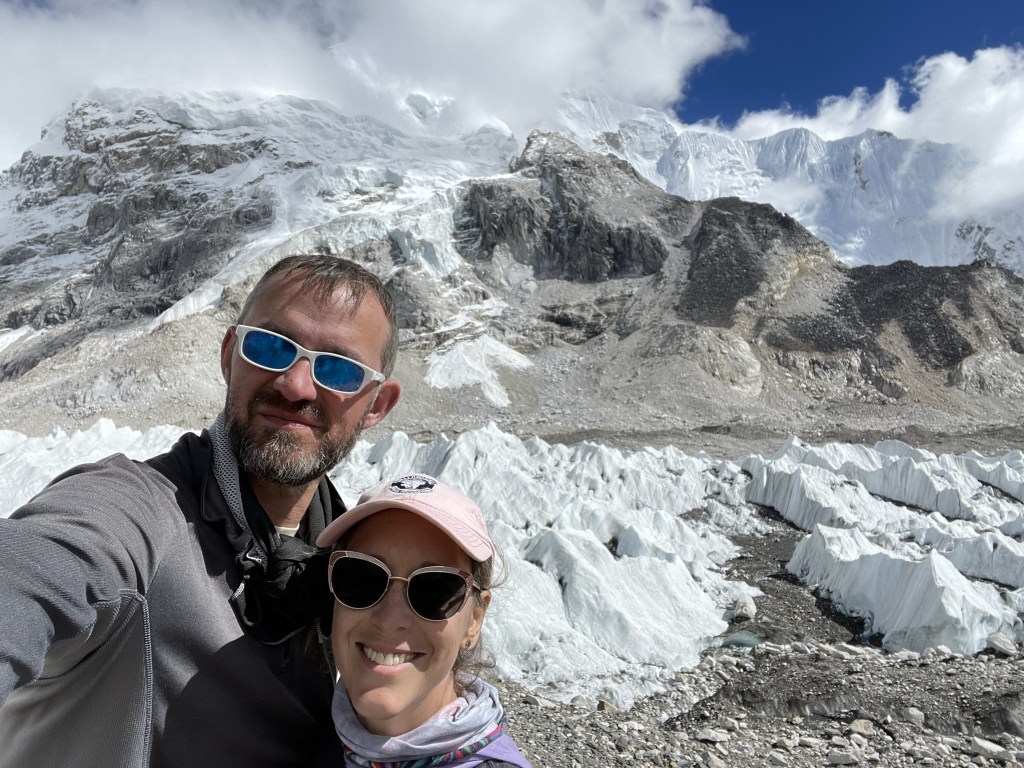
As we crawled our way back over the glacier toward our depressing accommodations in the village of Gorak Shep, I found myself naming the big mountains around us one by one, again and again, like some kind of mantra:
Pumo Ri, Lindgren, Khumbuche, Lo La, Everest, Nuptse, Lhotse, Amphalabsta, Ama Dablam, Kangtega, Thamserku, Tabuche, Cholatse. Repeat.
Of course, be a proper mantra, my repetitions should contain some statement of belief. Though who is to say this one doesn’t? I believe in mountains. Mountains are a statement of absolute fact, but also testaments to transformation. Mountains are amazing.
Pumo Ri, Lindgren, Khumbuche, Lo La, Everest, Nuptse, Lhotse, Amphalabsta, Ama Dablam, Kangtega, Thamserku, Tabuche, Cholatse.
I’m so glad to get to meet you.
 Thither & Yon