“Be careful as you get out,” I mumbled at Dustin as he left the tent at 5:30am to use the toilet. “The tent is wet.”
I’d learned this the hard way at 3am when I’d done the same. I’d backed out of the tent and wound up with water all down the back of my coat.
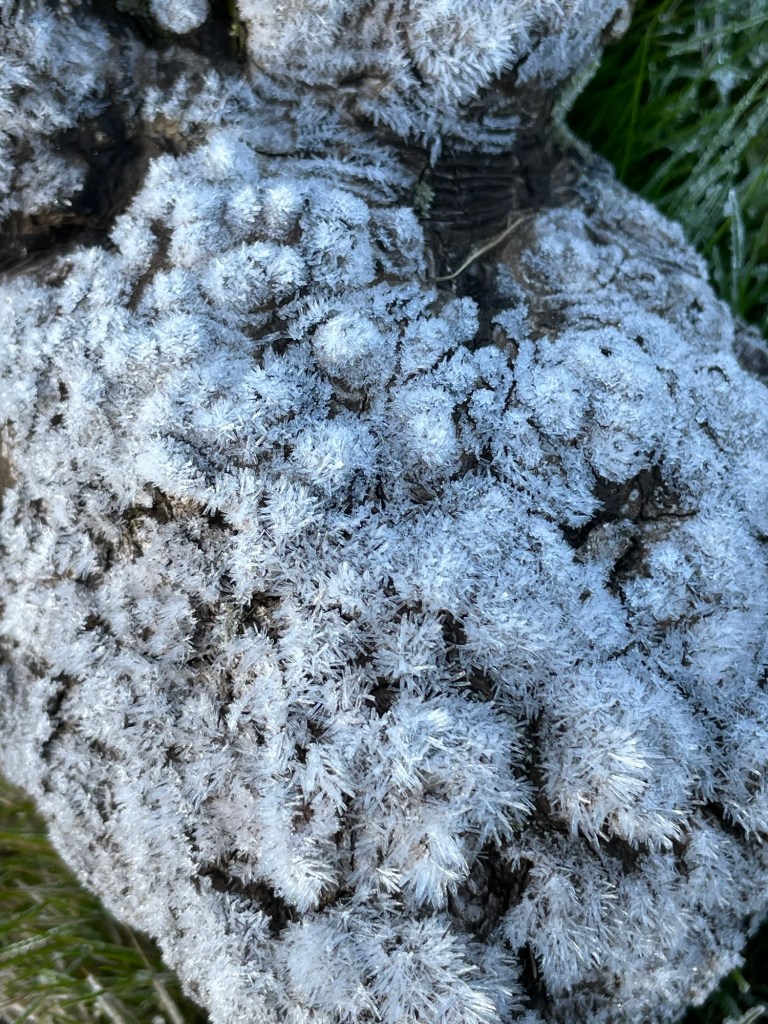
“Not a problem,” Dustin said upon his return shortly after. “The water got crunchy.”
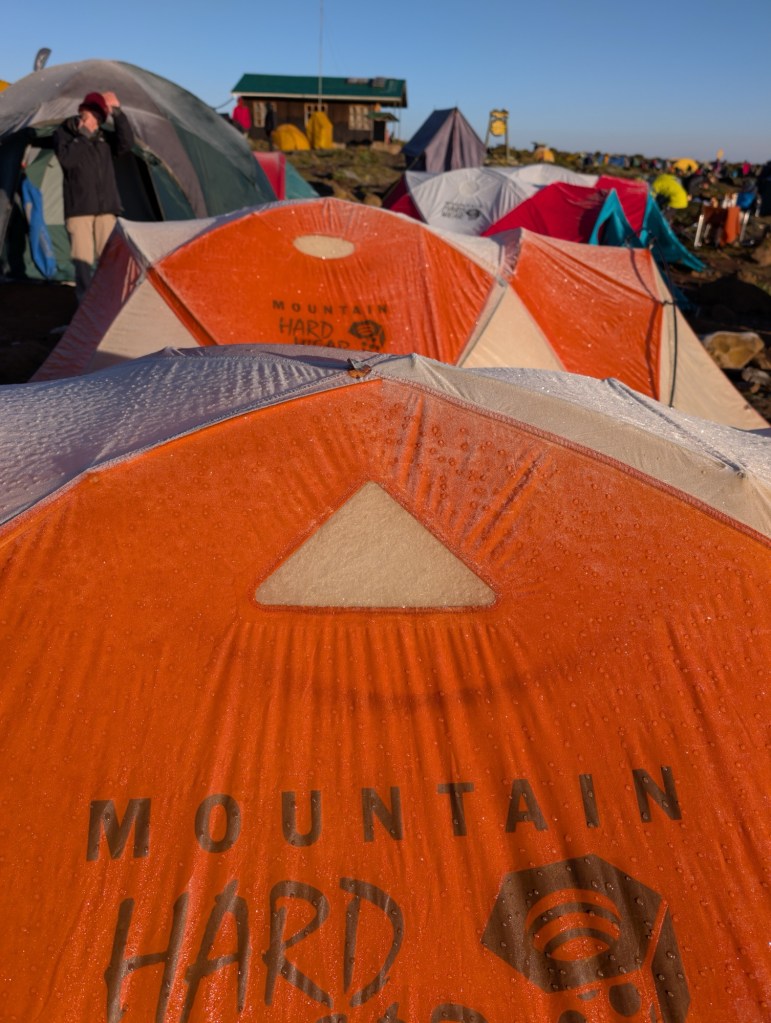
So Gideon had been right about an overnight freeze. When I’d taken my middle-of-the-night potty adventure, I had thought, “freezing schmeezing. I’ve camped in WAY colder temperatures!”
Hooray for good gear! (Though I’ve still camped in colder. For now…)
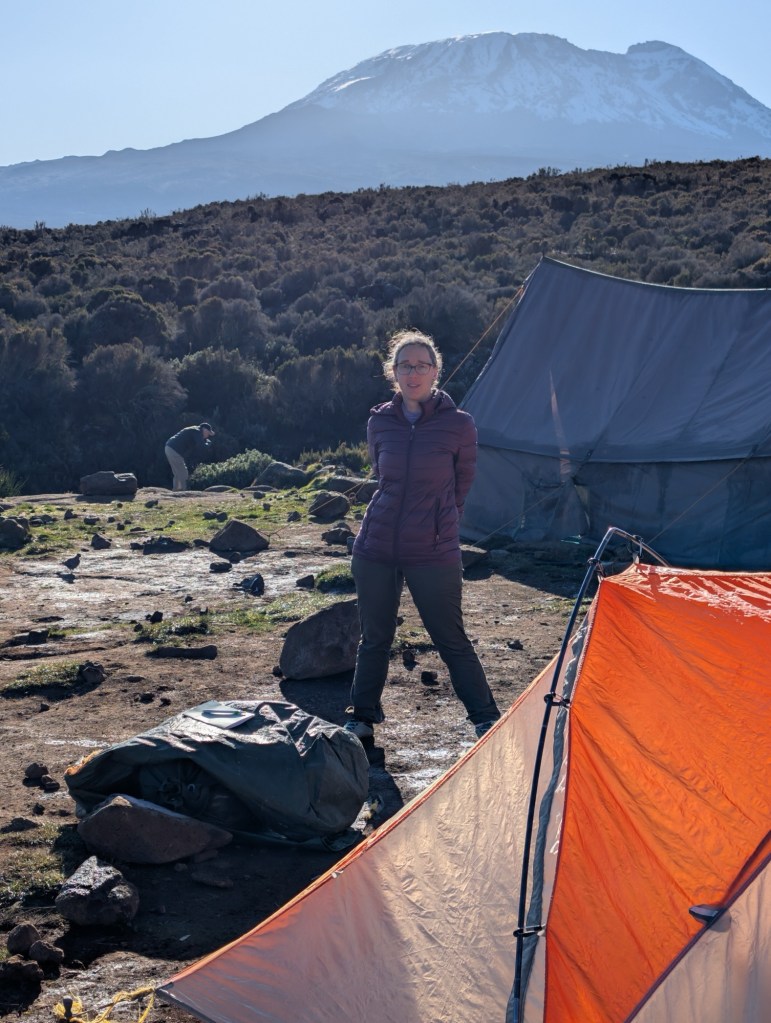
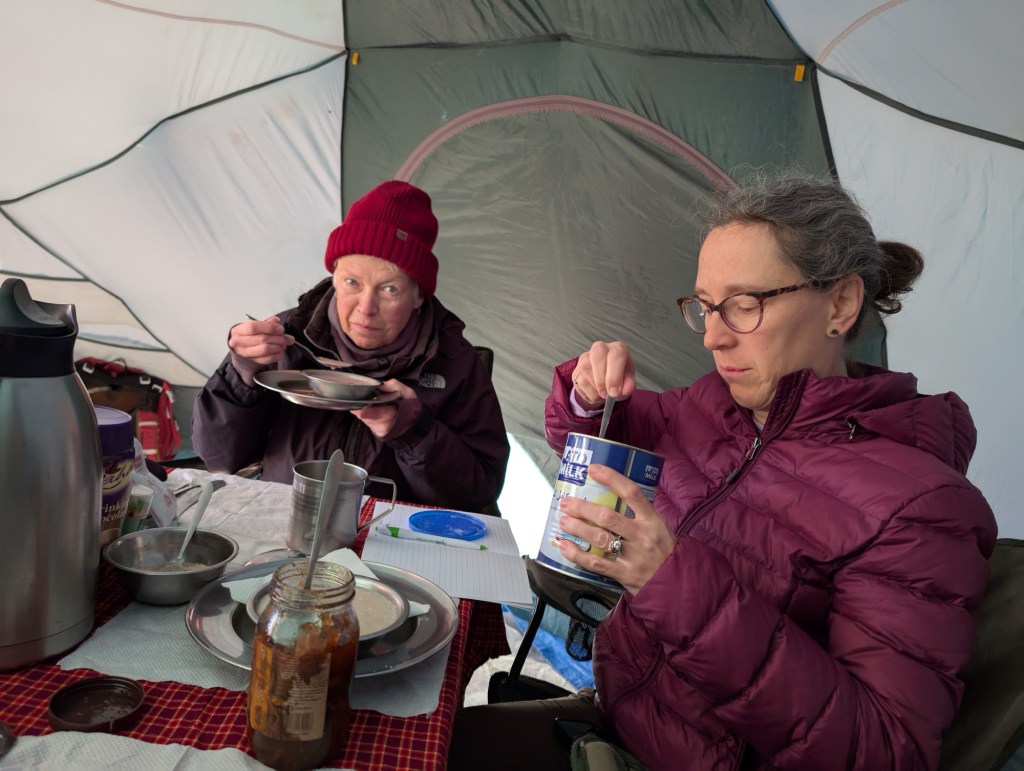
Breakfast was oatmeal, pancakes, eggs, and sausage. Gideon gave Nyla the beady-eye as we finished up and started collecting our bags.
“We’ll only fill your bag to two liters today,” he said, referring to her water bladder. “Two liters is the right amount for the morning, then we’ll refill at lunch. Drink it all! It’s easier to carry in your belly than your backpack, eh?”
Nyla accepted her instructions and we all hoisted our packs. Today’s destination would be Moir Camp, with a stop at Scott Fischer Camp for lunch. Fischer (famous for helping make Everest accessible to “normal” people), along with Reinholt Messner (famous for climbing everything the hardest way possible), set records for summitting Kilimanjaro via the Breach Icicle in the 1980s and ’90s.
“Stay to the left, stay to the left!” Gideon called from behind as endless troops of porters with their wide loads passed us on the way out of camp. In Tanzania, one drives on the left side of the road, so that is also where we hiked.
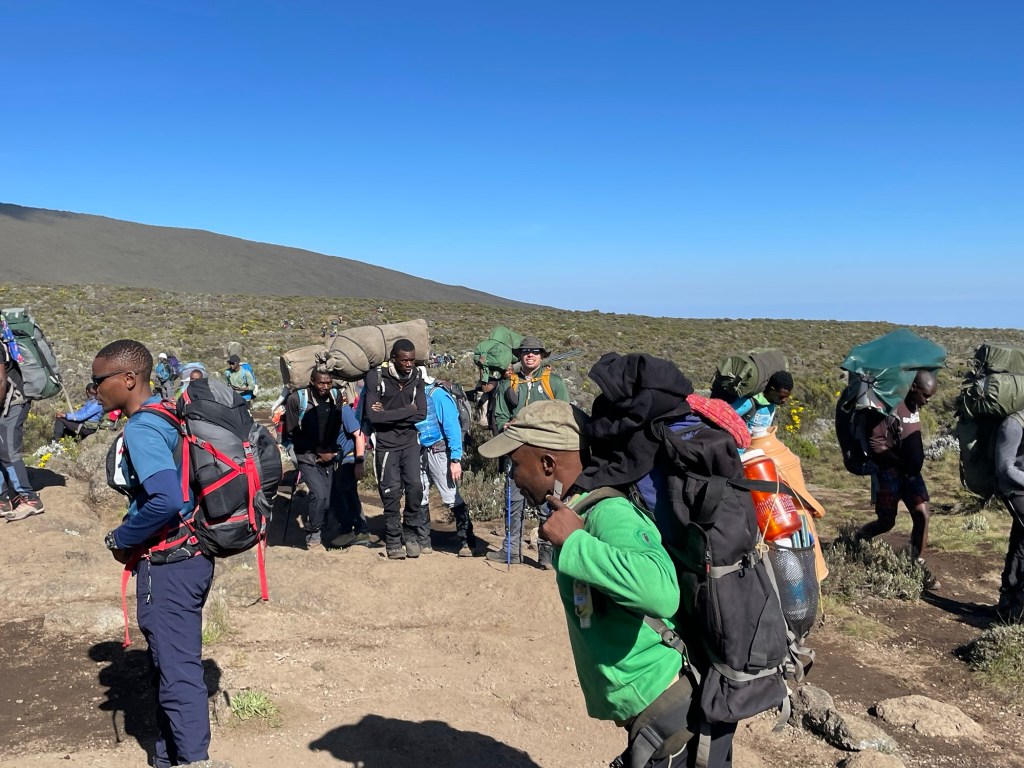
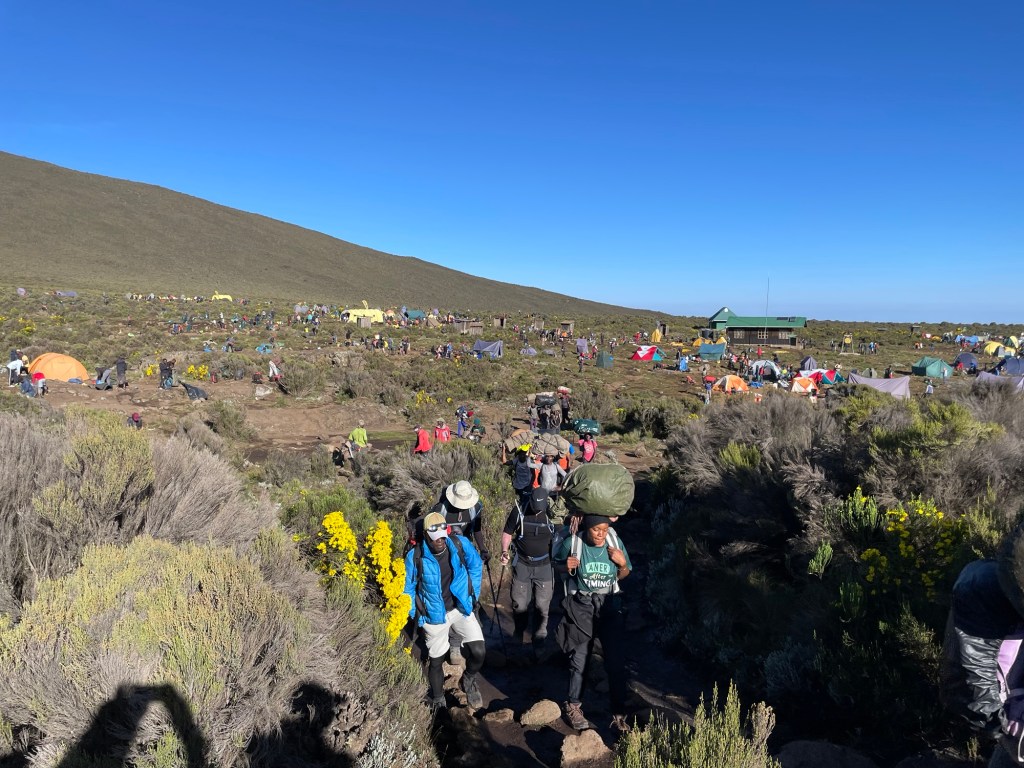
“That’s a lot of porters!” Nyla commented as we paused to let yet another group by, tent poles and chair legs sticking out of the sacks on their heads.
“Yeah, but the good news is, 80% of them are already ahead of us,” Gideon noted.
Good news indeed. Though our first hour on the trail was manic with traffic, pretty soon the lines unclogged and we, the slowest hikers on the mountain, had the trail to ourselves.
The crowd on the mountain fascinates me. The internet is cagey about how many people climb Kilimanjaro every year. You see the number 30,000 thrown around a lot, but I can’t find any proper stats anywhere to back that up. Let’s assume 30,000 is in the ballpark, and that the vast majority climb during the dry season, which is concentrated over 4 months. That’s as many as 250 clients plus their crews climbing every day. That’s a lot of people every day. 1,500 people, maybe? And we’ve come during an especially crowded time. So maybe 2,000? There are seven routs up, which is to say, seven different starting points, but they all end in the same place. Tomorrow, our Lemosho route will begin to converge with other routes.
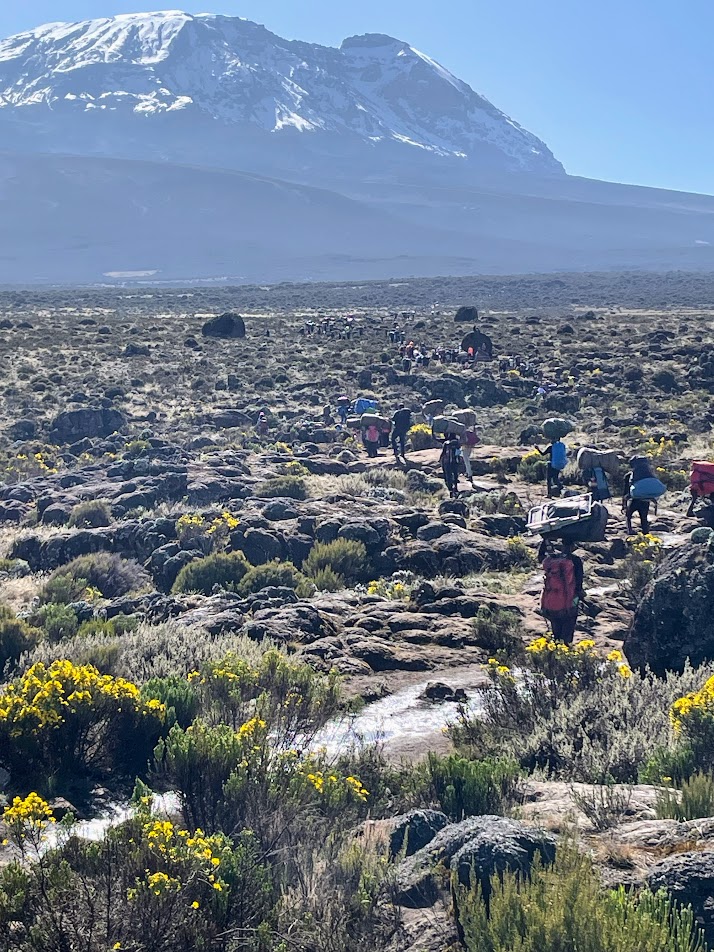
I am anthropologically curious to find out how the crowds change. There are three different basecamps (camps from which you launch your attack on the summit), though Barafu, where we are destined, is the most popular by a considerable margin. Will most of the 2,000 people converge there? The internet is also hazy on how many would-be summiters actually succeed. Somewhere between 50-80%? Gideon thinks it’s probably 80% or better. About half those who don’t summit will have dropped out before even arriving at basecamp, so maybe the population could be between 1,200-1,500? Bonkers.
The point I started out making was: slow hikers get the quietest trail. Our hike today was very peaceful, after the initial scuttle to get out of camp.
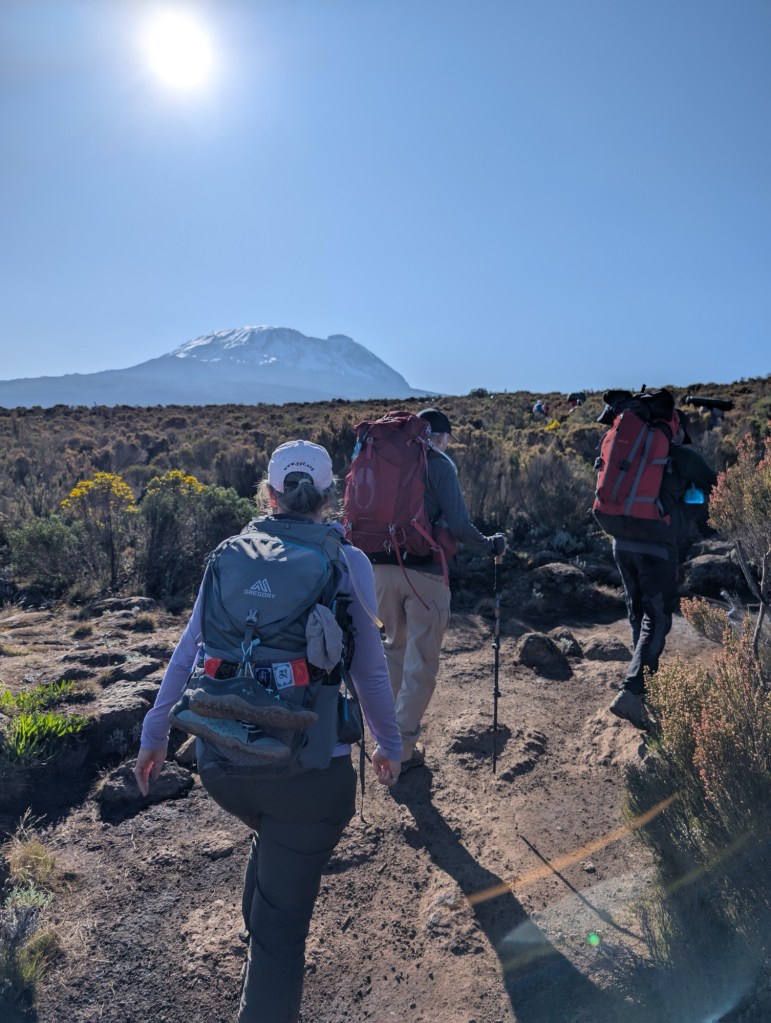
As soon as we left Shira 1 Camp, me moved from the Heather Zone into the Moorland Zone, where the plants became decidedly shrubbier. We no longer hiked under the shading branches of trees, but in the hot sun as Gideon had promised. Layers were shed.
Opportunities to collect photos of new plants and critters were diminishing rapidly, so now we only had my every-45-minutes potty stops to interrupt our walk.
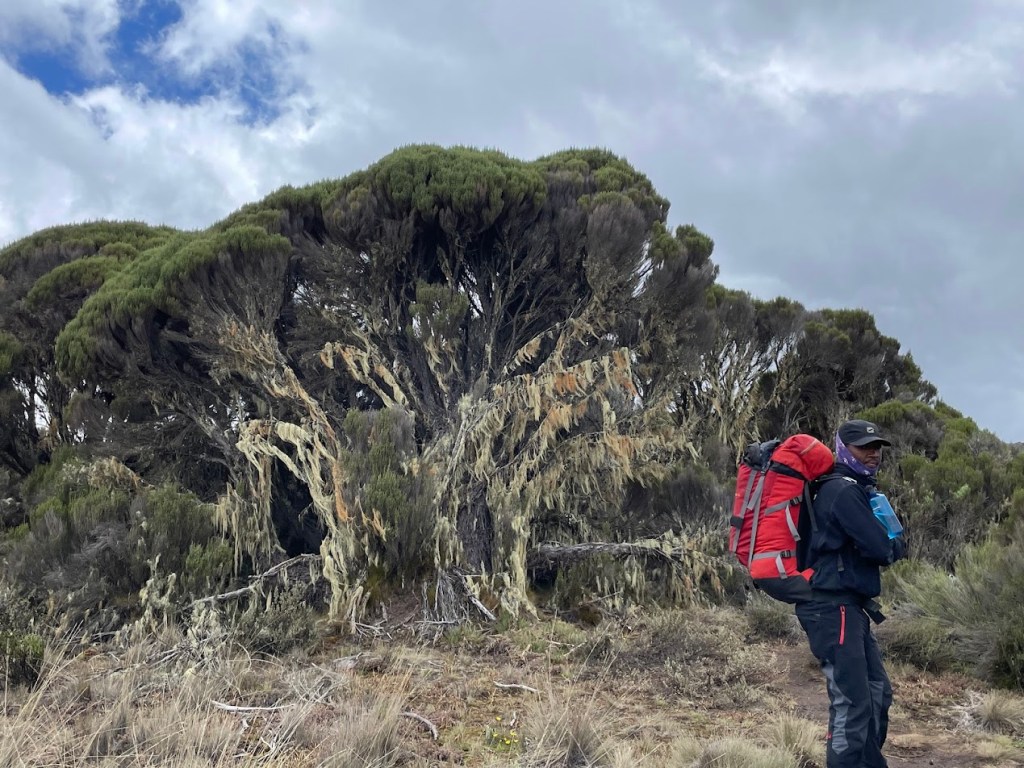
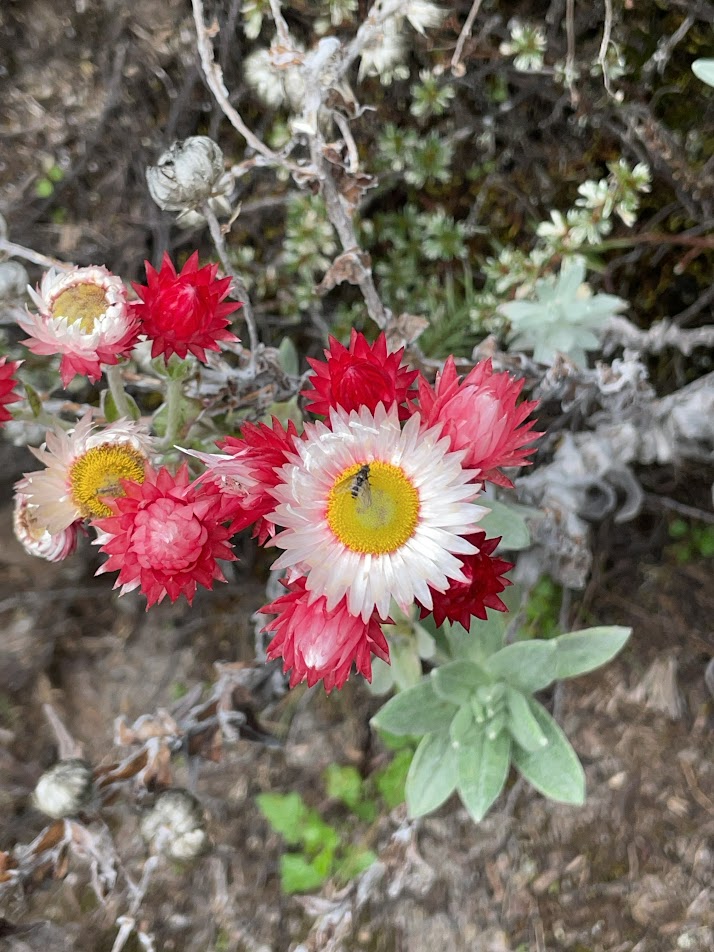
We arrived at Scott Fischer Camp just as a few spits of rain started.
“Good timing,” we congratulated ourselves as we sat down in our cozy dining tent. At least now, if we needed to put on rain gear, we would start with dry clothing underneath.
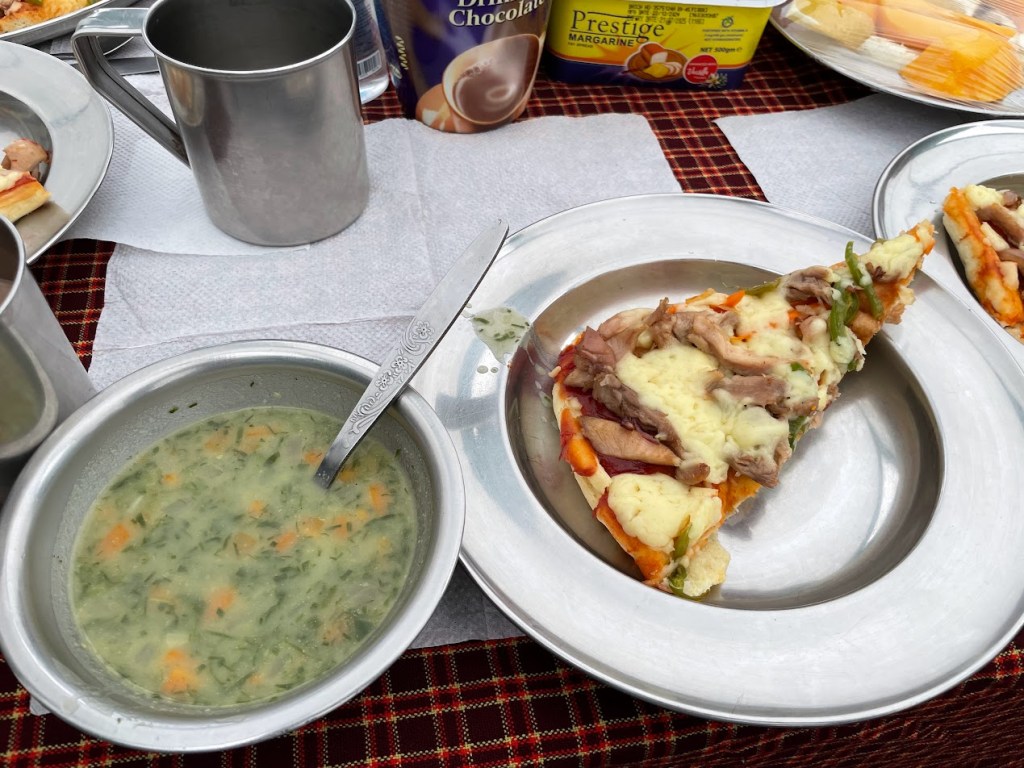
“You were supposed to drink all of it!” Gideon said when Nyla handed over her water bladder for a refill as we prepared to begin the afternoon portion of our march. A full liter remained, but Nyla was struggling with heartburn, and drinking water was making it worse.
“Small sips,” Gideon advised. “You have to drink.”
Nyla heaved a sigh and promised to take as many sips as she could.
The air was dry as we left camp, but had taken on a chill with the overcast skies so I put my raincoat on, just in case. The Moorlands took on a decidedly moodier atmosphere as we continued, exactly like my readings of Wuthering Heights had led me to believe moors ought to look.
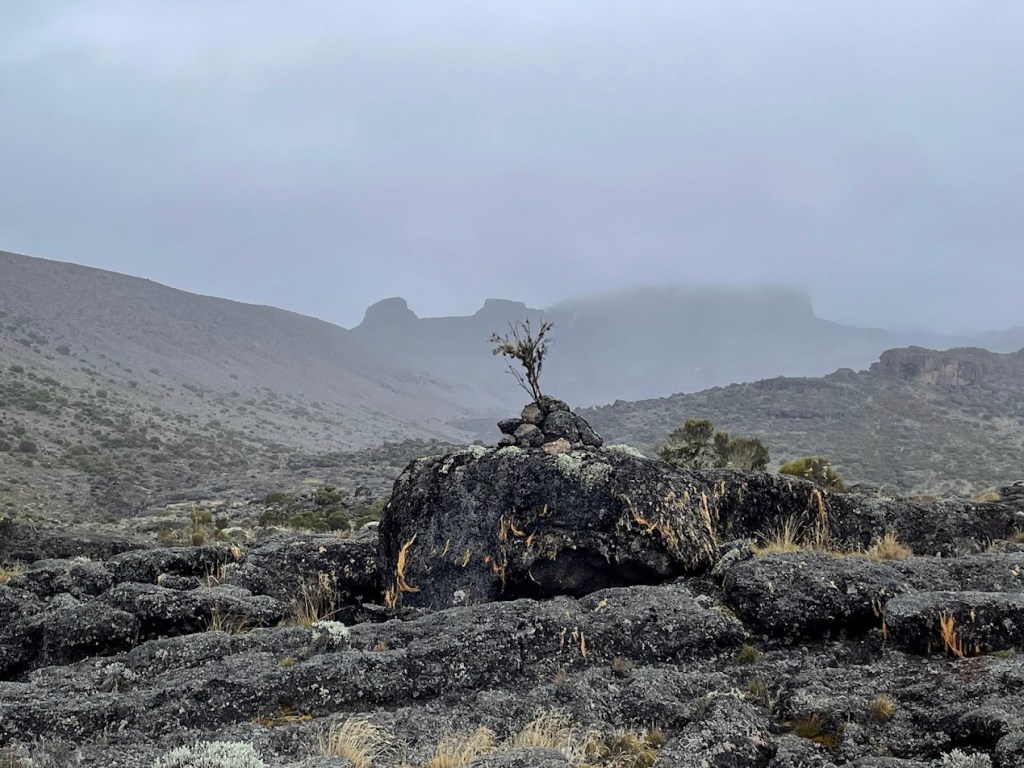
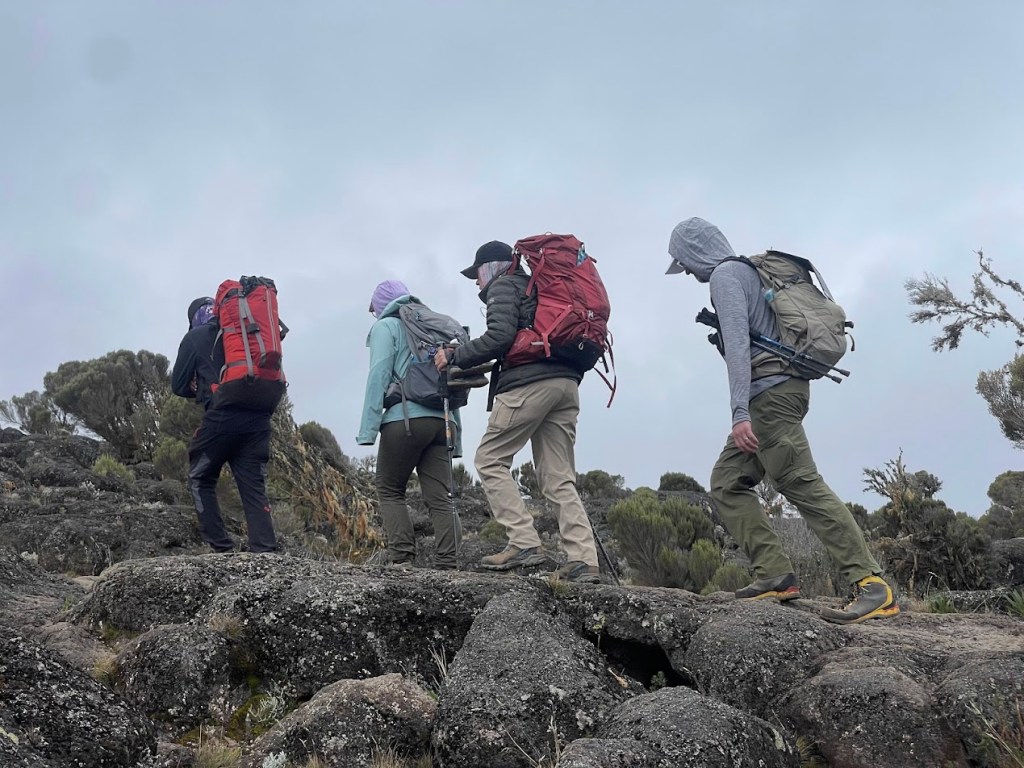
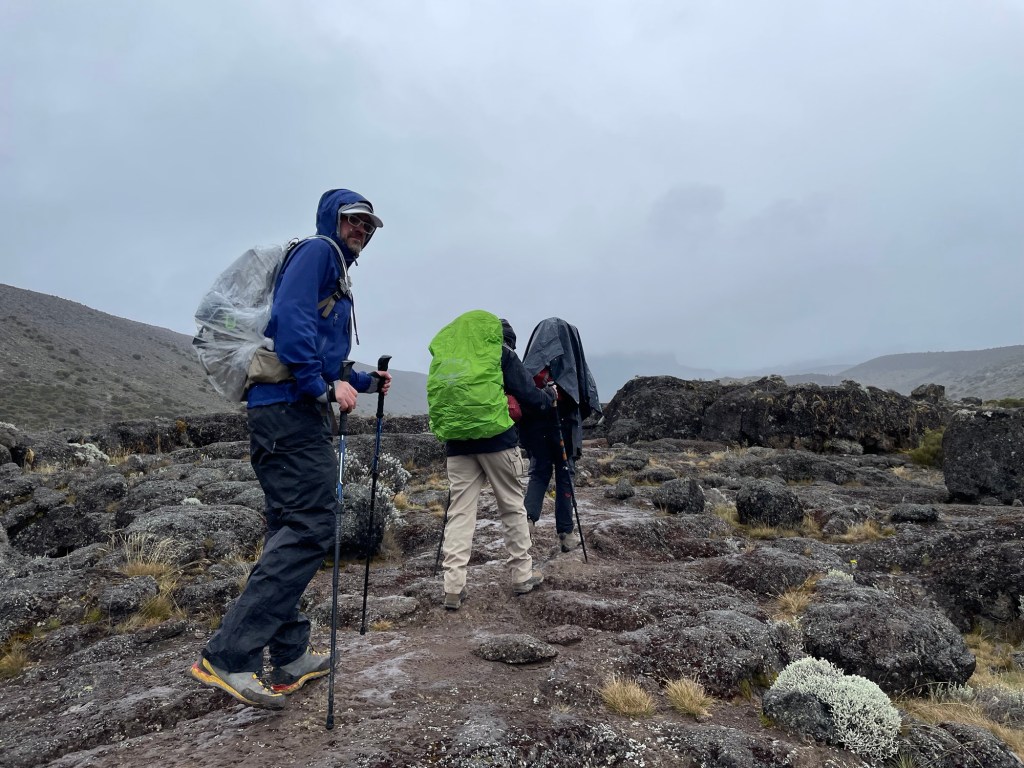
Suddenly the Moorlands no longer appeared as gently rolling slopes leading toward the mother mountain, but became slashed through with immense arms of volcanic debris – drifts of pyroclasts fifty feet deep capped with lava frozen as it flowed down the mountainside again and again. Now, instead of stopping to take pictures of flowers, I had to stop for pictures of rocks. (I really will spare you these. Even I understand that pictures of rocks aren’t interesting to anyone else.)
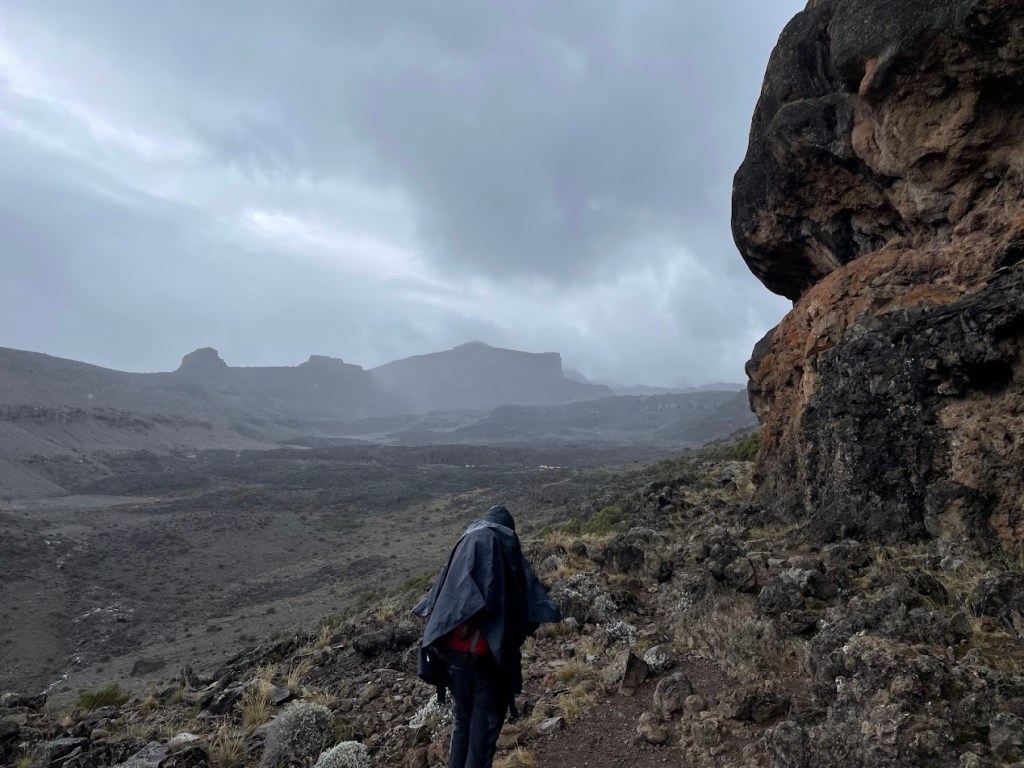
Moir Camp came into view just in the nick of time. Pro tip – if you have to take a wee break and you don’t know how far away camp is, JUST TAKE A WEE BREAK. There’s nothing like tip-toeing the last half mile because you can barely keep it together.
Moir Camp is nestled into the crook of a couple massive volcanic flows. I loved it instantly, though it promised to be as cold if not colder than our freezing campsite of the previous night. It was the coldest evening weather we’d had to date, anyway, and the first time I didn’t manage to at least partially undress for my evening bowl-bath.
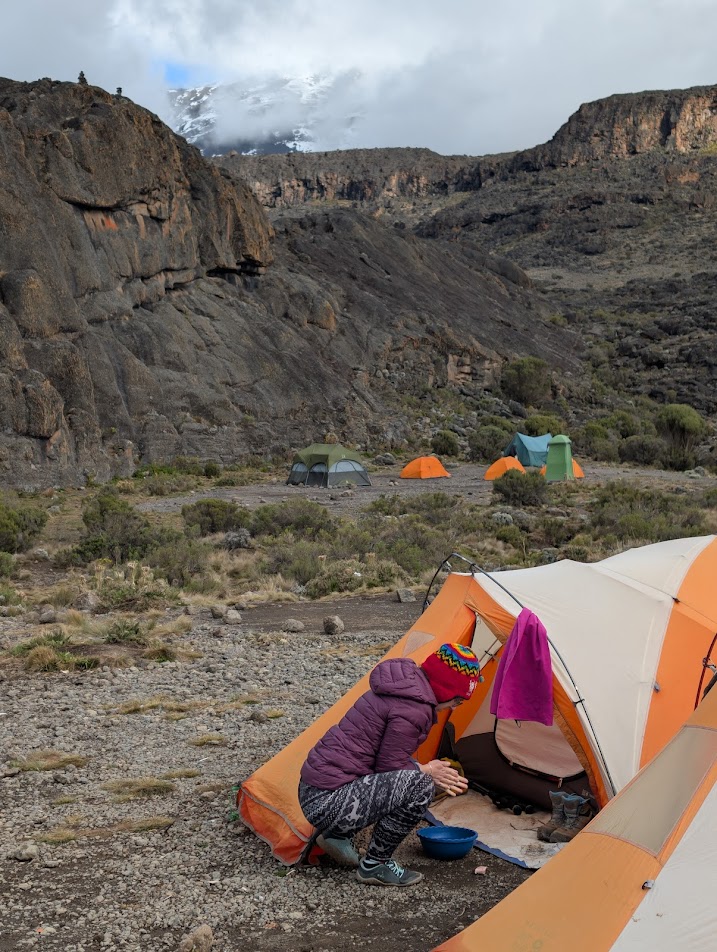
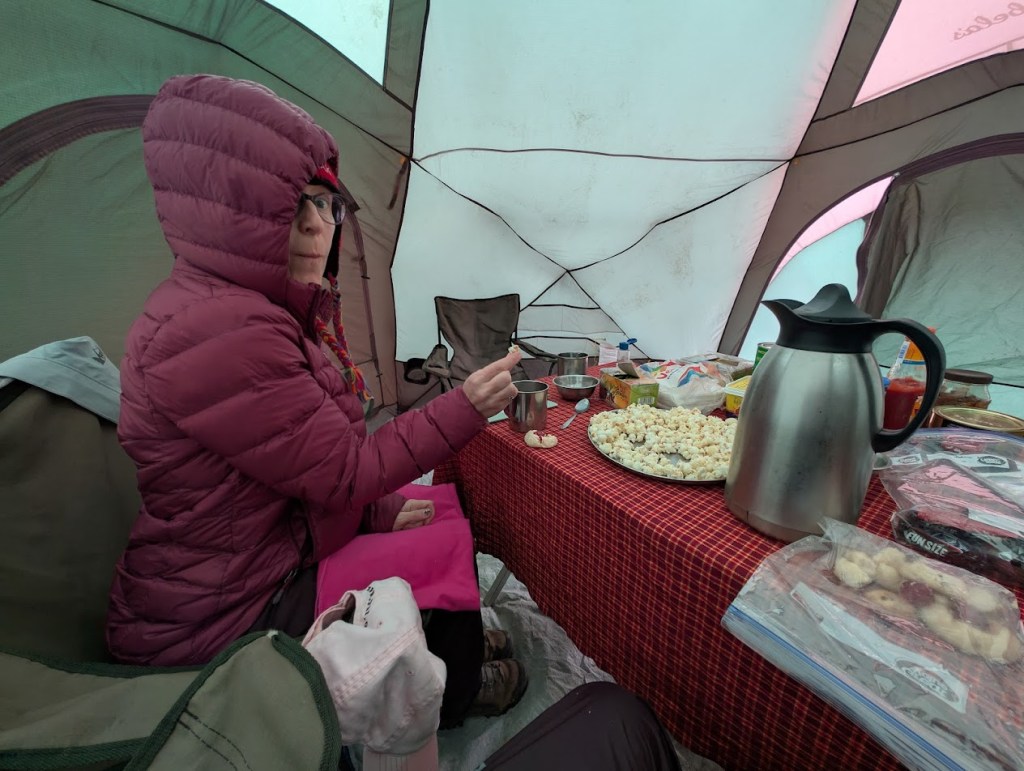
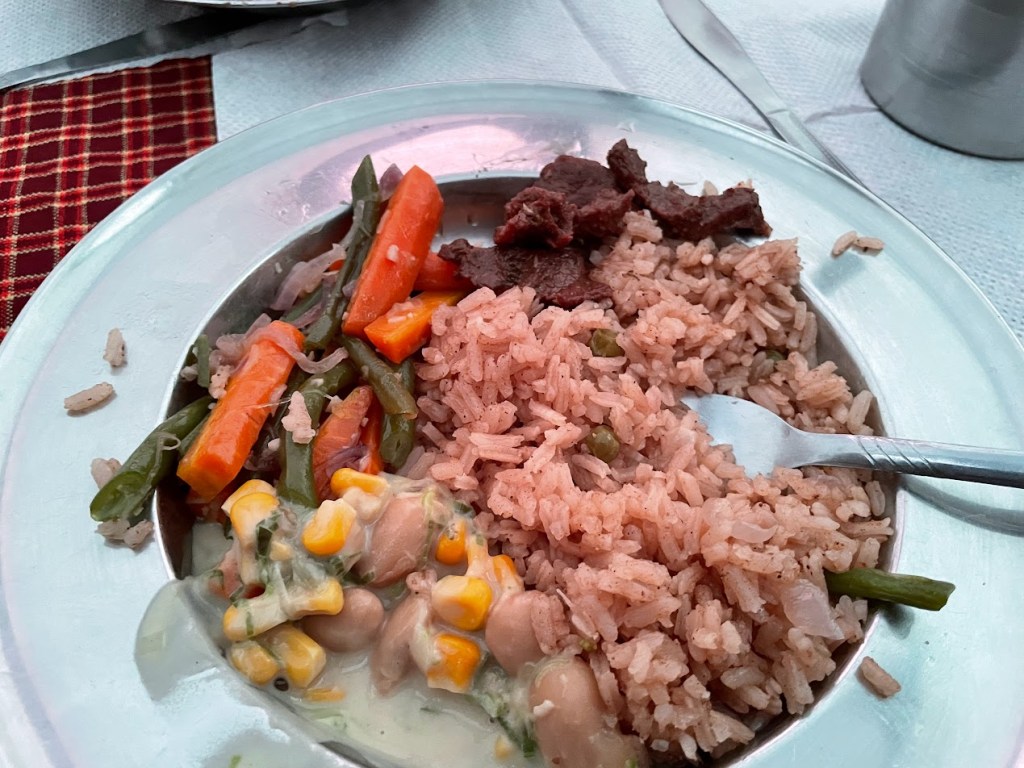
At 13,700 feet, Dustin and Nyla were starting to struggle with loss of appetite, and Nyla still battled heartburn. “Eat three more bites when you decide you don’t want anymore,” Gideon urged them.
I cleaned my plate and asked for a second helping of butterbeans.
As a lovely after-dinner treat, the sun came out and the clouds cleared off Kibo peak behind us.
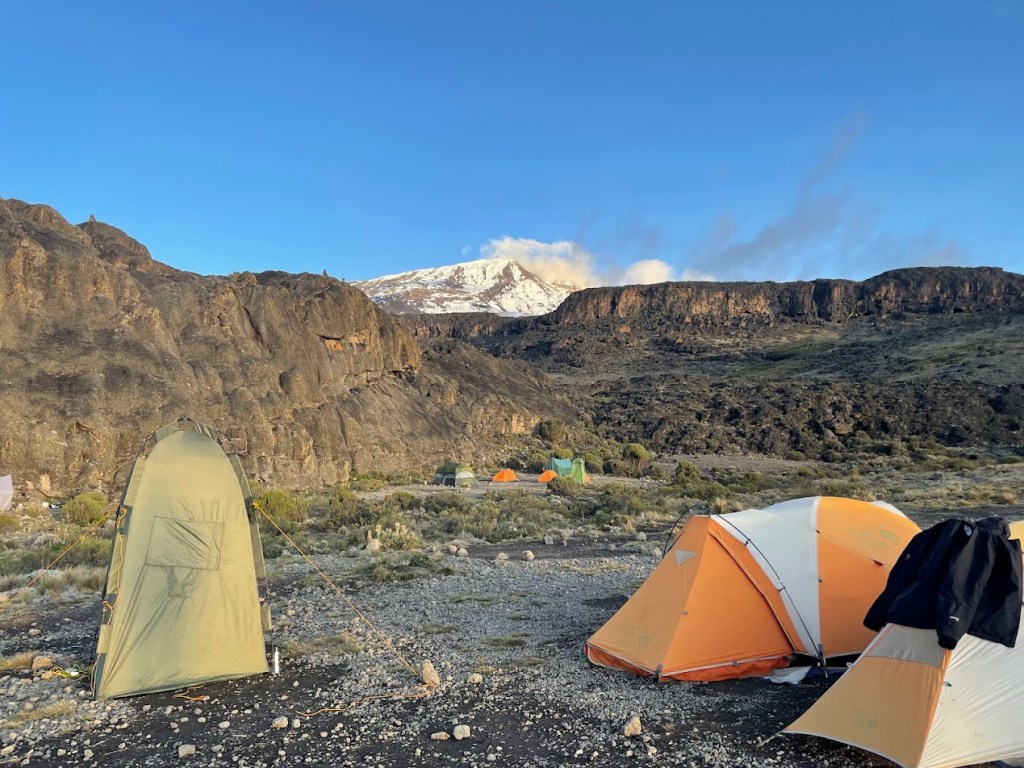
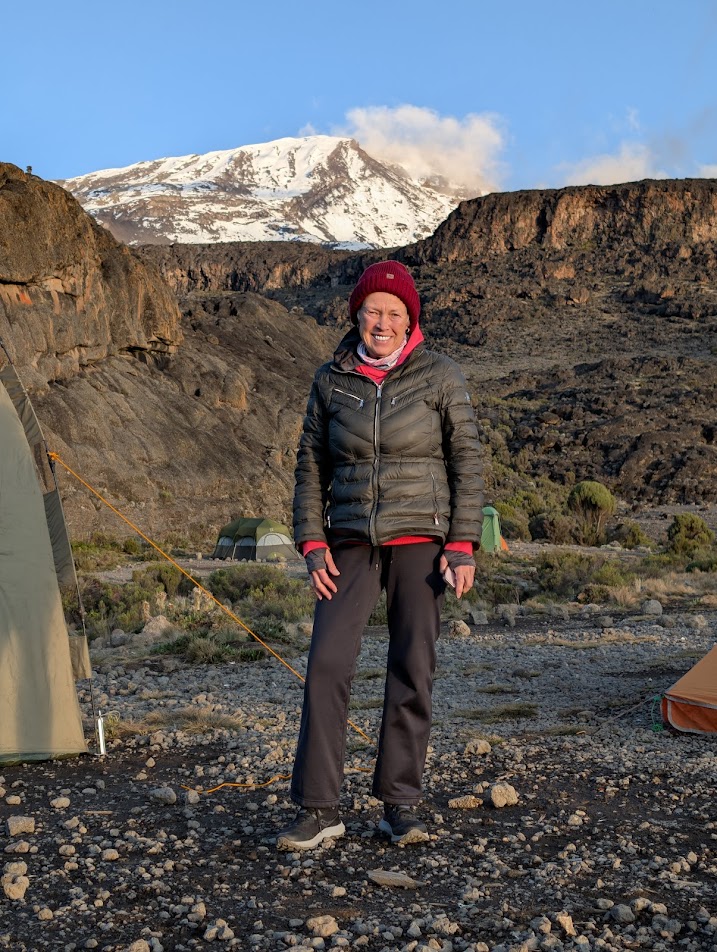
The sun set mere moments later, and off we crawled to get cozy in our tents. We’d come up a long way today, but tomorrow would be our first real test at altitude, and if we weren’t (strictly speaking) looking forward to it, it would come for us one way or another.
Lala salama, pretty mountain!
- Starting Elevation: 11,481 feet (3,510m)
- Ending Elevation: 13,698 feet (4,150m)
- Cumulative Gain: 2,285 feet
- Approximate Miles: 6.8
- Average Pace: 50’26”/mile
- Swahili phrases learned: “habari za asubuhi” (good morning); “lala salama” (sleep well); “ndeo” (yes); “hapana” (no); “hapana sante” (no thank you)
 Thither & Yon
Hello you happy hikers! I am holding my breathe just looking at your marvelous photos and reading your adventurous words. What a trip!
LikeLiked by 1 person
Thank you for reading along! ☺️
LikeLike