Transcription of images can be found at the bottom of the page. A proper blog post with loads of photos will come along some time in the next couple weeks. Stand by!
TRANSCRIPTION:
I’d heard that Kentucky is full of lush, green forests, but I hadn’t quite expected the dripping, verdant tunnel we drove through on our way into Mammoth Cave National Park. A big rain storm had just been through, and everything was glowing.
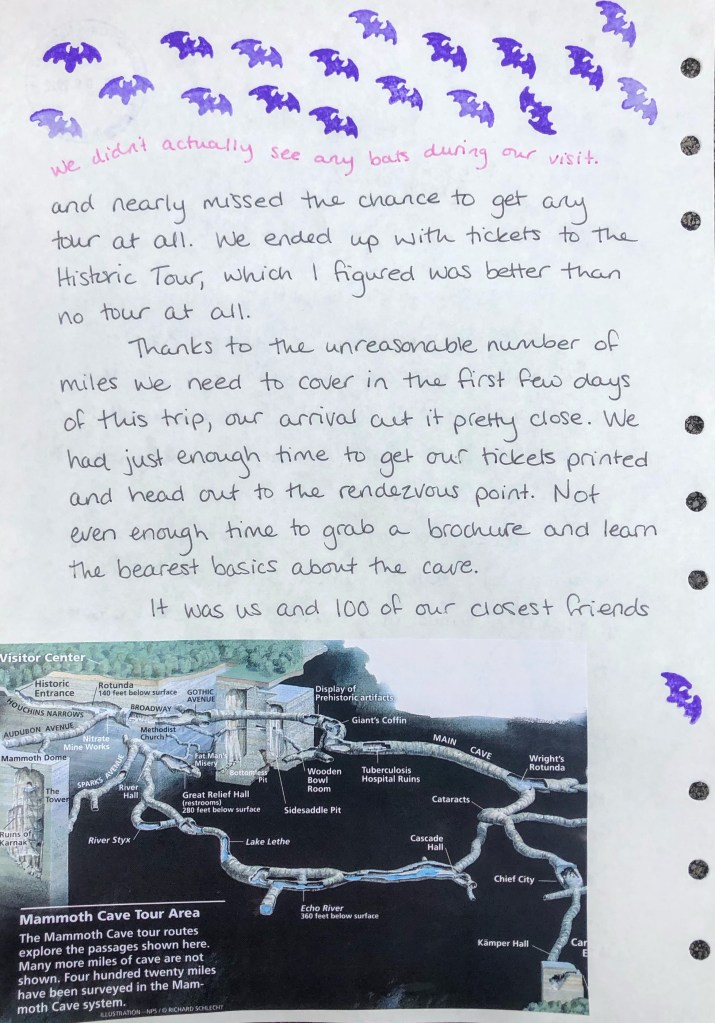
These caves were a late addition to our itinerary, I having somehow missed them as I initially planned our route. I reeeally wanted to do the immense Grand Avenue Tour (four hours underground) or the River Styx Tour (“ideal for visitors with a high interest in geology”), but the last-minute arrival on the reservations page meant our only options were the shorter, shallower, more geared-for-the masses tours. I tried holding out, hoping for a cancelation, and nearly missed the chance to get any tour at all. We ended up with tickets to the Historic Tour, which I figured was better than no tour at all.
Thanks to the unreasonable number of miles we need to cover in the first few days of this trip, our arrival cut it pretty close. We had just enough time to get our tickets printed and head out to the rendezvous point. Nopeven enough time to grab a brochure and learn the bearest basics about the cave.
It was us and 100 of our closest friends on the tour. I was stunned. I’ve been on many a cave tour, but I dont think ever with more than about 30 people. But a massive cave, massive group, I guess.
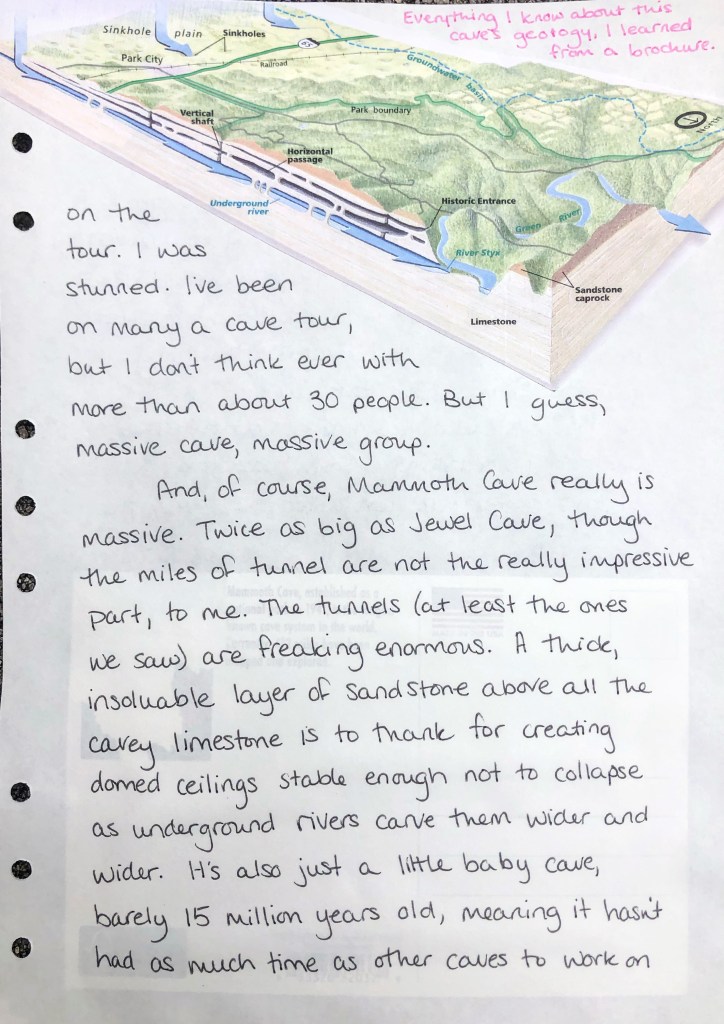
And, of course, Mammoth Cave really is massive. Twice as big as Jewel Cave, though the miles of tunnel are not the really impressive part, to me. The tunnels (at least the ones we saw) are freaking enormous. A thick, insoluable layer of sandstone above all the cavey domed limestone is to thank for creating ceilings stable enough not to collapse. Underground rivers carve them wider and wider.
It’s also just a little baby cave, barely 15 million years old, meaning it hasn’t had as much time as other caves to work on collapsing or making formations like stalactites (they exist, just not as bountifully as in other caves I’ve visited). In fact, Mammoth Cave is so new that it is still creating itself, rainwater moving through the rock to errode and dissolve away new caverns incrementally every year that passes. I don’t think I’ve ever been in a cave where that’s been true before, so I declare that my favorite thing about this cave.
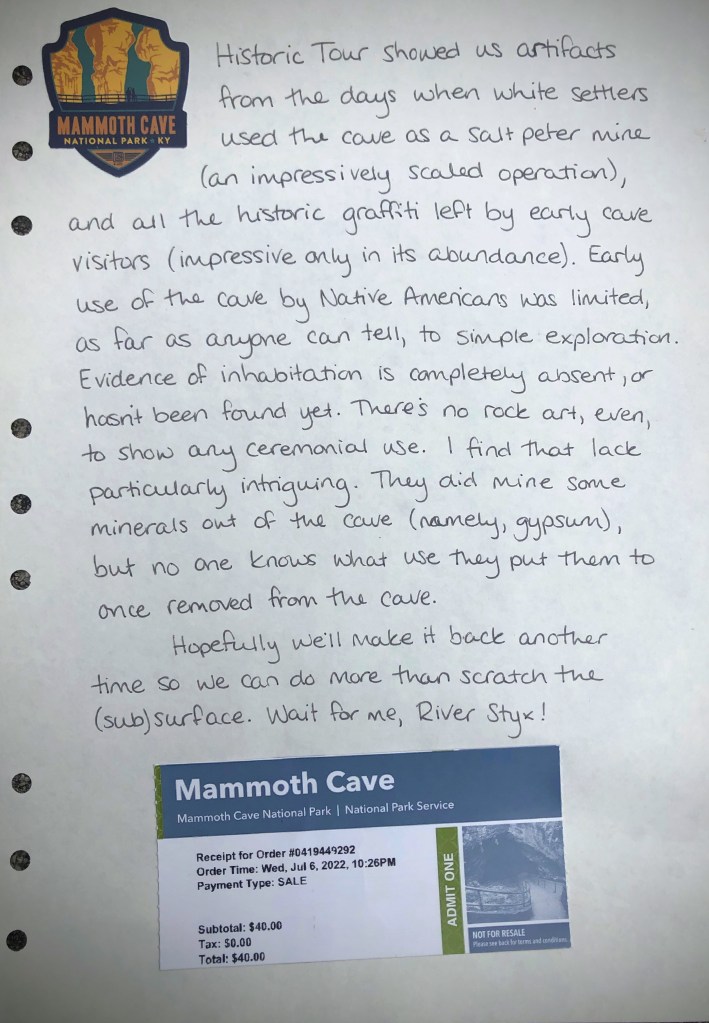
So instead of learning all about the geology (everything above I got from the visitors center museum after the tour), the Historic Tour showed us artifacts from the days when white settlers used the cave as a saltpeter mine (an impressively scaled operation), and all the historic graffiti left by early cave visitors (impressive only in its abundance). Early use of the cave by Native Americans was limited, as far as anyone can tell, to simple exploration. Evidence of inhabitation is completely absent, or hasn’t been found yet. There’s no rock art, even, to show any ceremonial use. I find that lack particularly intriguing. They did mine some minerals out of the cave (namely, gypsum), but no one knows what use they put them to once removed from the cave.
Hopefully we’ll make it back another time so we can do more than scratch the (sub)surface. Wait for me, River Styx!
 Thither & Yon