In 2011, I came to Cabo San Lucas with my mother, sister, and aunt as a celebration of Mom’s 60th birthday. We stayed at the Riu Santa Fe, an all-inclusive resort along the beach. I remember I was reading The Scar, by China Mieville (a bit heavy for a beach read – literally and figuratively). I remember the cats living in the manicured shrubs, one of whom I fed a duck leg I smuggled out of the Chinese buffet because he had an injured paw and broke my heart. I remember walking down the long, long beach to the marina where we boarded a glass-bottomed boat to sail around the tip of the peninsula. I remember watching a banana loaded with drunk college kids capsize and deciding banana-boat spectating was an hobby worth pursuing.
But that’s it. It was very much an all-inclusive-resort vacation. We left the property twice, venturing only far enough to do a couple tried-and-true tourist activities. We ate at restaurants tailored for tourists, drank off-brand margaritas by the pitcherful, and spent glorious hours by the pool. It was a nice vacation, but when people we meet this week have asked “have you been to Cabo before?” I find myself saying, “no, this is the first time!” because last time, I wasn’t in Cabo, I was at a resort.
In the ten years since, I’ve become a more adventurous traveler. Relaxing and drinking gallons of margaritas is nice (though I take mine non-alcoholic these days [limonada – you gotta try one]), but the world is full of things I need to see and learn, and the internet has made it very easy to find ways to get out and explore beyond the walls of the resort.
Enter Danny, tourism-bureau-certified guide par excellence.
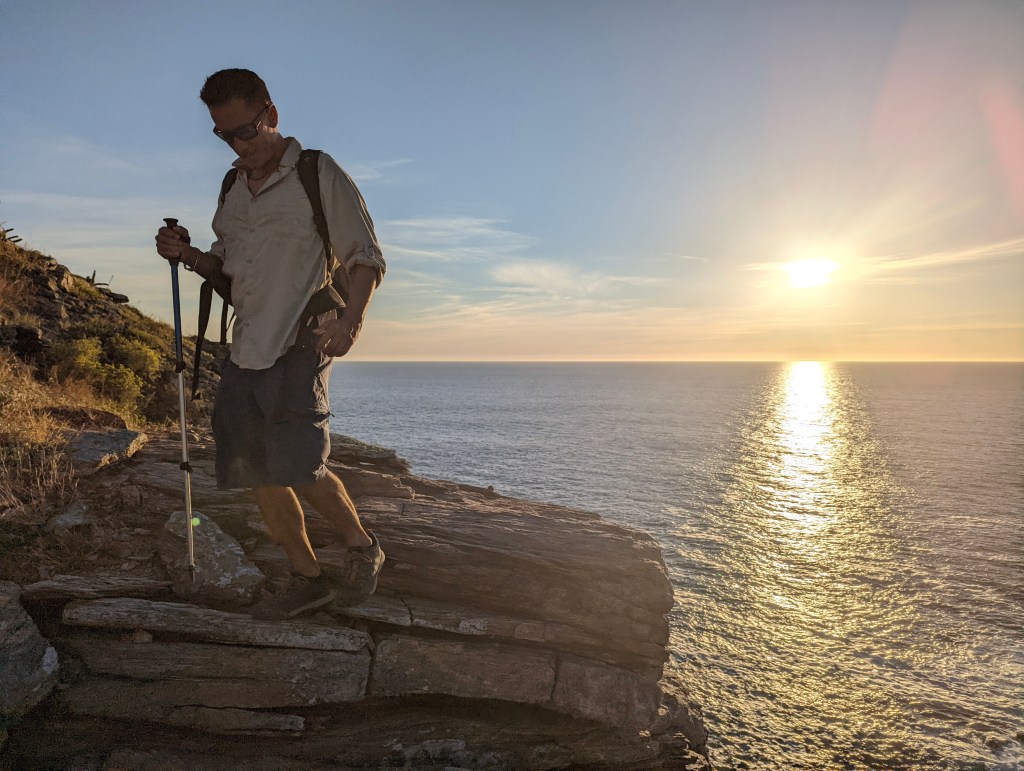
We found Danny’s Dharma Expeditions on AirBnB, though he’s working on establishing his own booking service and you can contact him by email at [email protected] (because let’s face it, AirBnB is a little bit evil). Danny has been guiding tours for 18 years, and guiding them in Cabo for the last 13. Danny knows things.
Today, the tour we booked was a trip up the Pacific Coast to the Pueblo Magico of Todos Santos. Of the 132 recognized Pueblos Mágicos in Mexico, we have previously visited Tequila in Jalisco, and Sayulita in Nayarit. These towns have been specially designated and promoted to tourists as locations where some combination of the culture, history, and landscape have made the town something really special. It’s easy to guess what makes Tequila special, and Sayulita is a gorgeous little artist community on the edge of some of the best beaches I have ever visited, but Todos Santos was a total mystery to me.
In fact, I knew almost nothing about the entire state of Baja California Sur before arriving here this week, other than that it is a peninsula of grand scale, with calm, warm waters on the Gulf side and wild, cold waters on the Pacific side.

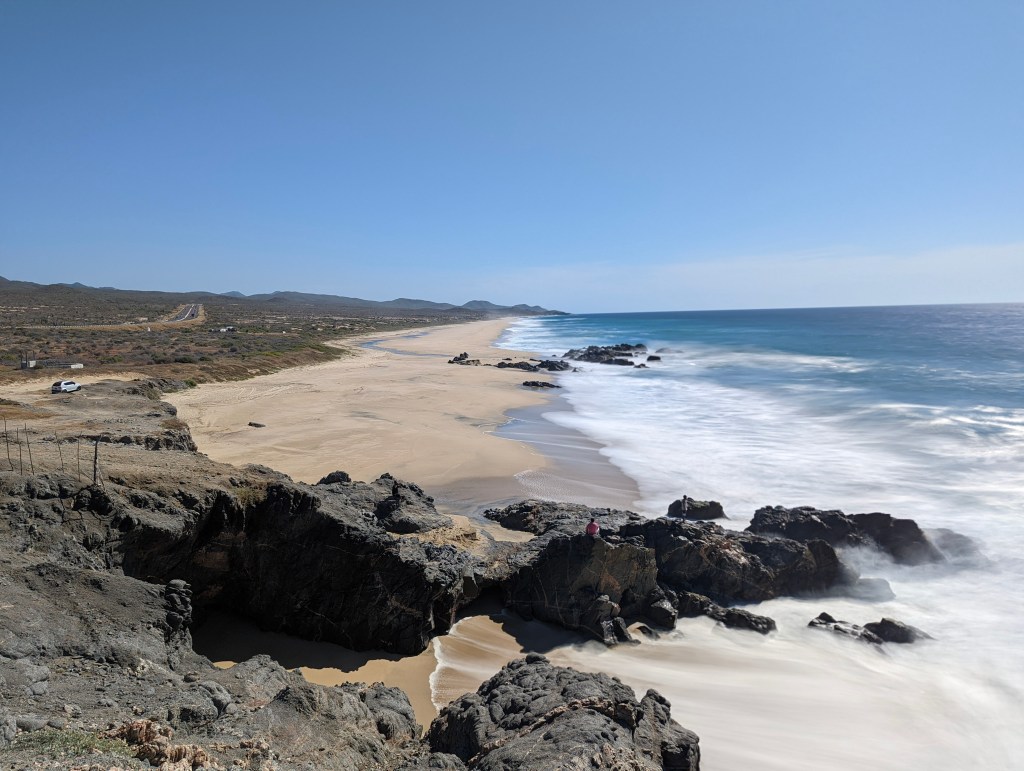
Danny picked us up in Cabo San Lucas, where we were staying, and we headed up Mexico’s Highway 1 along the Pacific Coast. The drive to Todos Santos took about an hour, during which time we got to observe the many miles of endless beach, some of it occasionally broken up by cliffs, but most appearing gentle and easy to access across the brief stretch of desert landscape between the highway and the sand.
“How is it that no one has built anything out here?” I mused.
“There’s no water,” Danny replied, a problem having nothing to do with surfing and everything to do with drinking.
All the water on this enormous peninsula comes from mountain rainwater runoff and a few springs. Fancy people living in cities have unlimited access to very expensive desalinated ocean water, but most of the population relies on filling their cisterns with water trucked in once every three weeks from public water sources. Procuring enough water to supply a house in a location this remote would be environmentally irresponsible and, more relevantly to the sorts of people who look at this beach and covet its beauty, financially prohibitive.
I am American. I come from the land of Las Vegas and Everywhere in Arizona where there is no water, but we never let that stop us from growing palm trees and lawns. The idea of not building someplace just because it’s impractical is…
… Really, really smart, actually.
[Drain Lake Powel! Let’s restore Glenn Canyon! Wooo! …… Okay, sorry, back to your regularly scheduled, non-controversial post.]
After this conversation, Danny pulled over at a public access point (all beaches in Mexico are public, from the edge of the water to 30 meters inland) and let us get an eyefull of the endless, uninterrupted beaches in every direction.
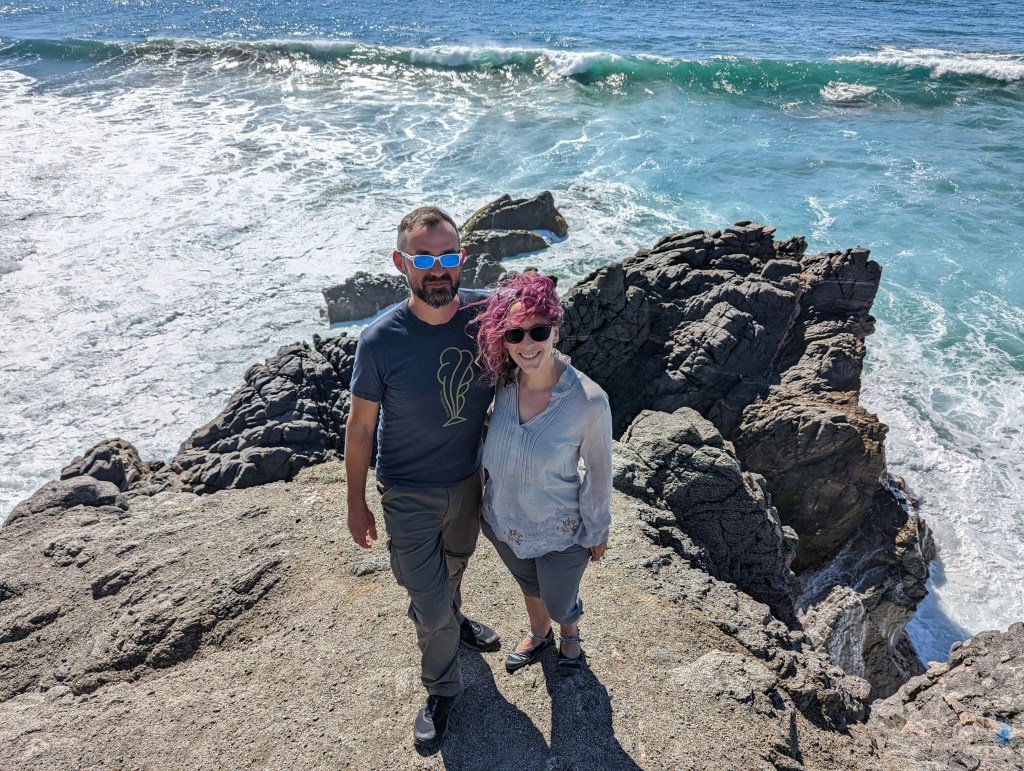
Then back into the van and onward to Todos Santos.
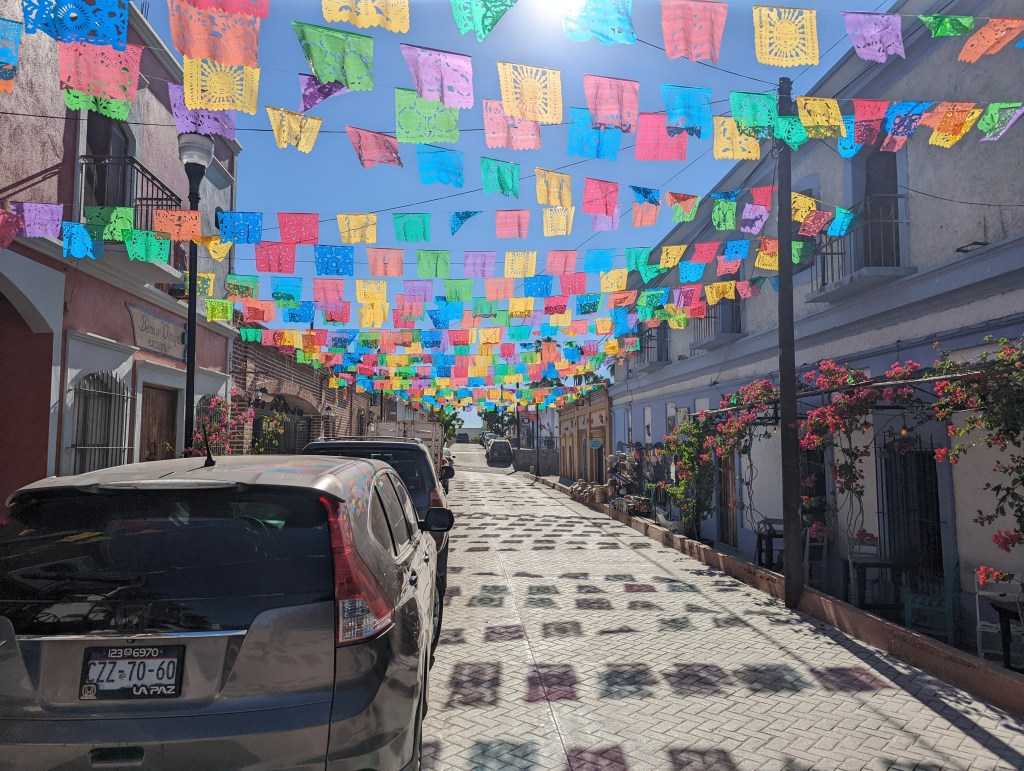
Todos Santos has found a place for itself in pop culture as the home of the Hotel California. Tourists flock to have their pictures taken in front of the hotel and buy shirts in the gift shop while the Eagles play endlessly over the stereo.
Funny story, though…
The Hotel California was founded by a Chinese immigrant who loved Mexico so much that, having married a woman from the state of Tabasco, decided to rename himself Don Antonio Tabasco. The name didn’t stick, and he became known locally as El Chino Tabasco. He founded the hotel in 1947 and lived there with his wife and seven daughters. Eventually he also opened a gas station and restaurant that served the only cold beers in town, the ice having been imported from La Paz, 50 miles to the north.
After El Chino Tabasco’s death, the hotel fell into disrepair. A Canadian couple purchased and renovated it in the 2000s. Being entrepreneurial types, they decided to make the most of the case of mistaken identity that had people believing their hotel was the hotel that had inspired the Eagles’ song. (It was not. Not only did the Eagles never visit or stay here, but their song is fictional from top to bottom.) This was fine and good until the hotel owners got a little too big for their britches and tried to apply for a trademark in the United States.
Now the Eagles knew who they were, and were not happy about it. Lawyers got involved. The trademark application was dropped and the owners of the hotel slunk home, cleared their giftshop of Eagles merch, and posted this kind of hilarious disclaimer on their website:
The hotel wishes to inform its guests that there is no past or present connection between the hotel and the Eagles, any of its members, or their song. Any rumors or innuendo suggesting that the song is associated with or inspired by the hotel are untrue.
Rumors and innuendo abound, and everyone seems happy. I did not take the classic photo with the sign, because see above, but I did take a photo of this amazing painting that hangs in the lobby. Something about it really speaks to me.

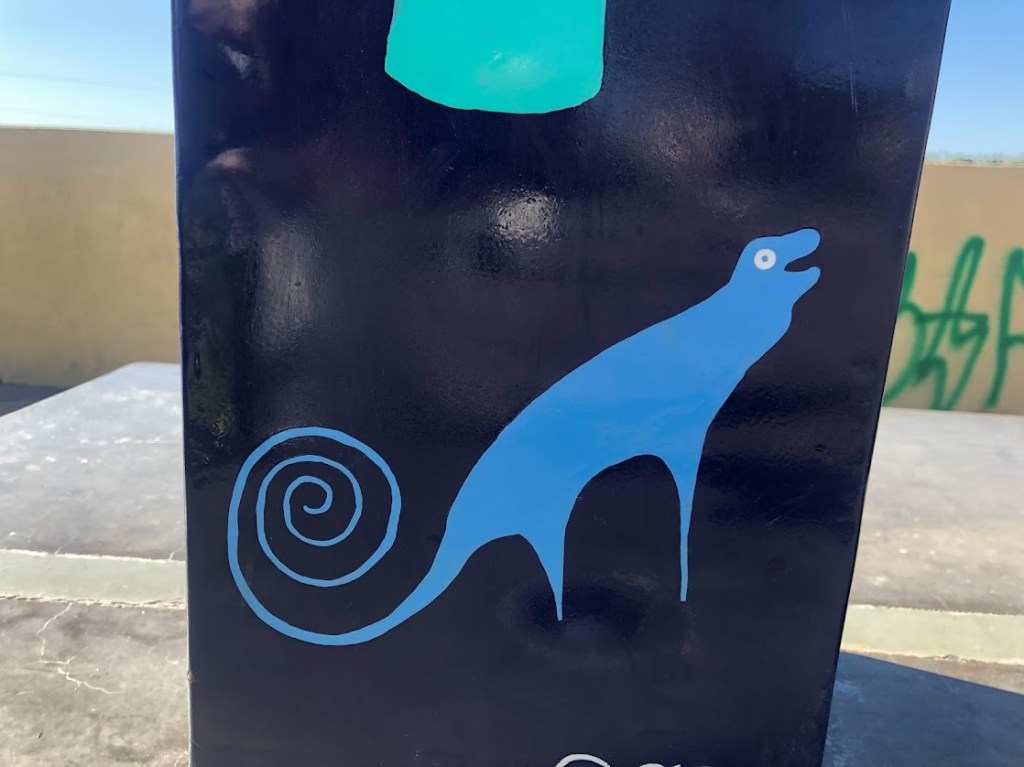
Onward and upward to roam the streets of the town. Interesting art lurked around nearly every corner, with shops and galleries offering more than the typical trinkets that seem to mandatorily stock every shop in Cabo.
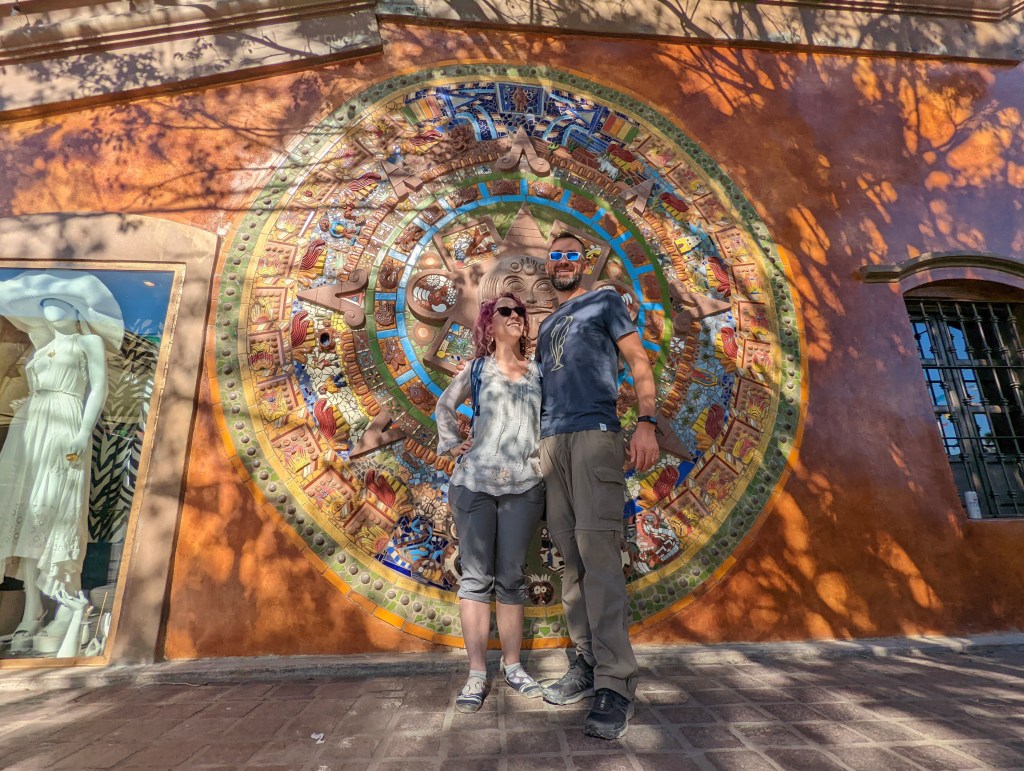
We swung by the mission as we wrapped up our tour, and learned that the town of Todos Santos was founded by the Jesuit missionaries in the early 1700s. Situated on an estuary that flows primarily underground, Todos Santos enjoys one of the best water supplies on the tip of the peninsula, and is stunningly green year-round. The first church was built in 1712, and the first service was held there on November 1 – All Saints Day – thus the naming of the town. The mission was built in 1723, and passed sequentially from the hands of the Jesuits to the Franciscans to the Dominicans, as Spanish political and religious tides shifted.
The missionaries who established the town also helped establish the Ranchero communities that worked the land, farming fruits and corn and eventually sugarcane. The sugarcane was a doomed enterprise, however, as it requires more water than even water-rich Todos Santos could regularly provide.
Speaking of delicious fruits and sugar, time for snacks!
“Forget where you send the rest of the gringos, tell us where the best taco stand is!” we demanded as Danny set us loose on our free hour before the hike.
Danny sent us down the street from the Hotel California to a little local shop called “Fish Taco Santo Chilote” to get some avocado tacos. Two great regrets of my current life are that I did not get a photo of these tacos, and that I did not eat more of them. Not that I could have eaten more at the time, but… oh lord, were they tasty.
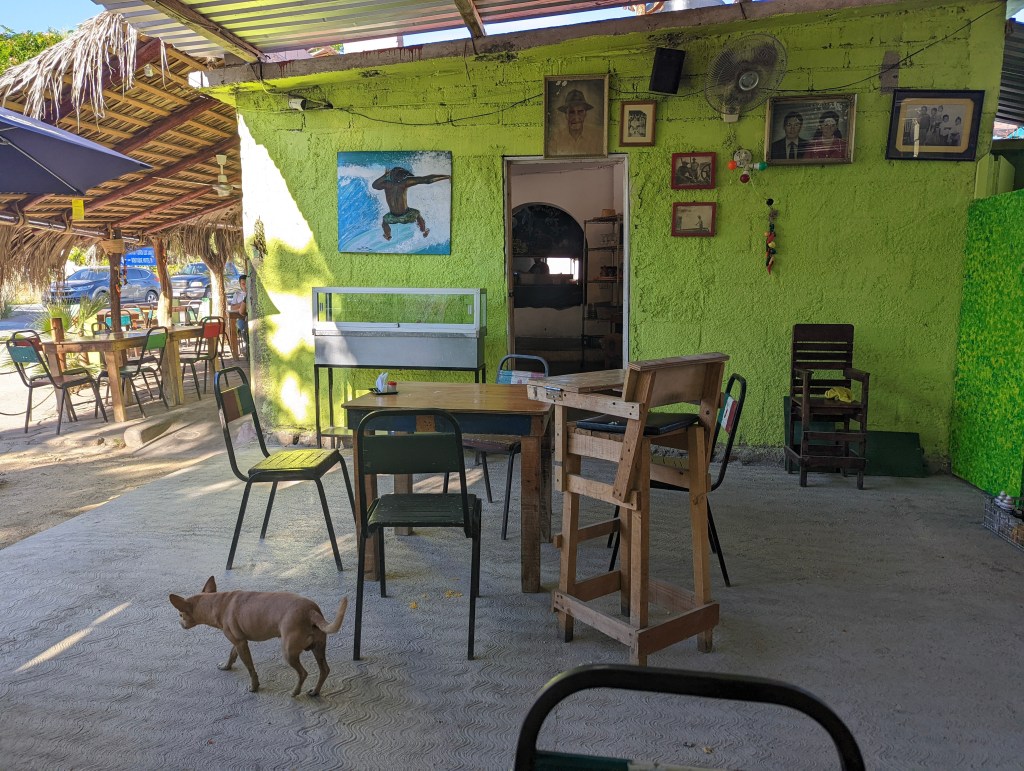
What is an avocado taco, you ask? (You probably didn’t ask. It seems obvious, but it’s not as obvious as you think.) Cut a perfectly ripe avocado in half and peel it. Roll it in fresh shredded coconut. Now lightly bread it with crunchy crumbs and deep fry it until it is extra crunchy. Meanwhile, drop a huge pile of cheese directly onto a griddle and fry it until it, too, is crunchy and gooey. Wrap this around your fried avocado, then deposit the whole ridiculous parcel into two fresh-made corn tortillas. Now, walk your taco over to the salsa bar and cover it with pickled onions, salsa of any spiciness you desire, and so much fresh-squeezed lime juice.
This, my friends, is what heaven tastes like.
Educated and refreshed, we moved on to the hiking portion of our adventure. Danny drove us out to Punta Lobos. We marched across a lovely little beach and then started picking our way up the rocks onto the side of the cliffs. Danny’s AirBnB listing describes the hike as “moderate to advanced,” and notes that he can modify it to suit the abilities of his hikers. By the time we got up the cliff edge, my little hummingbird heart, which has been subjected to nothing more strenuous than house-painting since we came back from Glacier National Park in August, was rolling along at a solid 163bpm.
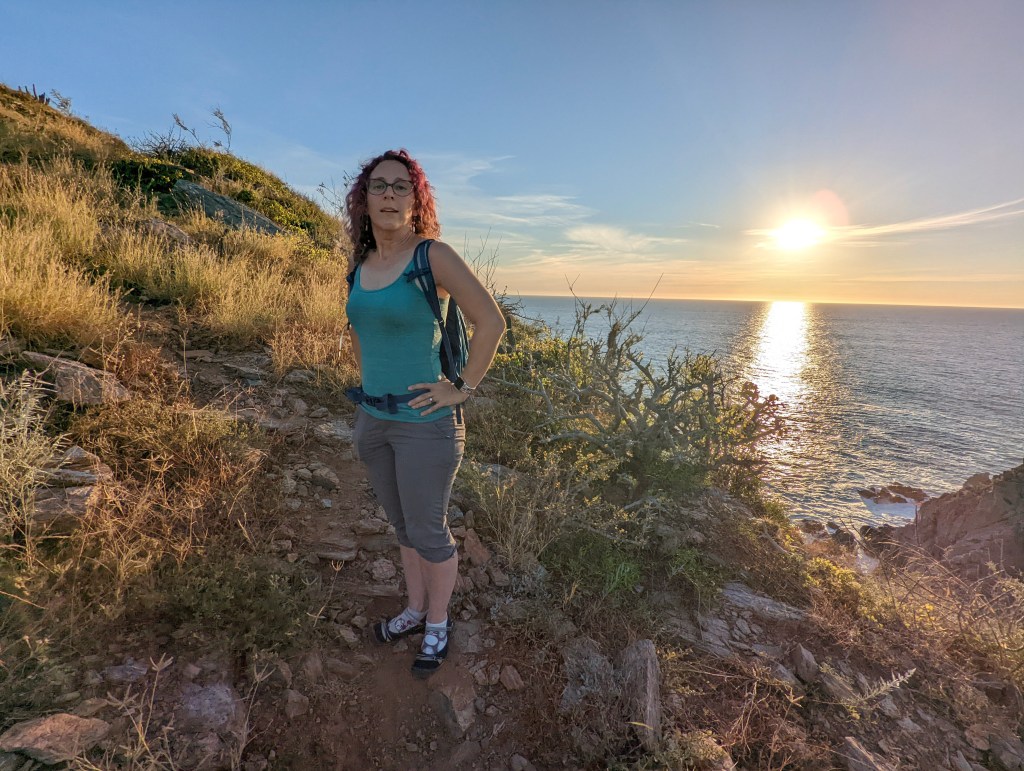
“You passed the test,” Danny said. “Many hikers decide after this section to just watch the sunset from here, but there’s a better view up there,” he pointed to the top of the hill, “and the best view over there.” He pointed along the cliffs to the end of the punta, where it was obvious the view would be truly magnificent.
“Over there we go, then!” we agreed.
I puffed along gamely behind Danny and Dustin, allowing myself a pause whenever my heartrate topped 160. (How did I get up to Sperry Glacier at 8,000 feet with hardly any trouble but I can’t climb this 660-foot hill without almost combusting? Don’t just quit exercising for three months, kids.)
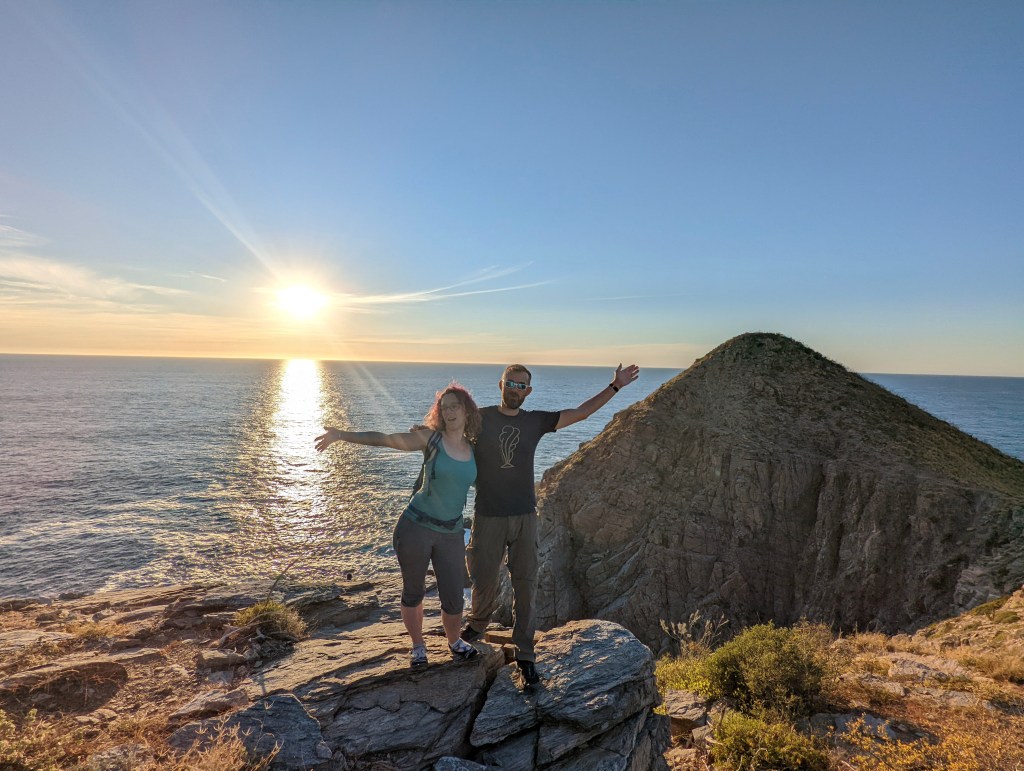
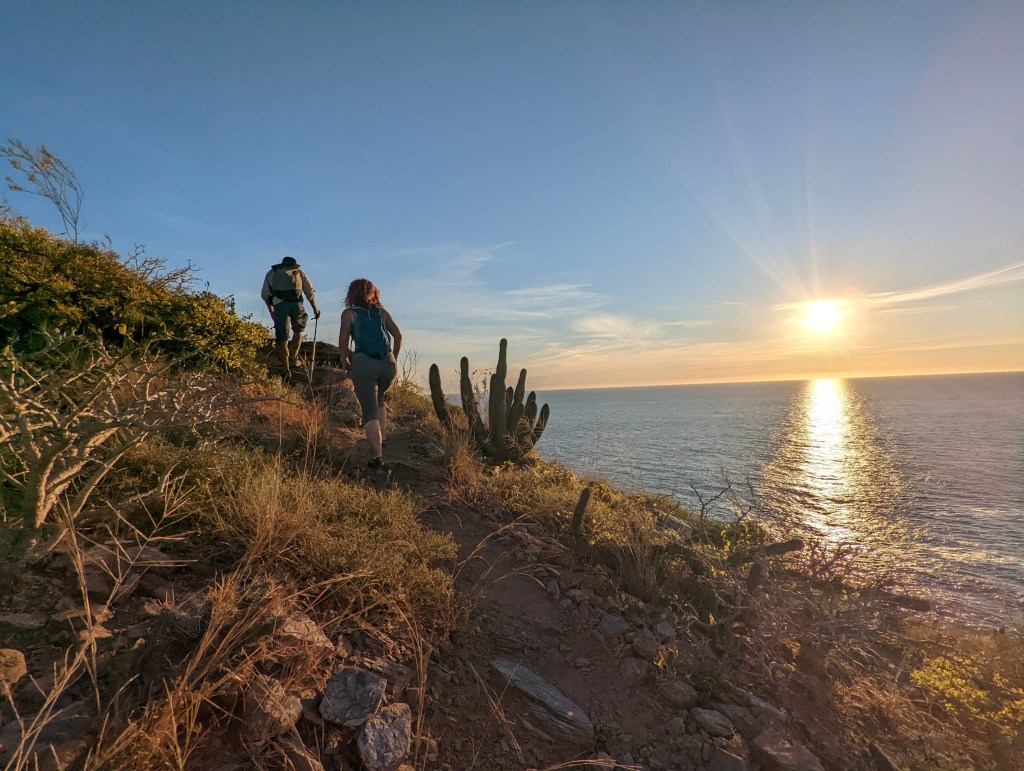
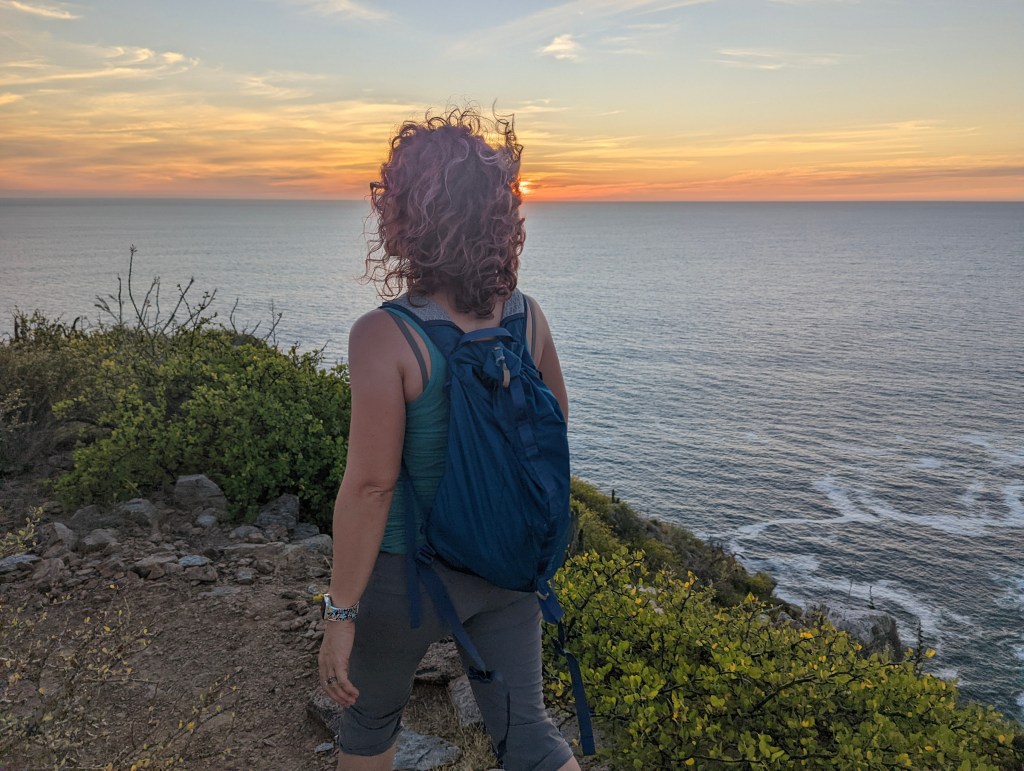
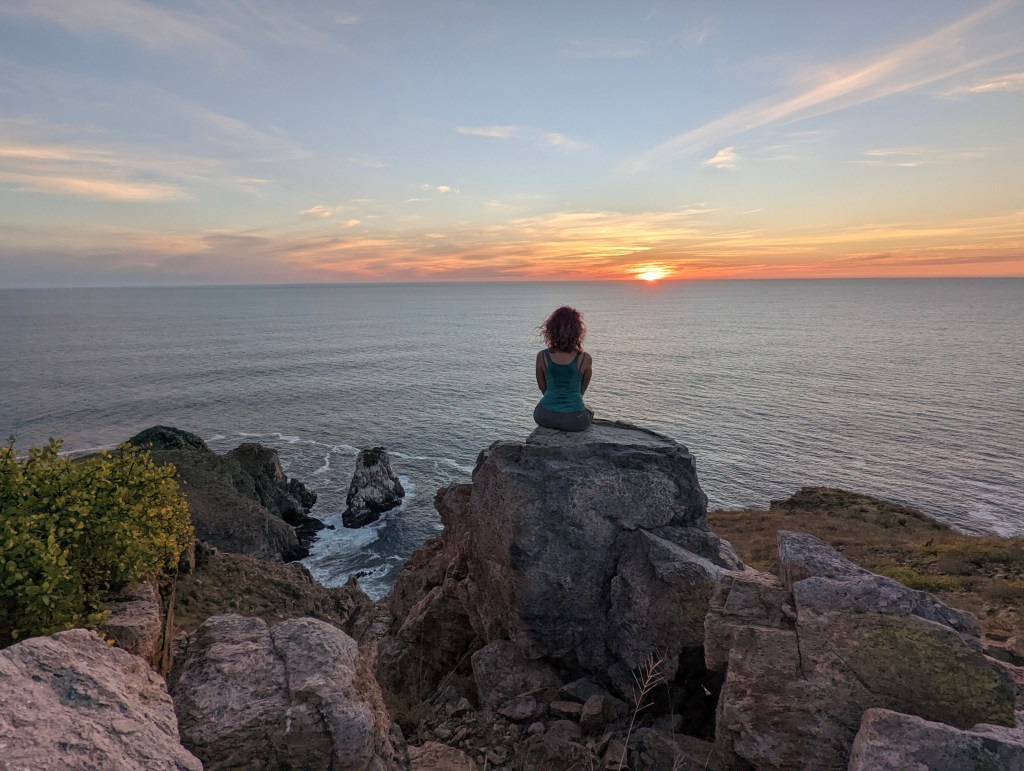
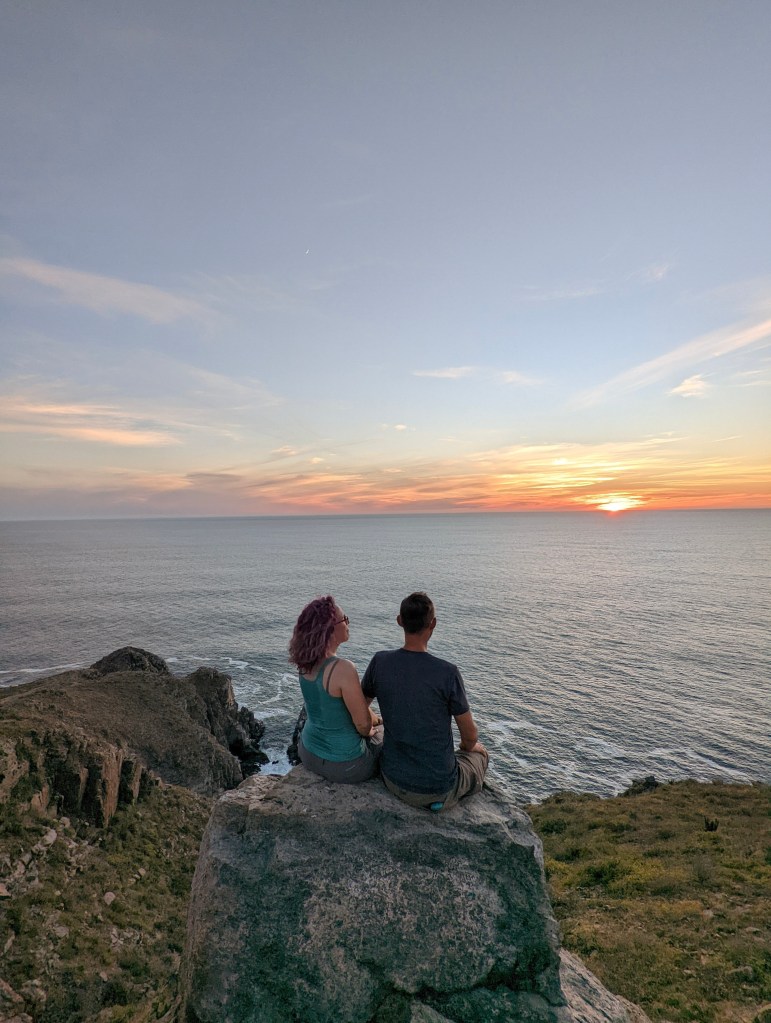
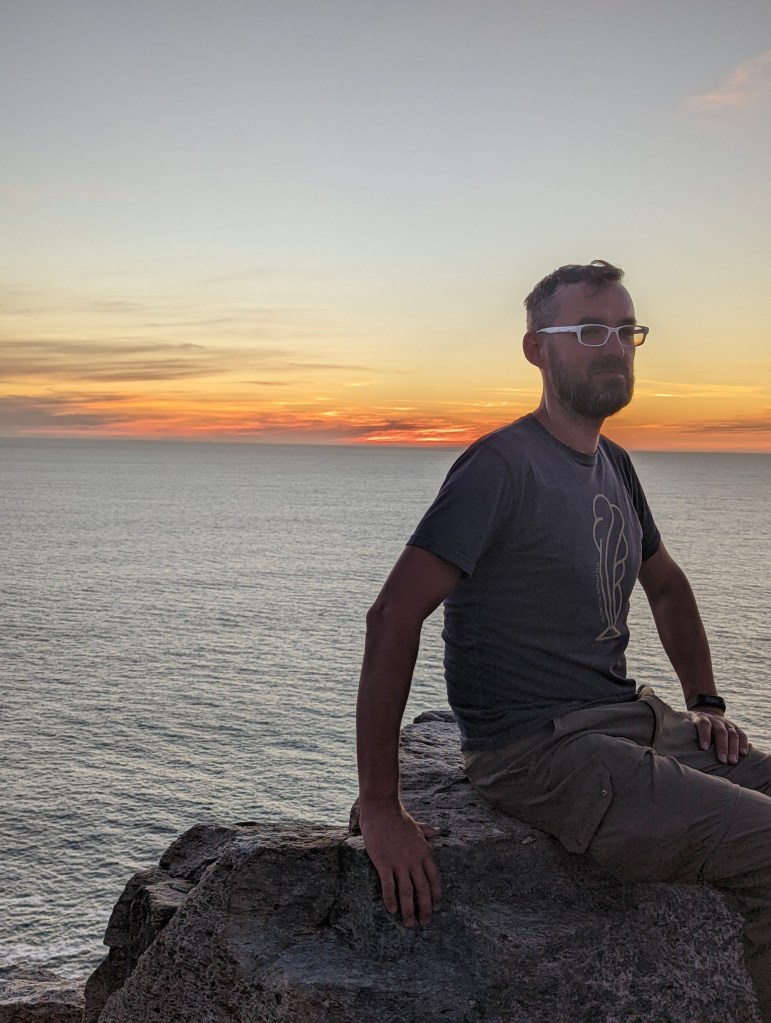
We spent twenty minutes at the point, soaking in the perfect conditions for a stunning sunset. Just the right number of clouds made for as many bands of color as you could possibly wish for.
With the last glimmers of day still lingering at our backs, we began working our way back toward the beach. Instead of retracing our steps, which could have been hazardous even with the headlamps Danny thoughtfully provided (“this isn’t my first rodeo, mamacita!”), we went up the cliffs until we crossed paths with a dirt road that, long ago, provided transport of goods brought in by ship to the town several miles away.
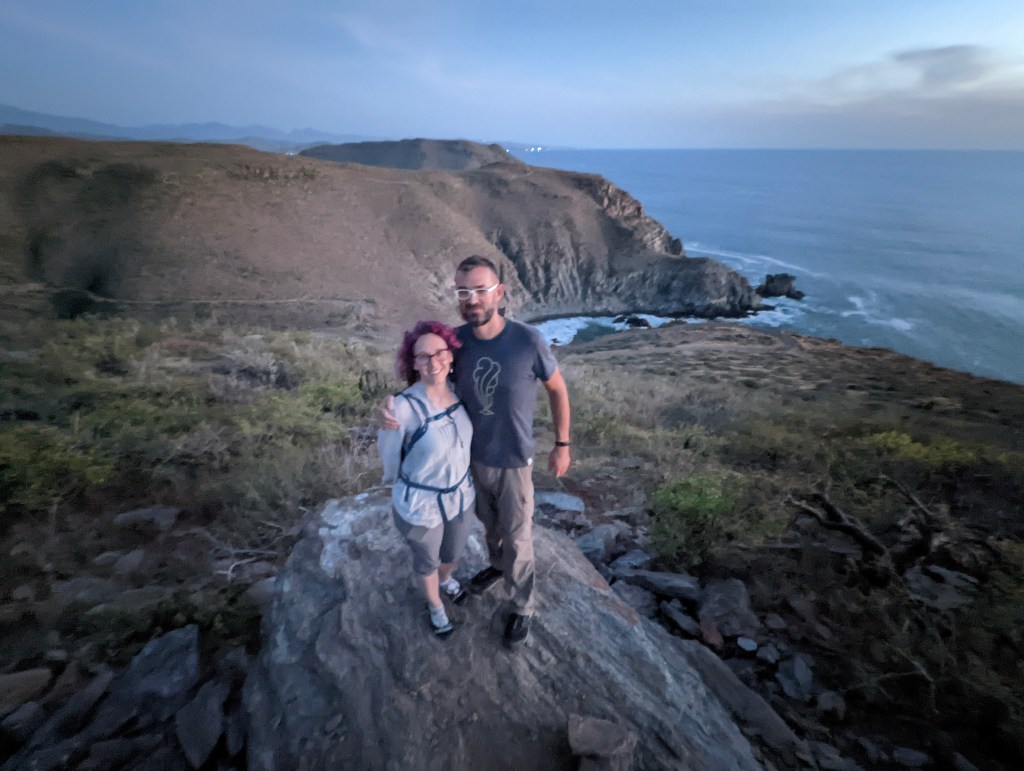
This tiny natural harbor served as one of the earliest ports in the area. If it had been lighter, we could have followed the road all the way down to the beach and seen some of the ruins left behind by the long-ago sea-farers that made use of the harbor’s protection. However, the same cliffs that would have offered protection also must have made this port an absolute nightmare for the people retrieving the cargo. Sheer cliff walls and hardly any space to maneuver. I’m a little hazy on the details, but I understand that bandits were a serious problem. They would wait for the ships to arrive, stick-up the crews as they unloaded, then make off with the goods over a path much like the one we’d just finished hiking, hiding in the cliffs while the seamen struggled to find a path.
(Danny, if you read this, correct me if I’m wrong!)
The dirt road we followed back to the beach would have been the path for lawful transport of those same goods. Even this road was rocky and winding as it followed the topography of the hills back down toward town. I can’t remember how long ago the port was abandoned, but it’s been quite a long time, since a much more sensible port was established in La Paz.
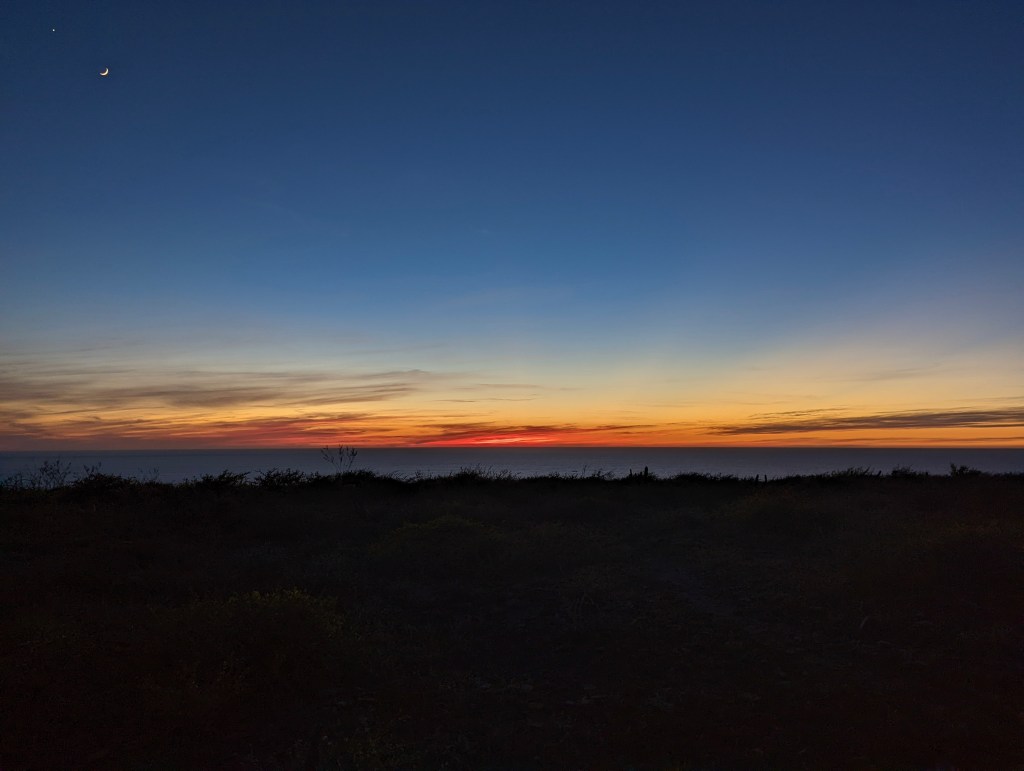
The ride home consisted of gazing thoughtfully out the window into the dark night, listening to a mix of Ozzy Osbourne and Mexican music. Leaving the comfort of the resort is always worthwhile. Today’s adventure had netted me not only a lot of new information about the history and culture of the area, but an excellent little workout for my neglected little bod.
Danny provided front-door service back to our villa. “Do you know this is the Hollywood of Mexico??” he exclaimed as we drove through the gates of the Pedregal neighborhood en route back to our ridiculously swanky digs. Oh yes. The poshness of our resort was the one thing we did know at the beginning of this day.
To bed, then, to dream of crunchy fried avocados and a three-day trip Danny proposed that would take us out into the mountains among the Rancheros and up Sierra de la Laguna, the highest point in Baja California Sur at almost 7,000 feet. “Next time,” we said, and I can’t wait to make that happen.
 Thither & Yon