[July 21, 2021]
Our first day in Lassen Volcanic National Park had been unexpectedly perfect. Even though we were within less than 50 miles of four different wildfires, including the Dixie Fire, the wind had shifted in just the right way to keep our day almost entirely clear and beautiful.
We did not get quite so lucky the next day. We could smell the smoke in the air before we even left our hotel room, and as we trundled down the highway toward the Butte Lake entrance to the park, it became apparent that this would be a completely different kind of day.
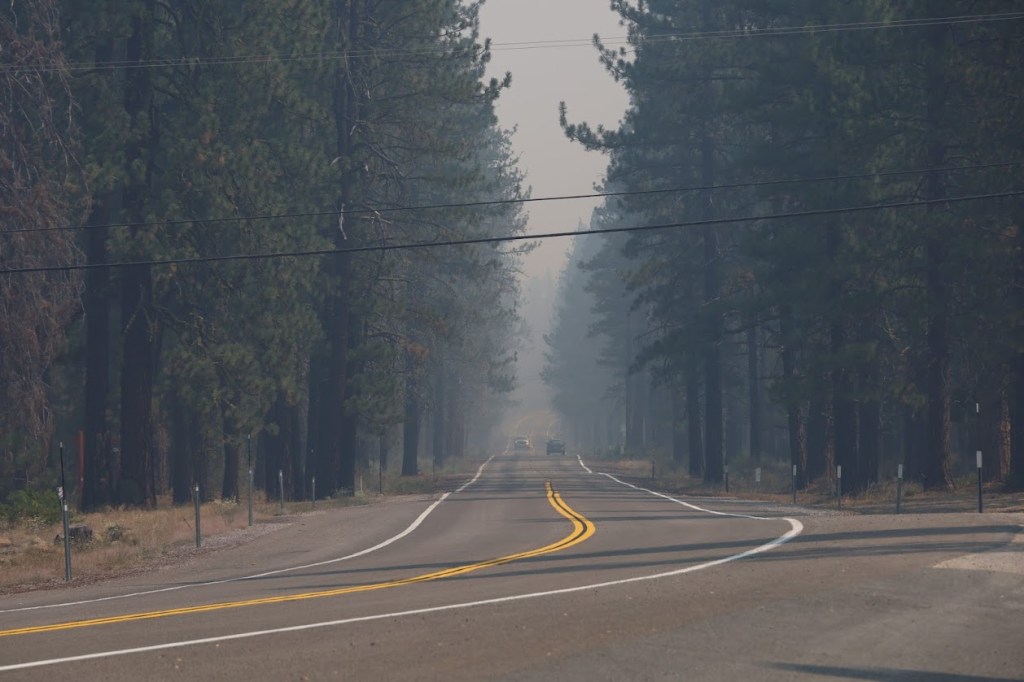
This had also been the day we planned to camp in the backcountry. We were ready to go – the bear cannister had been rented and our bags were packed. A 13.5-mile hike had seemed like a good idea when I was planning, but my burning eyes suggested it might be time to reconsider – even though Lassen was the only park that had made us pay to rent a bear canister. Ten whole dollars down the drain!
We headed to the Cinder Cone trailhead with the same “let’s just see” attitude that had worked out so well yesterday at Lassen Peak. Rather than strap on our big packs and head out into the smoke, we decided to travel light and see how it went. We could always come back for the big packs and camp closer to the trailhead than originally planned. Lassen’s permitting system is more “choose-your-own-adventure” than most parks, which meant we had a lot of flexibility.
Today’s goal was to climb Cinder Cone, a big, crumbly volcanic crater in the northeastern corner of the park. From there, we would also have views of the Painted Dunes, a super-cool formation of cinders sporting rings of rich mineral colors. These were two of the sites I reeeeally wanted to see in Lassen, and as they could be found only two miles down the trail, it seemed like they should be manageable without suffocating on the rather crunchy air.
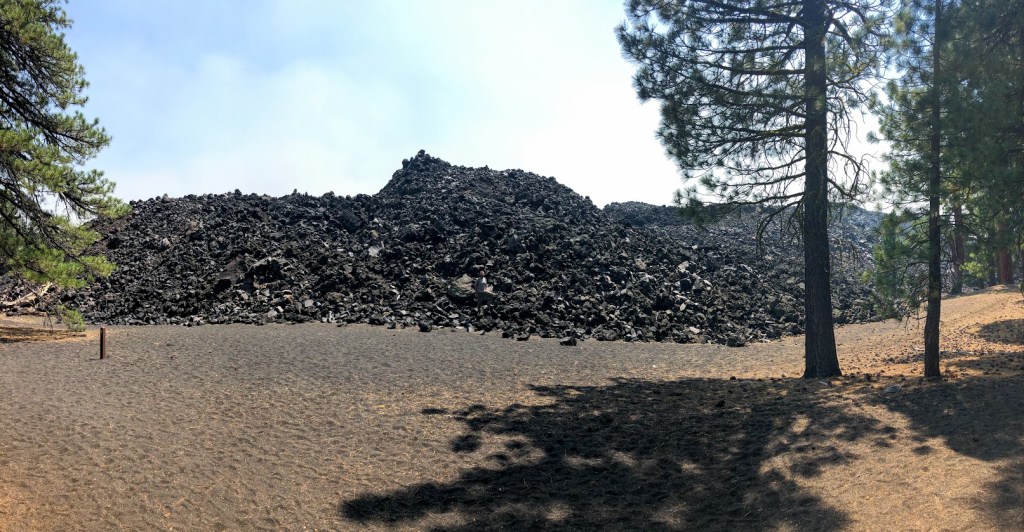
Mile one led us along the side of the Fantastic Lava Beds (I didn’t even make that name up), a flow of a’a lava that looks brand new but probably arrived during a series of eruptions in the late 1600s. The volume of rock laid down boggled my mind. I tried to imagine it as it was born: a hot, living monster creeping across the forest, bowling over and burning everything in its wake. My imagination failed me.
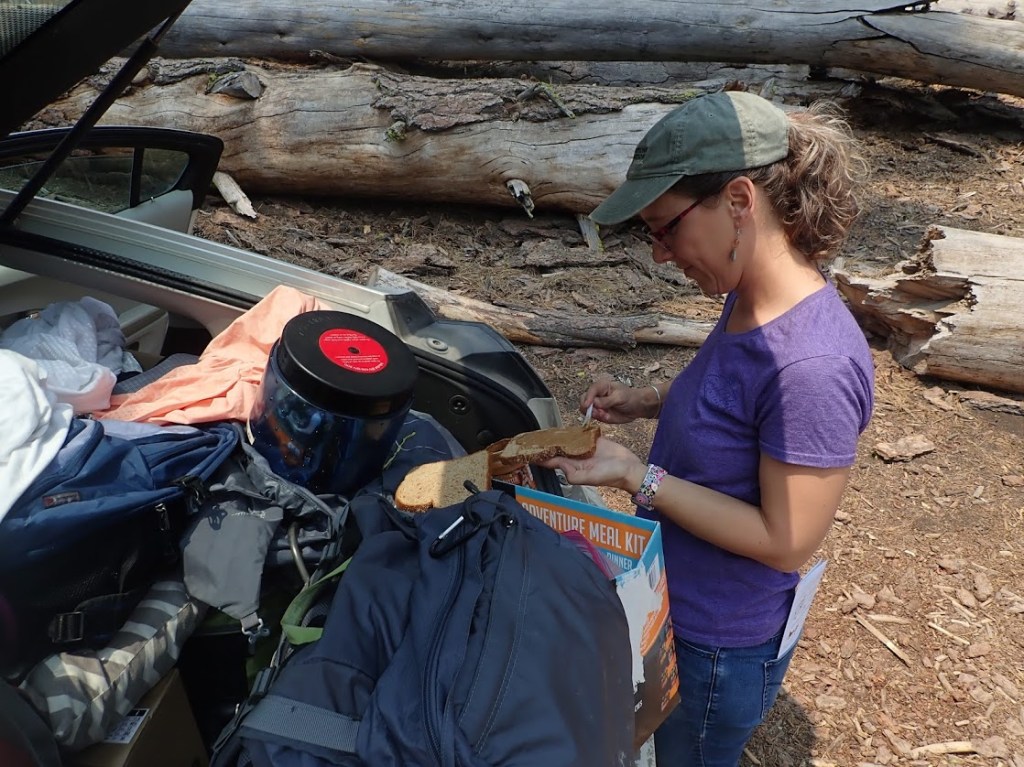
The day was a piping hot 95 degrees by the time, idiots we, we got around to starting our hike. The picnic lunch would obviously have to be consumed in the shade before we tackled Cinder Cone, a necessary fortification against what was sure to be a grueling ordeal.
As we sat and munched our sandwiches, a young family came by, heading back toward the trailhead. A young boy, let’s say 8 years old because I think they’re all 8 years old, bounced ahead of the others.
“Which way are you going??” he demanded as if we weren’t totally random strangers. We pointed up the trail, to where we could just see the base of Cinder Cone.
“You’re almost there!!!” he said, hopping gleefully from foot to foot.
“Hooray!” I replied.
“Oh, but then you have to climb a big mountain,” he added with a frown, a total afterthought.
“Why didn’t someone tell us that before we started?” Dustin moaned.
“It’s not that bad,” the boy assured us.
The family moved on and I giggled happily. “It must be wonderful to be eight,” I said to Dustin.
Then we ran out of sandwiches and there was nothing for it but to get back on the trail and tackle the beastie. And oh! is Cinder Cone a beastie. Rising 700 feet above its surroundings, it is in no way the tallest thing we had climbed or would climb on this trip, but it is pure cinder. If you’re not sure what that is, imagine a 700-foot pile of sharp-edged gravel and you’ve basically got the idea. This thing is not solid. The eruption that produced it was basically a fountain that spouted droplets of molten rock instead of water.
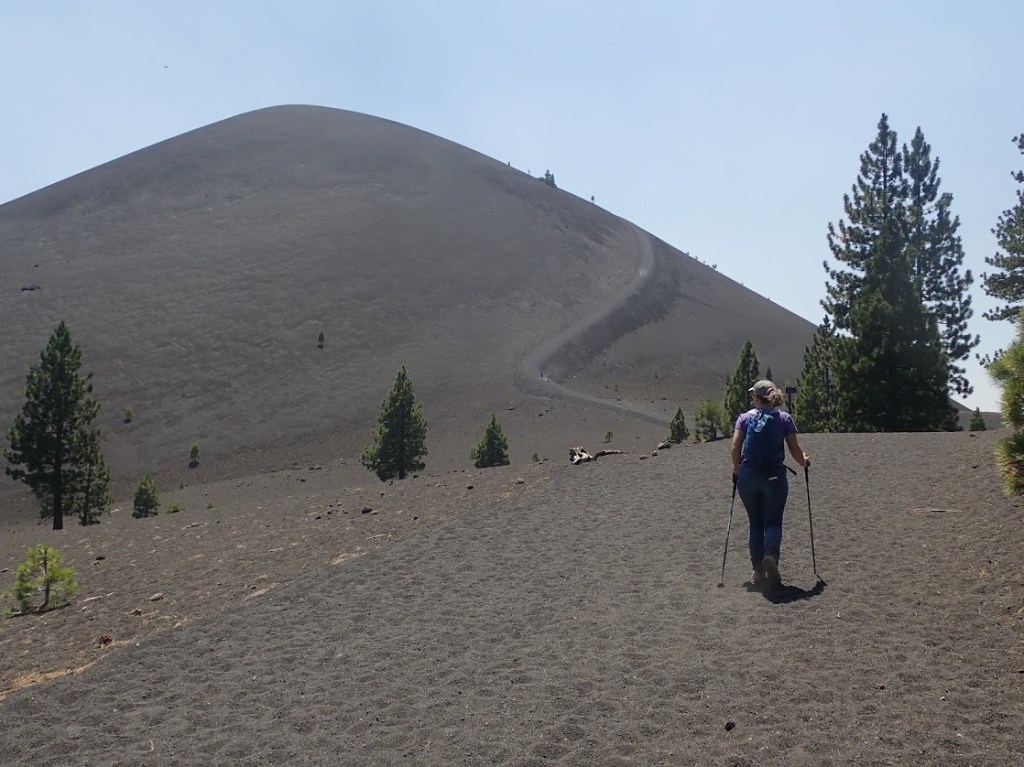
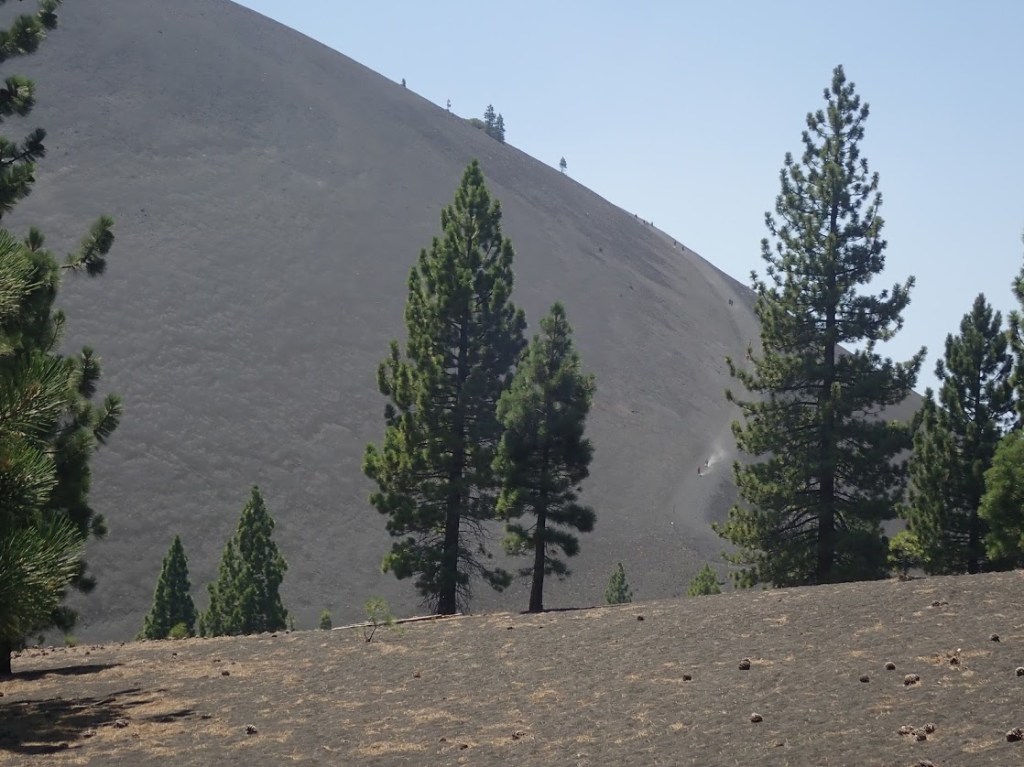
“This is going to be demoralizing, isn’t it?” I asked Dustin. Last spring, we had made a visit to Vermillion Cliffs National Park, where a BLM employee described hiking for miles in sand as a “demoralizing” activity. I had not found the hiking in that park to be so terrible, but a few weeks later we had climbed up some immense sand dunes in Great Sand Dunes National Park and that had passed well beyond demoralizing into straight-up soul-sucking. Hiking on ground that will not stay put is hard.
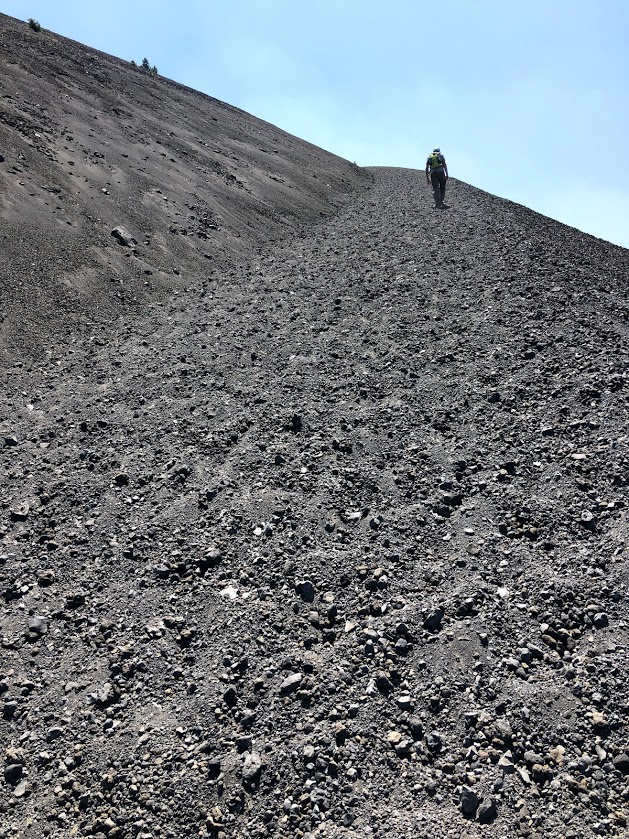
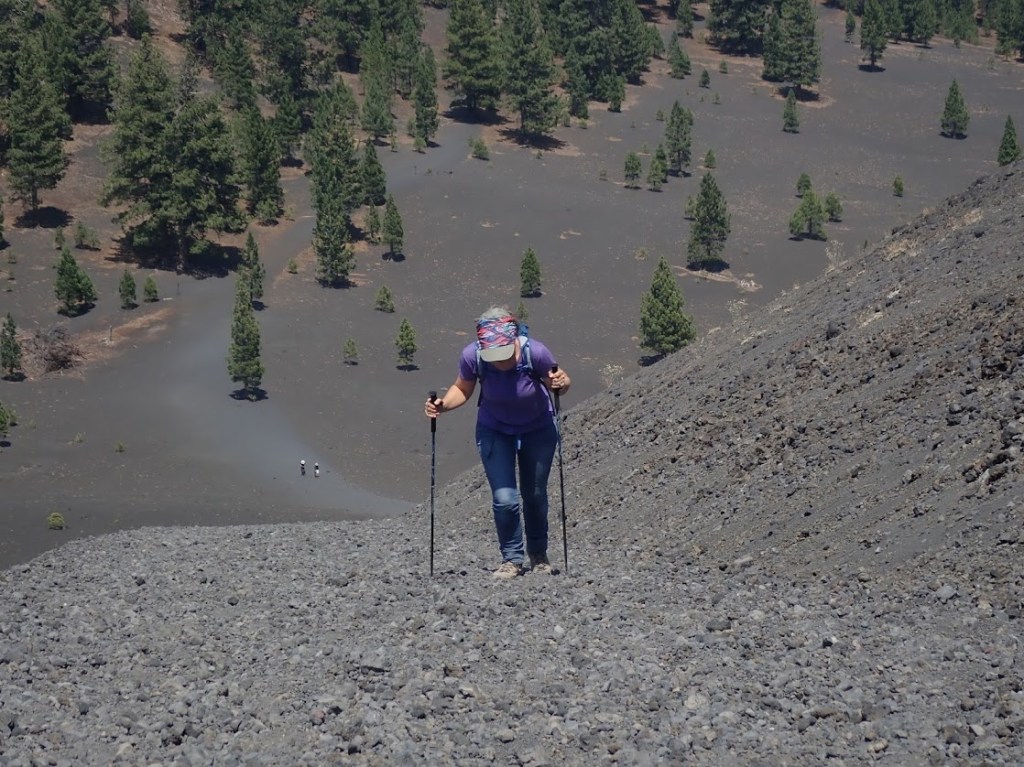
One foot in front of another, again and again. I could not refrain from checking my watch every few minutes to see how many feet of elevation I had put behind me. I celebrated every twenty feet. Climb twenty feet enough times and somehow you get there. I was grateful not many other people were idiotic enough to start this climb in the hot heart of the day, which meant at least I wasn’t being passed by every other tourist in the park.
My watch barely registered 500 feet gained when I came around a corner and discovered – not an additional 200 feet left to climb – but the top of the cone. I’ve never before blessed my watch for its unpredictable inaccuracy. This was the best surprise I’d had all day.
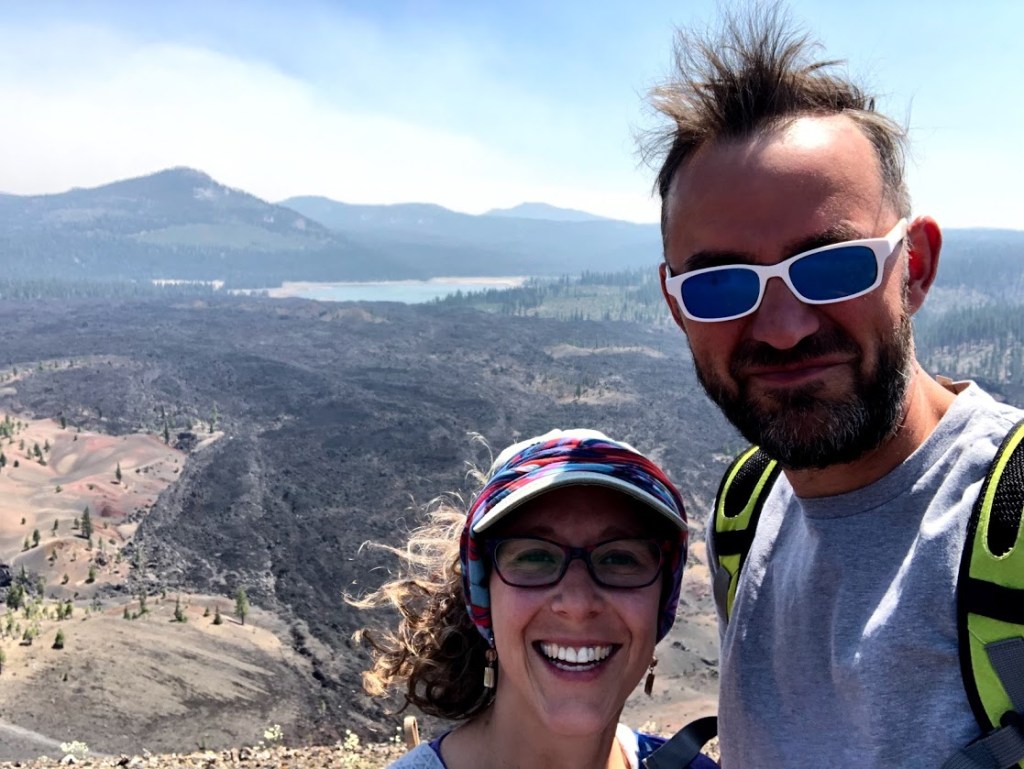
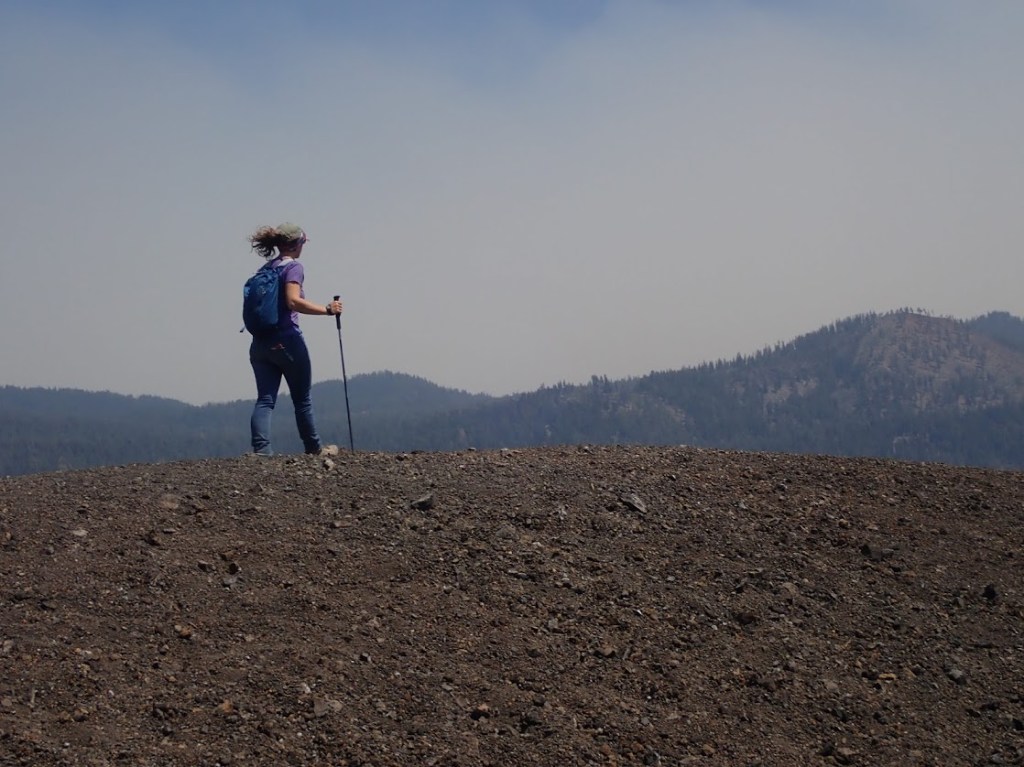
The views from the top were worth all those miserable, tiny steps up. The cone had a double crater, which I had never seen before, and it was super cool. We elected not to follow the path to the very bottom. Being able to claim we had done it would have been great, but what goes down into a cinder crater must come back up out of that cinder crater, and I had had my fill of climbing cinder slopes.
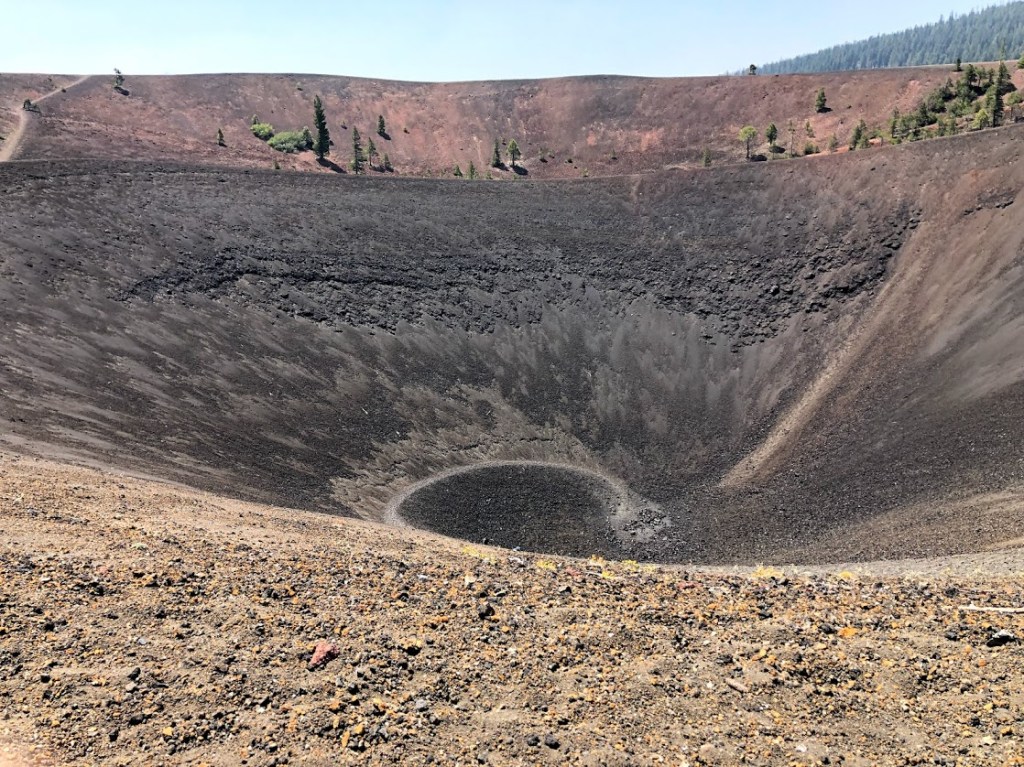
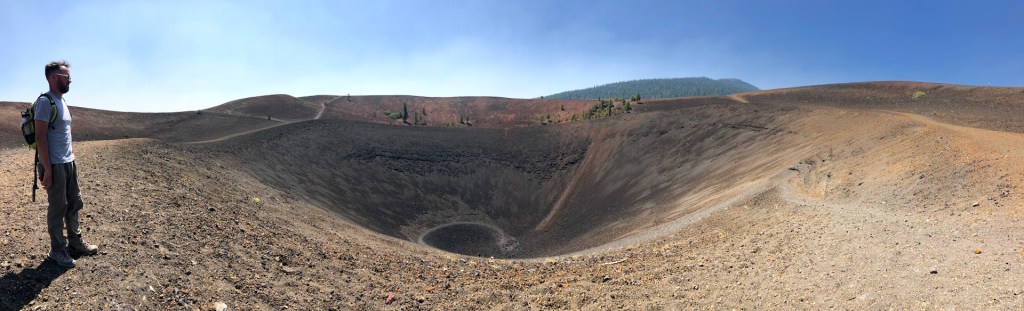
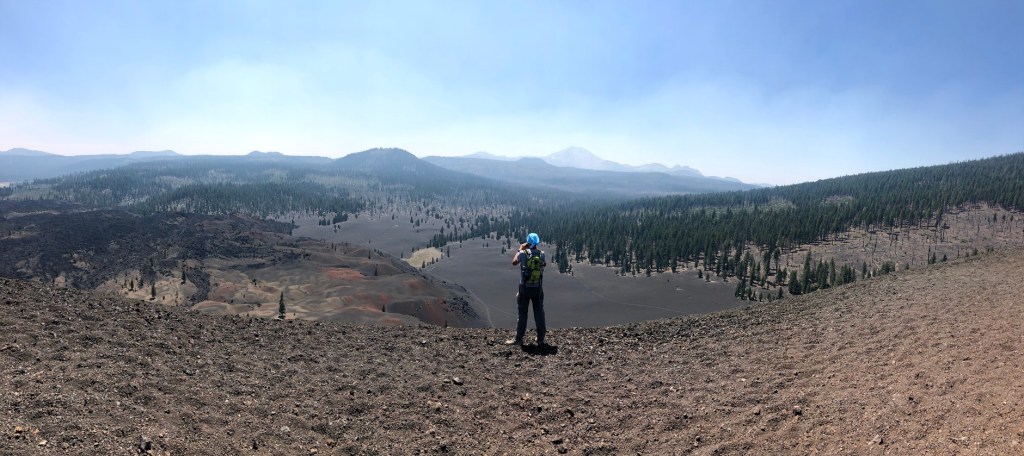
To the south we could see the Painted Dunes, blushing prettily in between waves of bleak black lava flows. They weren’t quite as colorful as some of the highly enhanced photos online had suggested, but as works of nature they were incredibly cool.
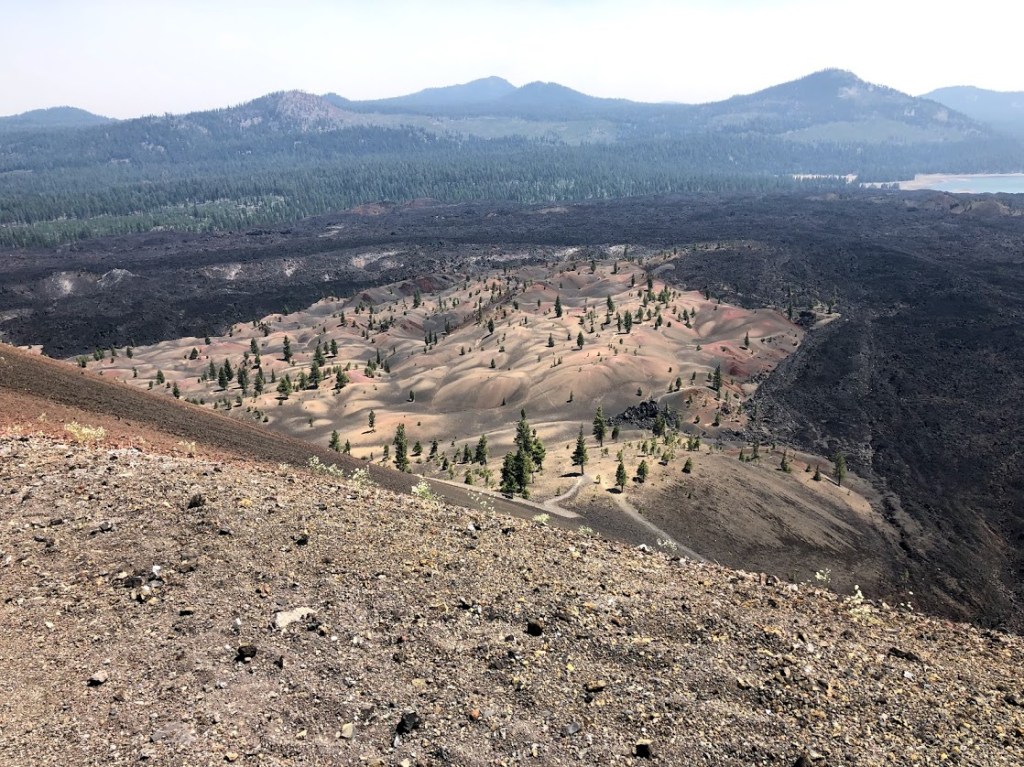
We made laps of both the inner and outer craters before choosing the southern path down, a path which would extend our hike but give us a close-up view of the Painted Dunes. Our 700-foot climb had been enough to pull us a little above the smoke, so we were feeling pretty good and an extra mile or two didn’t seem like such a bad idea.
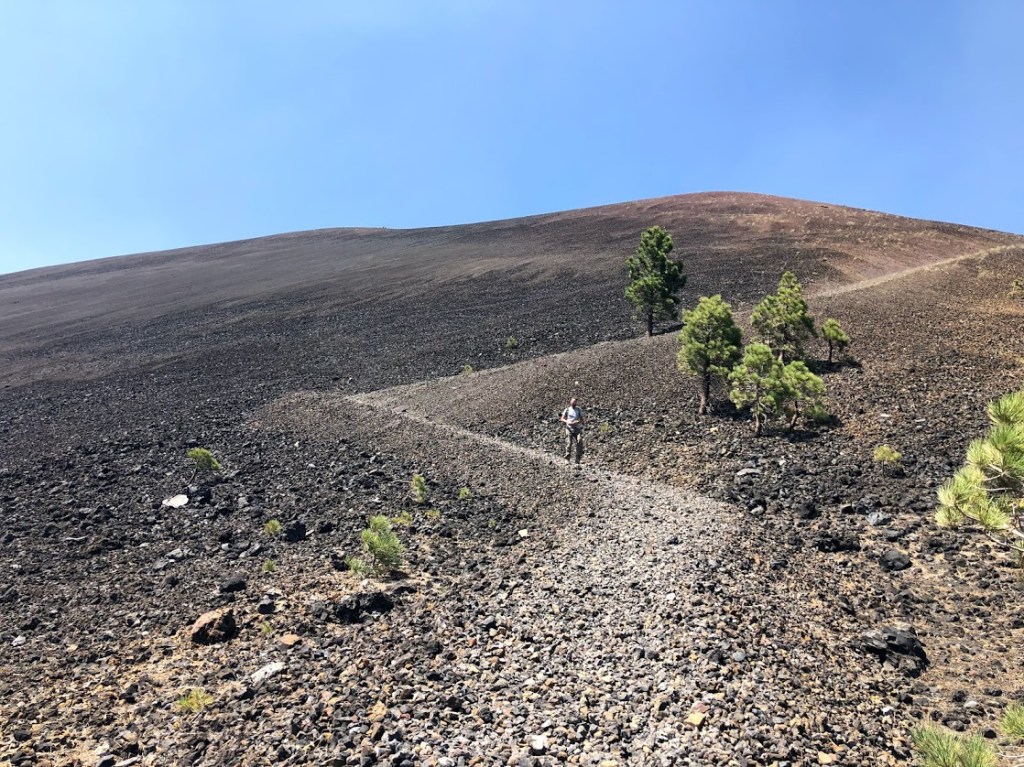
Walking down a cinder slope is an absolute treat. When you go up, you take short steps and lose about 50% of the elevation you gain on any single step as the cinders sink away beneath you. Going down, that same sinking action nets you an extra 100% or so per step, especially if you get going at speed. I guess going down is the reward for having gone up. It took us a total of about five minutes to descend the 700 feet.
The Painted Dunes were even lovelier up close, though you could see where some knobhead had decided to trample all over them, leaving foot paths that will probably remain for the rest of eternity. Stay on the paths, kids, so the rest of us don’t want to clobber you.
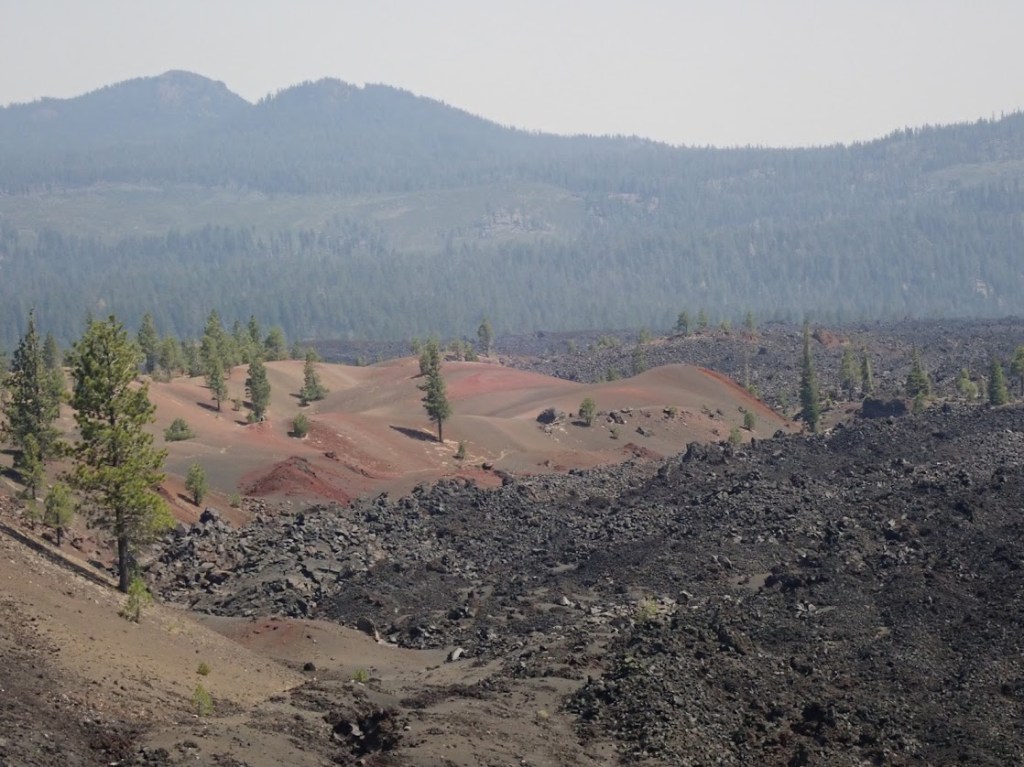
And then I realized that the southern path let us off at a very noticeably lower elevation than the northern path would have done. Thanks to this detour, I’d have the dubious pleasure of climbing more cinder slopes. These were nothing when compared to the incline of the cone itself, but up is up, and once you’ve conquered the Mother and thought you were done… well, this is when the demoralization really set in.
“It’s too soon to be demoralized!” Dustin told me when I stopped at the bottom of the slope and wailed in despair.
“The whole hill is still ahead of us!” I moaned. “It’s the best time to be demoralized.”
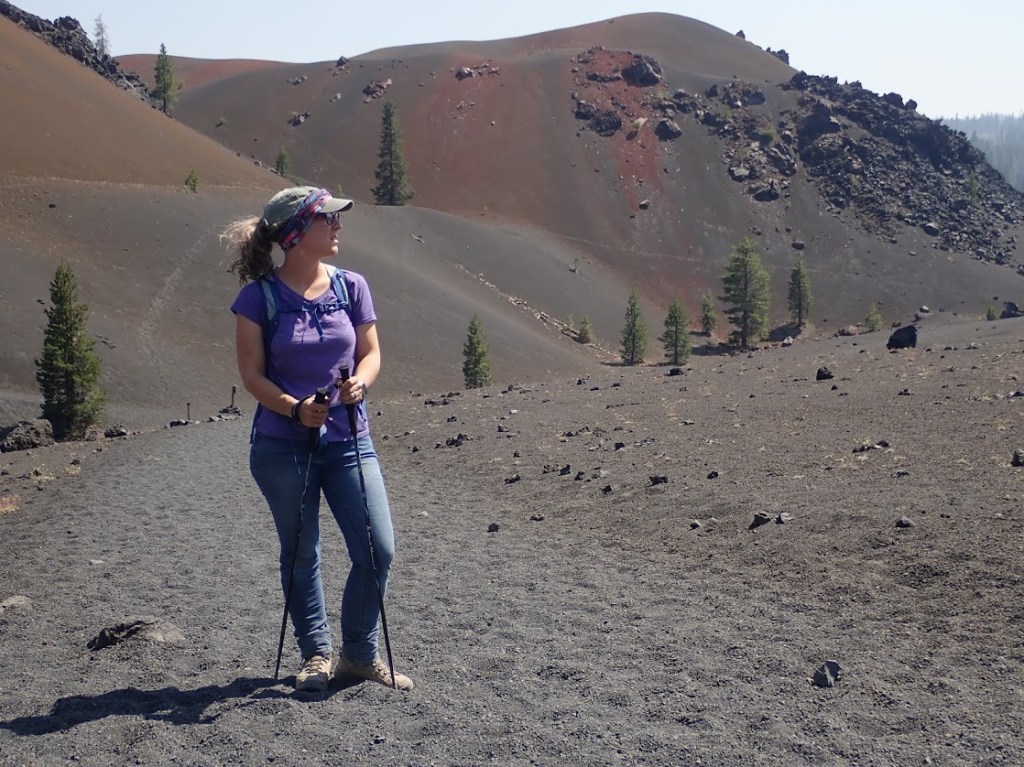
Cinders or no cinders, I somehow always seem to make it to the ends of these trails.
Not much had changed with the smoke by the time we’d returned to the trailhead. I regarded our $10 bear cannister woefully, but we decided to forego our evening in the backcountry. Clearer country called us from the California coast, and we were happy enough to get a head start.
 Thither & Yon
2 thoughts on “Lassen Day 2: in which we are finally chased out by the smoke”