Thanks to the extra miles we piled on yesterday, the elevation gain on this lovely fourth day of our hike would be fairly negligible. Our starting point at Sunset Lake clocked in at 9,659 feet, and we would top out for the day and the trip at Hurricane Pass, a mere 800 feet higher.
Still, that ridge stretching up above us offered plenty in the way of intimidation, and we’d had no morning moose to cheer us on.
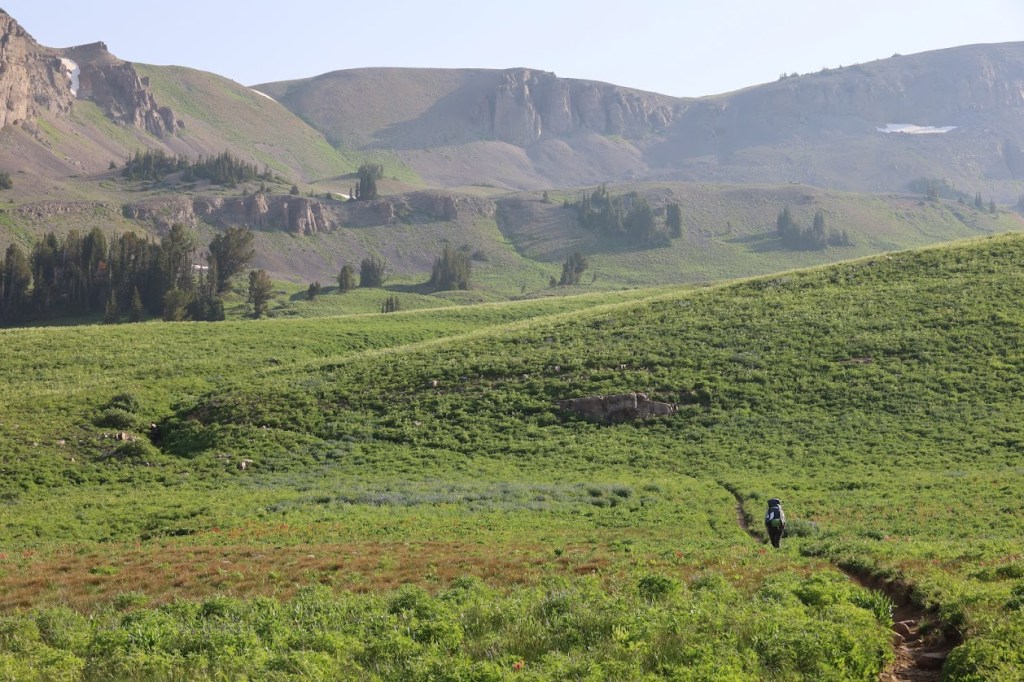
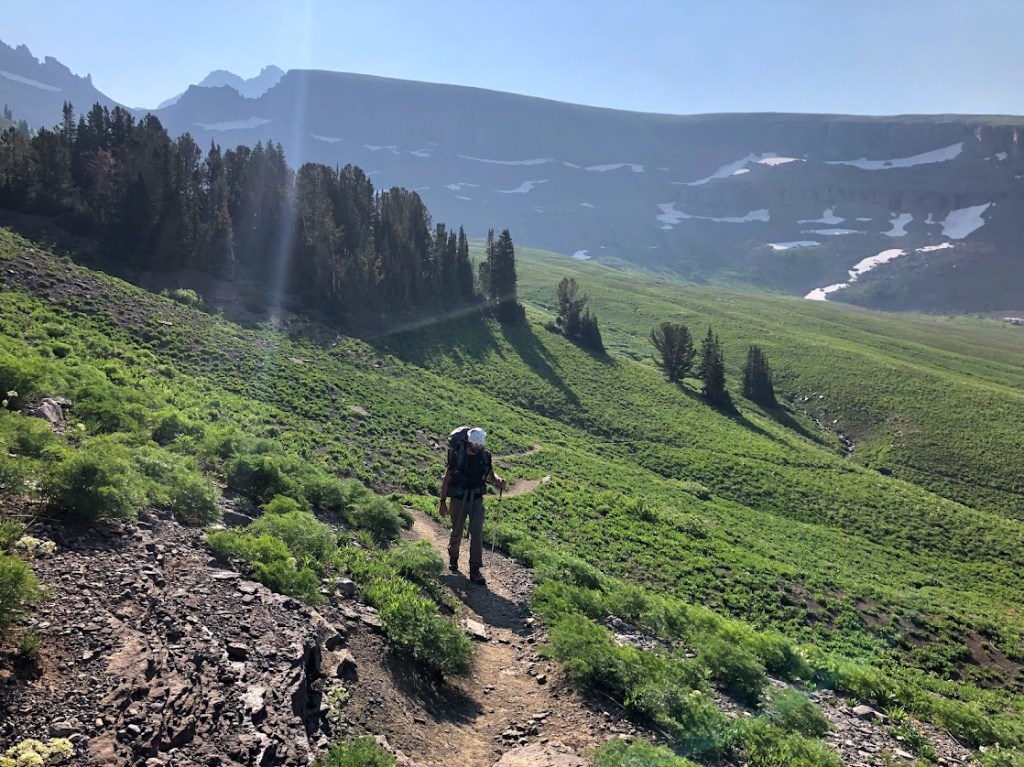
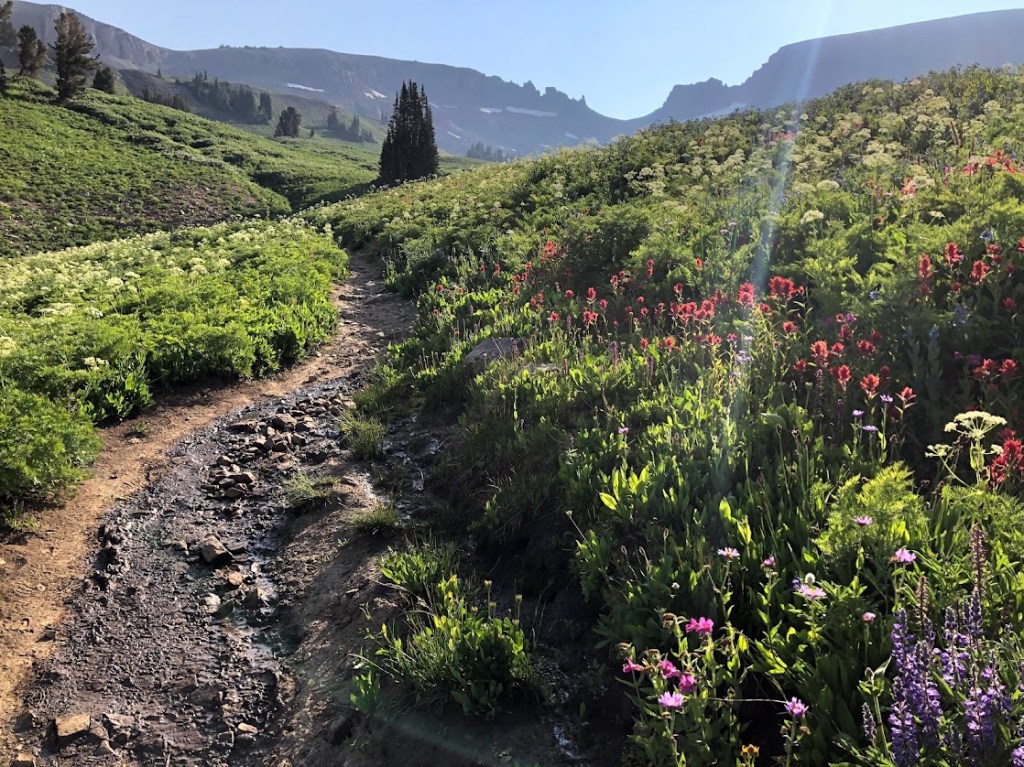
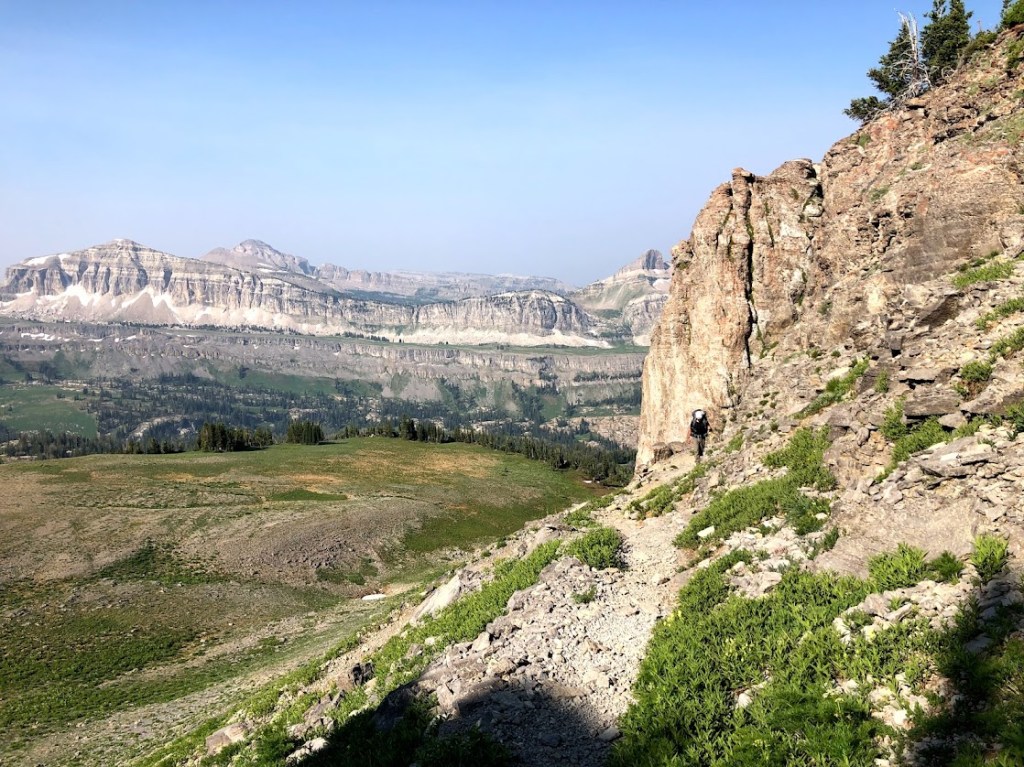
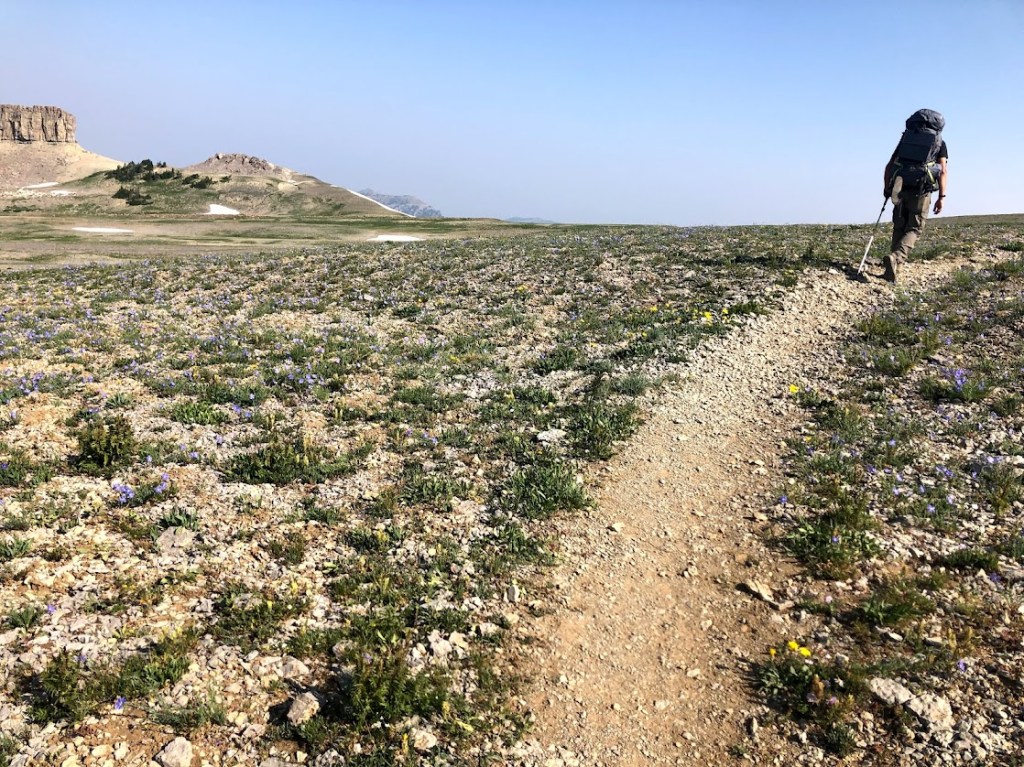
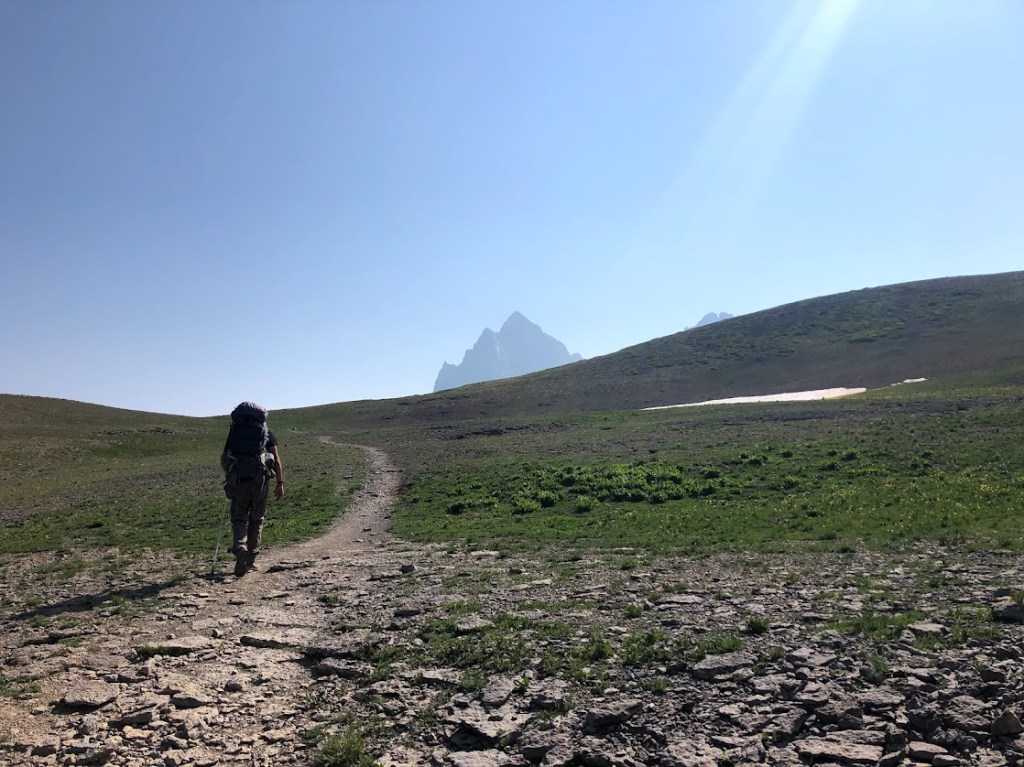
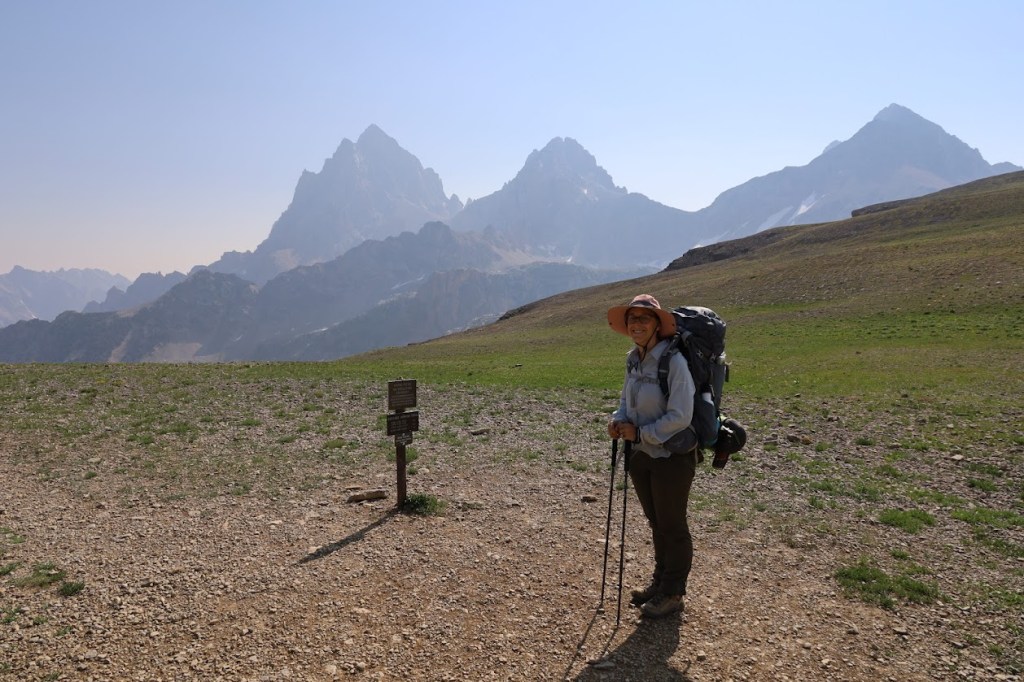
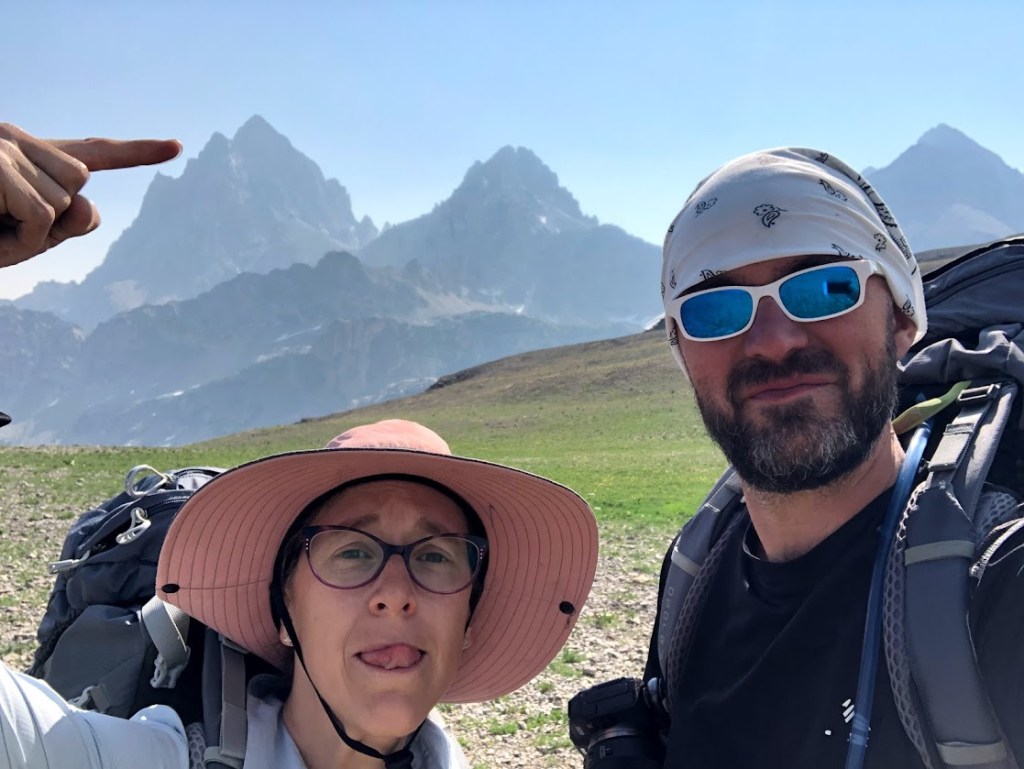
I love climbing to high places. Or no, “love” is not exactly the right word. I love having climbed to high places, and I love sweeping views. While I could admire the Grand Teton from our perch at Hurricane pass, however, I knew its 13,770-foot summit would never be on my personal list. I certainly enjoyed being Grand-adjacent, though, just as I look forward to some day being Everest-adjacent. And at 10,400 feet, Hurricane pass was already one of our highest-altitude accomplishments, and had required more than 5,700 feet worth of cumulative elevation gain over these past four days. We had earned our swig of summit victory whiskey.
Hurricane Pass’s allure was not only the elevation accomplishment, or that we’d be going almost entirely downhill for the rest of our trip, but that just after the pass, we expected to find Schoolroom Glacier. My love of glaciers had begun in Iceland, five years previous, and collecting as many as possible had become a travel goal
Schoolroom Glacier did not, however, appear where I expected it to be and I began to fear that global warming may have gotten to it before I did.
Then we started descending properly into the south fork of Cascade Canyon, and lo! My glacier did appear. It clung to the side of the pass, draped over the steep slope like a giant, fluffy cloak. It wasn’t enormous, but it was big, and had several very proper crevasses. Better even yet, it had its own lake and it was exactly the color a glacial lake should be.
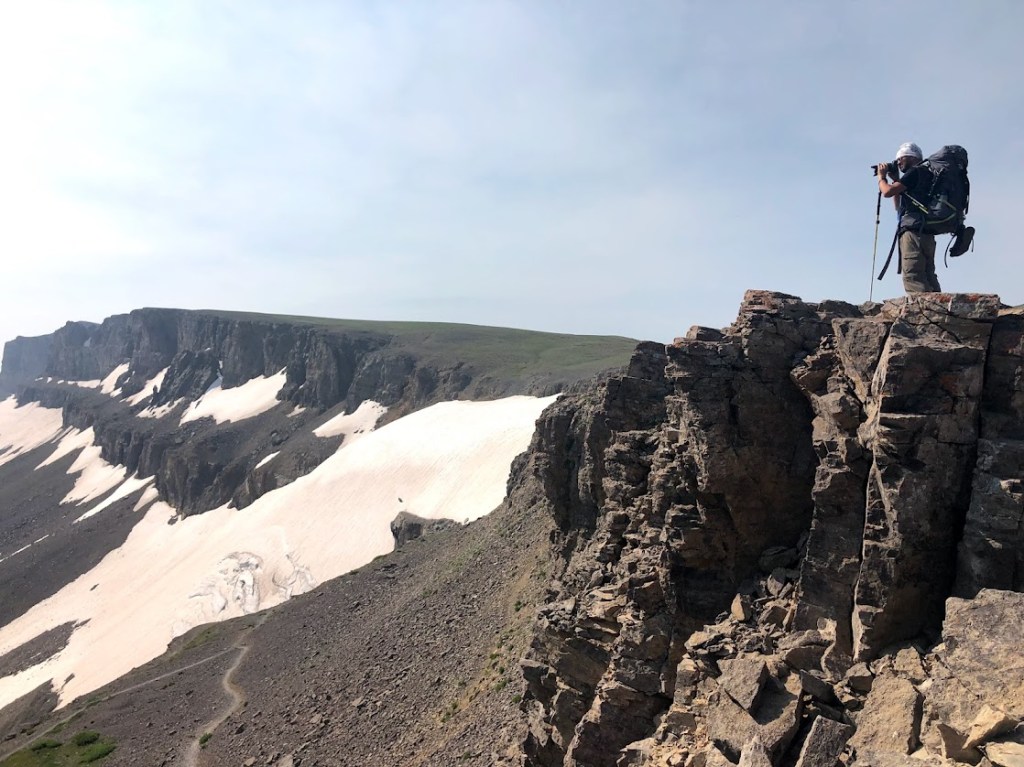
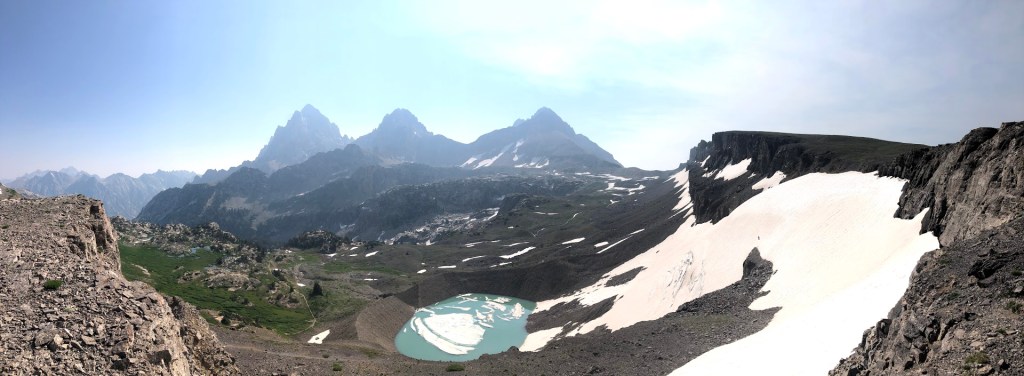
I squeeeed and went scrambling off to find a way to get my hands on it. Seeing a glacier is fine, but I want to touch them. Standing on them is preferable, but this one’s slope did not accommodate that desire. No problem. I could be flexible.
A short spur trail (sanctioned, as far as I could tell) led to the mid-point of the glacier’s vertical slope. I trotted down it like a pika on a mission, shedding my pack when the path disappeared and uneven boulders took its place.
“Have fun,” Dustin hollered after me. Those two words contained worlds of doubt as to the wisdom of my choice, but I saw nothing precarious about my route except for the footing. Anyway, if Dustin stayed behind he could be my action photographer.
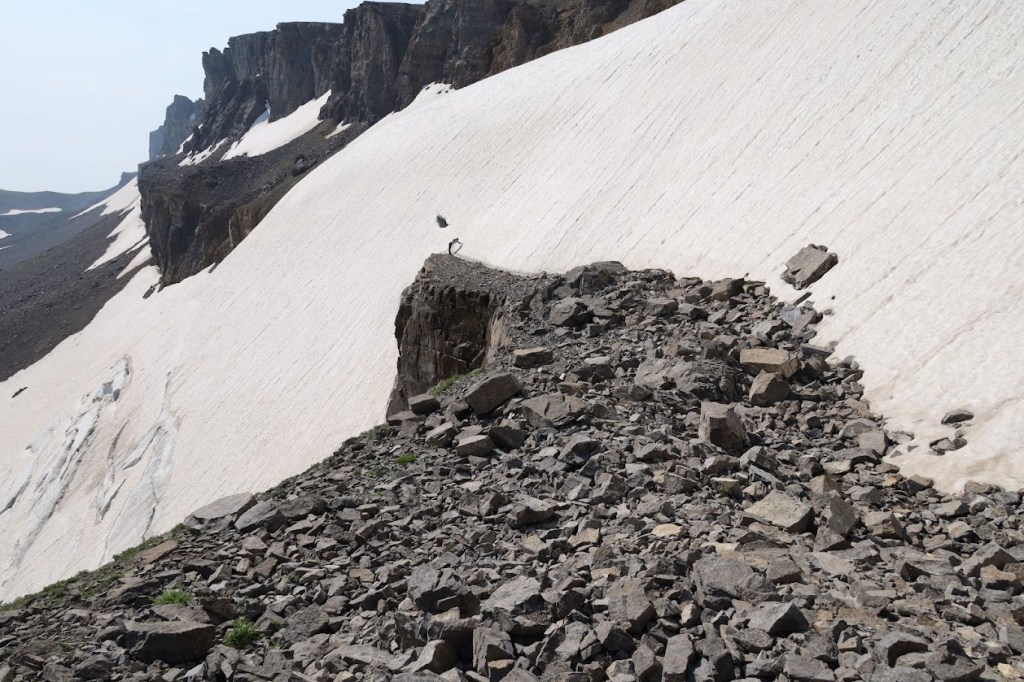
As I got out to a point where I was surrounded more by ice and snow than rock, I expected to hear the glacier making some kinds of glacier sounds. Groaning, perhaps, or some kind of low-key grinding as it did that glacial weathering thing I’ve admired on so many rocks. Instead, it dripped. It was, afterall, the middle of July and the temperature was in the upper 80s. This was glacier recession time, not glacial earth-carving time.
I felt quite pleased with my glacier interaction nontheless. I picked my way back to Dustin, entirely unscathed.
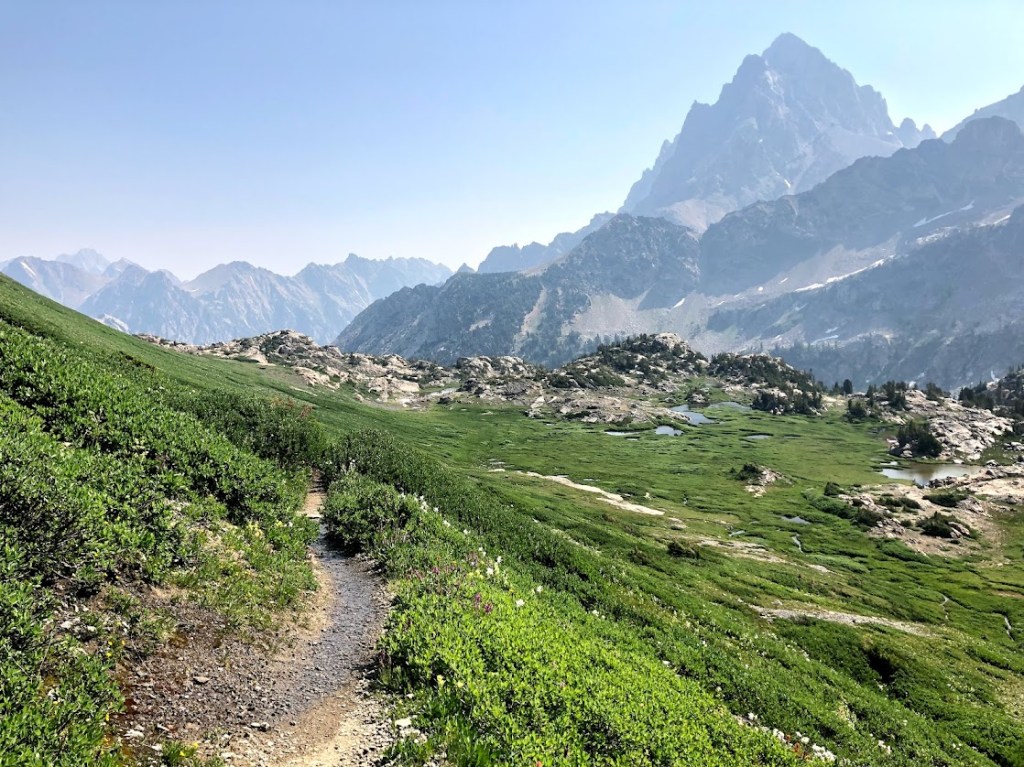
I rehoisted my pack and we made our way back to the path, then down to the bottom of the glacier where another spur path led out to its lake. Along this trail, we saw three backpacks that had been laid off the side of the trail, their owners nowhere to be seen. One of the backpacks seemed to be moving.
“Hey! You! Get off of there!!” Dustin had already lobbed a rock toward the furry backpack before I realized what was going on. The marmot stuck his head up to give Dustin a dirty look, then meandered sulkily off into the flowers.
“These hikers must have missed the ranger talk,” I said as we made our way back toward the lake. Dustin kept casting glances back, muttering about sneaky marmots already making another grab for the bags. For my part, I had started rehearsing ways to tell the unprepared hikers that their bags were being rummaged by marmots. I maybe shouldn’t have, but I was really looking forward to delivering that message.
We arrived at the lake. It was stunning – and empty. No one else was there.
“Where’d they go?” I asked. The spur trail dead-ended at the glacial lake. “Swimming?”
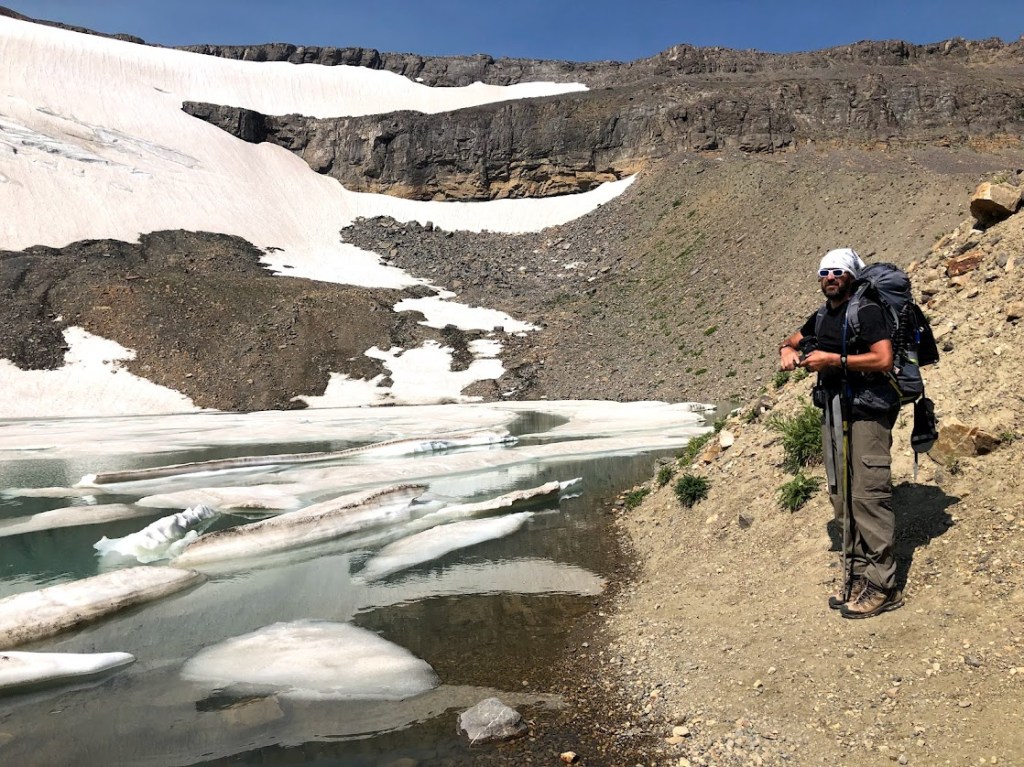
We admired the turquoise water full of bobbing mini-icebergs, took our photos, and headed back out. No hikers appeared in or around the lake, nor did I see anyone cavorting in the wildflowers in the meadows around us.
The backpacks came back into view, just where we’d last seen them, except now they sported a marmot apiece. Three heads lifted to eye us as we approached. I joined Dustin in the rock-chucking this time. Neither of us wanted to hurt the marmots, but they couldn’t be encouraged to think people-stuff was a free buffet.
“Where are they?” I asked again, pointlessly. We had an excellent view out over the valley and not another soul could be seen. We tossed a few more stones into the grasses where the marmots had waddled off to, then left them to their raiding. Defending unprepared, missing hikers’ bags was not on today’s long-term goal list.
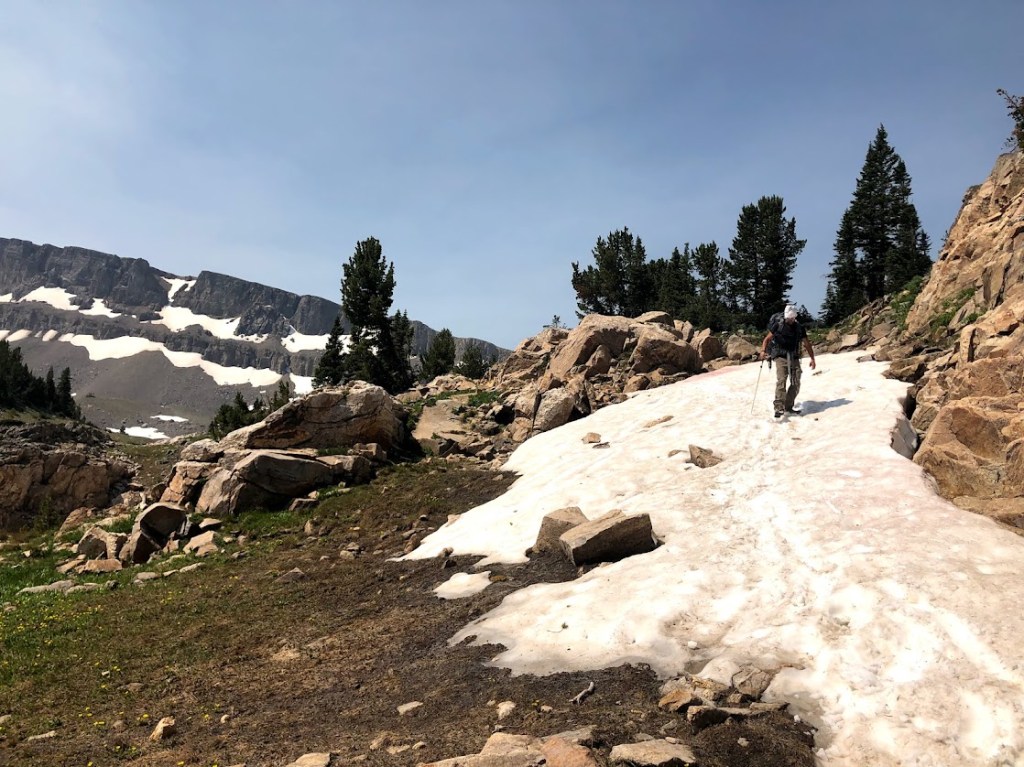
Having spent three and a half days going up, up, up, we now got busy going down, down, down. Waterfalls and cascades created by those little drip drips I had heard on the glacier raced us to the bottom.
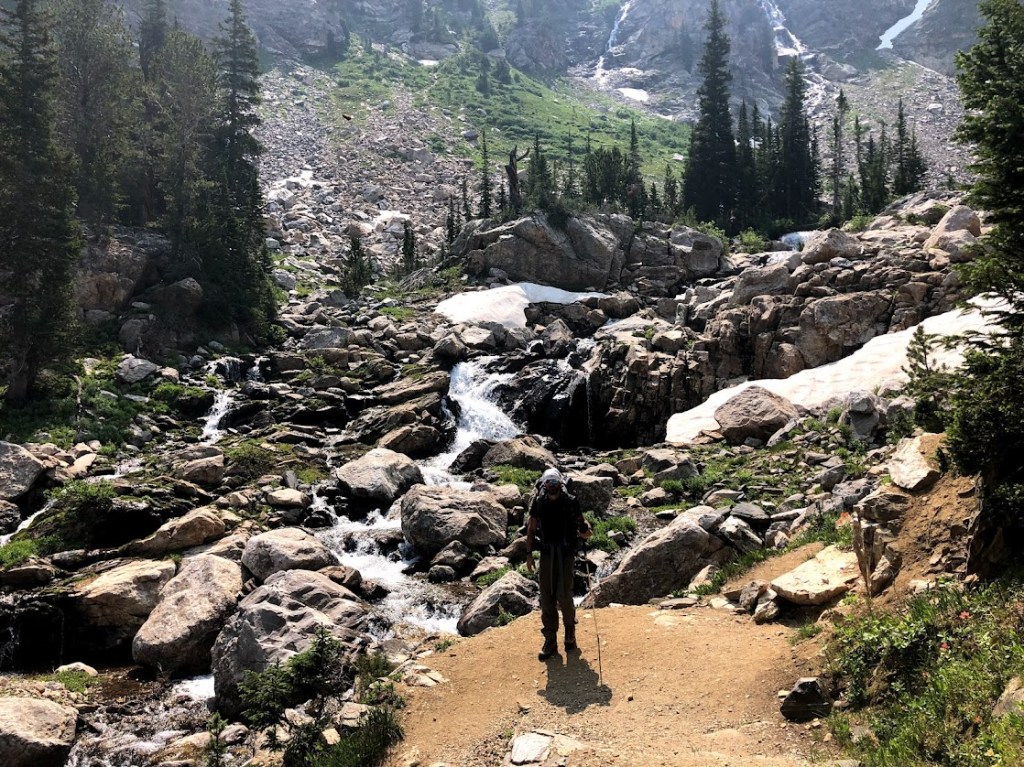
I forget, after spending so much time going up, how difficult down can be. My hiking poles did provide some assistance and knee relief, but by the time we arrived at the beginning of South Fork Cascade Canyon camping zone, our home territory for the evening, my feet had turned into stupid feet, too heavy to properly lift over the countless rocks and roots decorating our downward path.
We hoped to claim the farthest available campsite again. The day was young, and if we got our camp set up early enough, we could do a little extra exploring without our bags. As we passed one lovely campsite after another, though, our elevation dropping dramatically with every switchback, I began to worry that we’d reach the end of the zone only to discover all the campsites claimed, leaving us with no choice but to climb back up the canyon to one of the earlier sites.
Nah. It was barely past noon. The end of the camping zone offered four separate sites. Surely not all four could be claimed this early in the day.
Halfway down the zone, we crossed paths with an NPS ranger, out on his once-weekly trail patrol shift. “Best part of my week,” he reported. He would make sure any hikers and campers he encountered had proper permits, were following bear (and marmot) safety precautions as required, and that no one had decided to try getting away with a campfire.
“How far are you going today?” Dusitn asked him.
“As far as I can get in the next hour,” replied the ranger. Dustin proceeded to report the marmot-infested abandoned backpacks, just in case the ranger could do anything helpful once he got that far. In the excitement, I forgot to ask if he’d noticed whether all the low campsites were already taken, so we headed down again, still ignorant of our odds.
The odds turned out to be favorable if not perfect. We arrived at the final campsite just as another group was pitching their tents, so we did have to trudge back up the trail, but less than a quarter mile.
The campsite was gorgeous, of course, as any site located in this canyon could not help but be, but was less than ideal in every other way. Access to the rushing river was tricky, good separation of sleeping and eating spaces was all but impossible, and not a single close-branched spruce tree was suitable for hanging our gear. Fortunately, our supply of food had greatly diminished, leaving some space in the bear cannister for a few of our more fragrant personal items. The rest got slung over a half-fallen tree that we could only hope was still too steep a climb for a pudgy marmot.
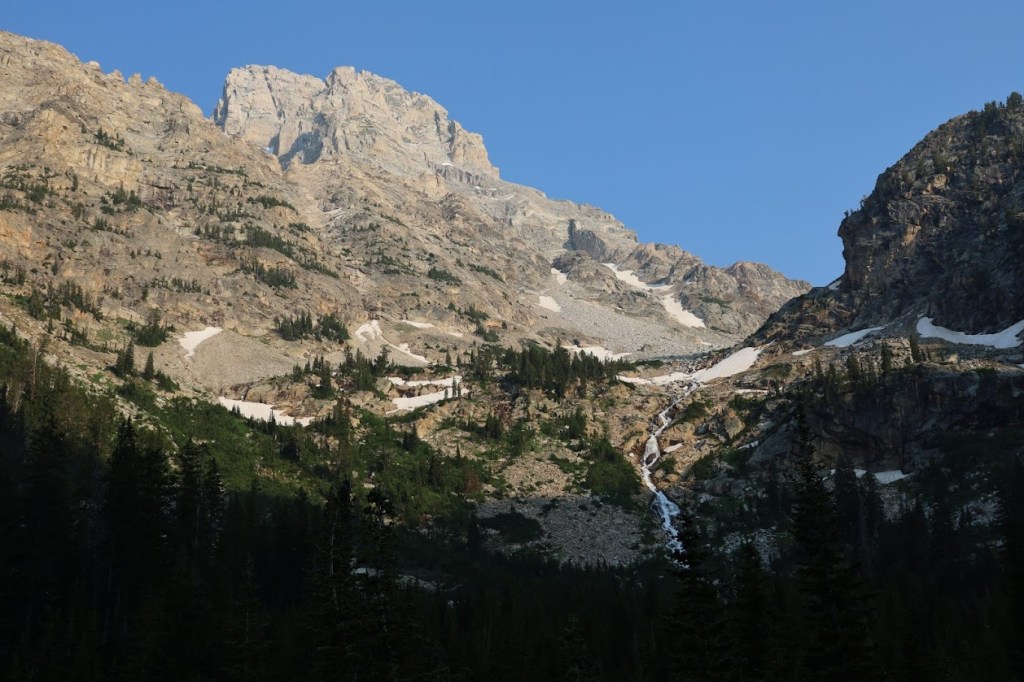
After setting up the tent and having a proper lunch, we considered our next move. We’d come 6.5 miles today, up 800 feet then down 2,300. Plenty of afternoon remained. Dustin was in favor of heading up into the north fork of the canyon, but four days of so much exercise found me less than enthusiastic.
“You should go,” I said. “Hike a bit, take some photos, and I’ll defend the camp from marmots.” This plan being agreeable to everyone, Dustin headed off into the woods. I settled in next to the creek with an ebook I’d downloaded to my phone with just such a scenario in mind and passed a lovely, marmot-free afternoon.
I had pouch-dinner all set up by the time he rolled back into camp a couple hours later. Dustin recounted his adventures (“more waterfalls!” “loads of unprepared hikers heading up to Paintbrush Divide!”), we watched the sun set, and then we tucked ourselves into the tent. Tonight we had left off the rain fly, as the drop in elevation meant the overnight temperatures should stay plenty high for comfort, and having a breeze was about the most wonderful thing in the universe.
 Thither & Yon