Saturday, April 24, 2021
TUMACACORI NATIONAL HISTORICAL PARK
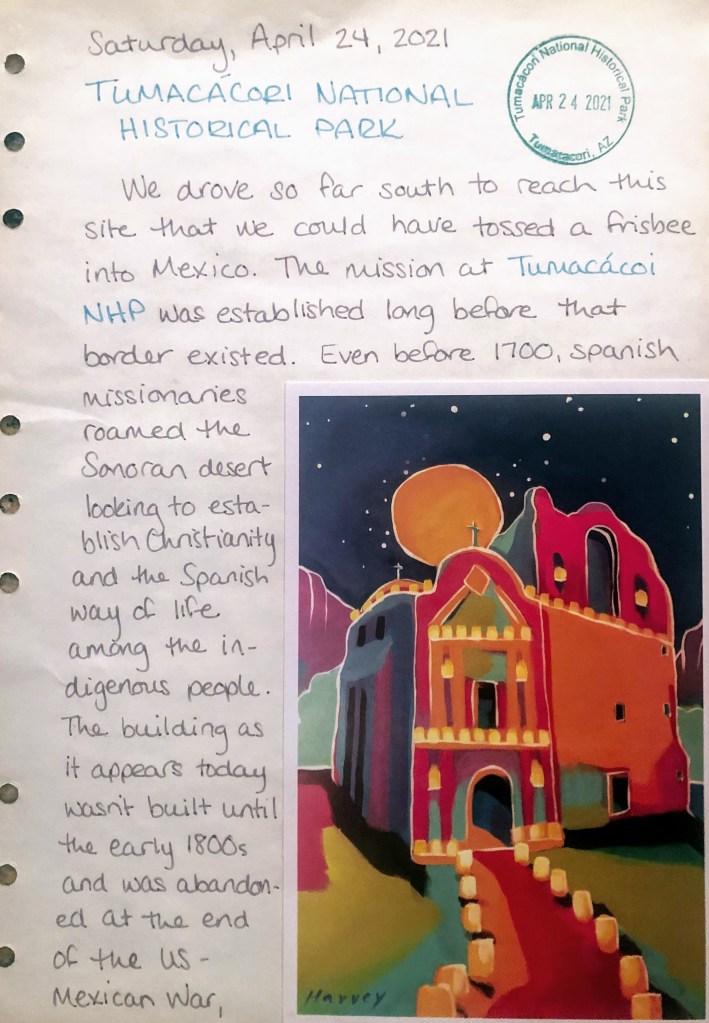
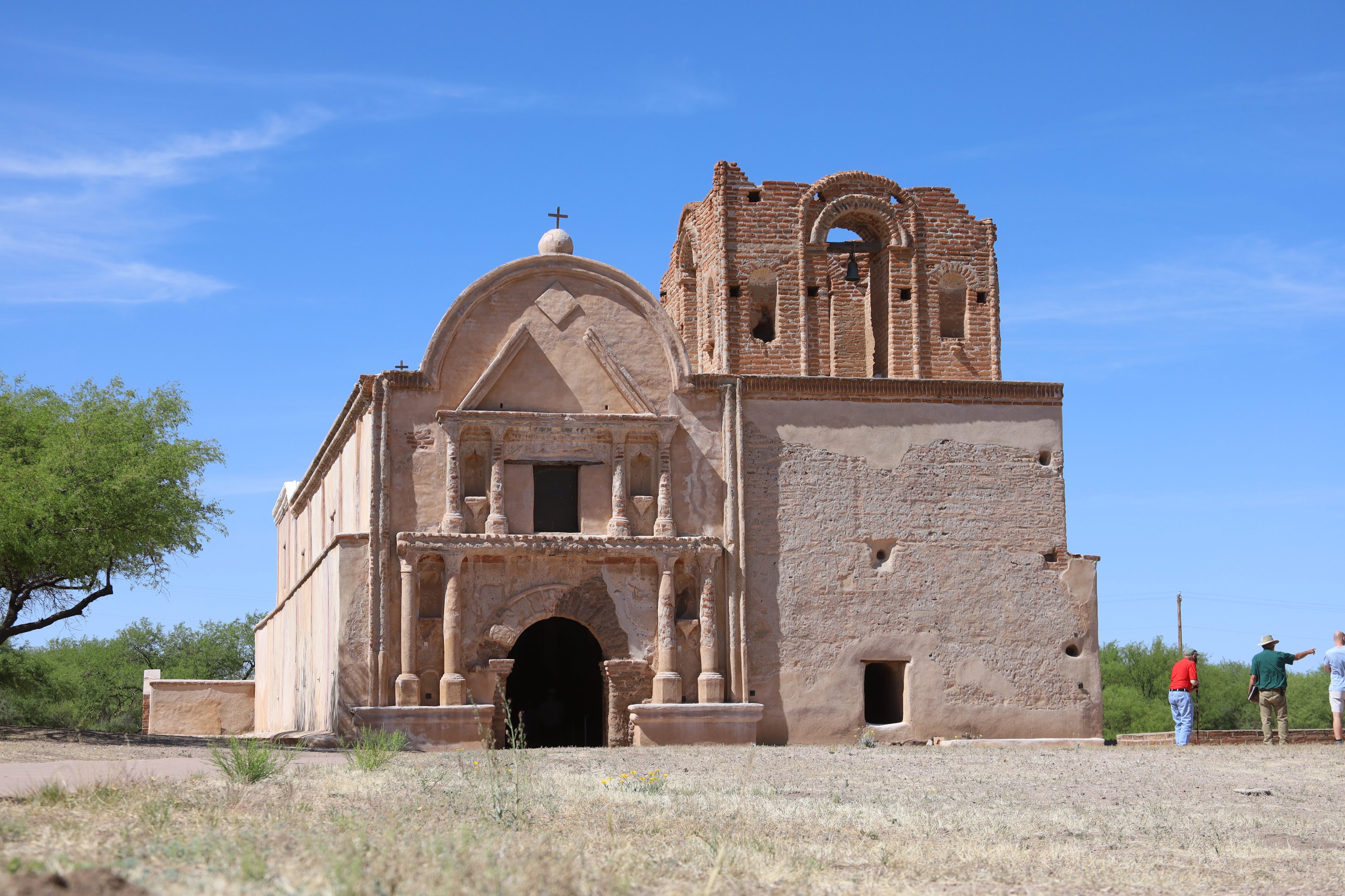
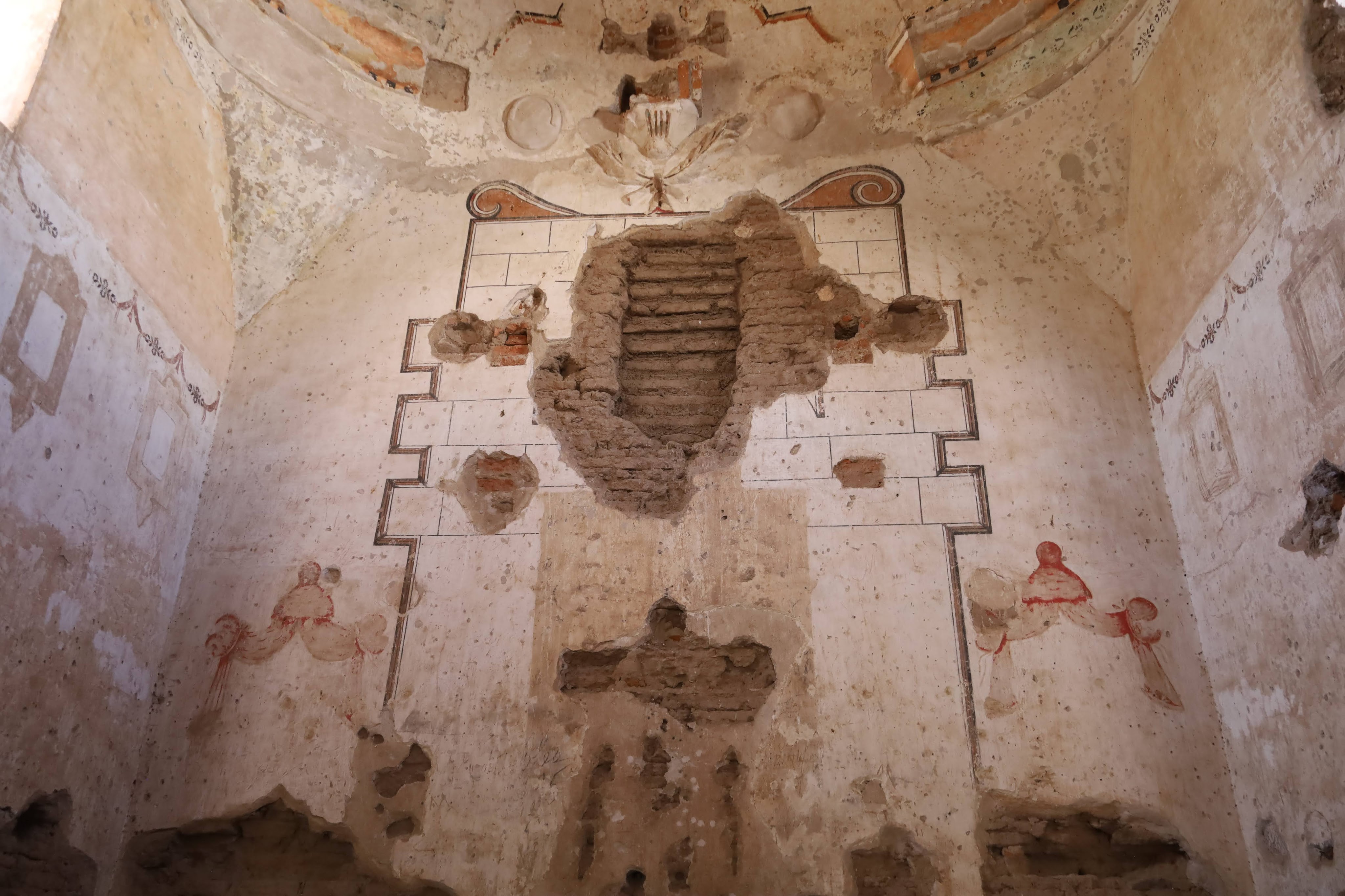
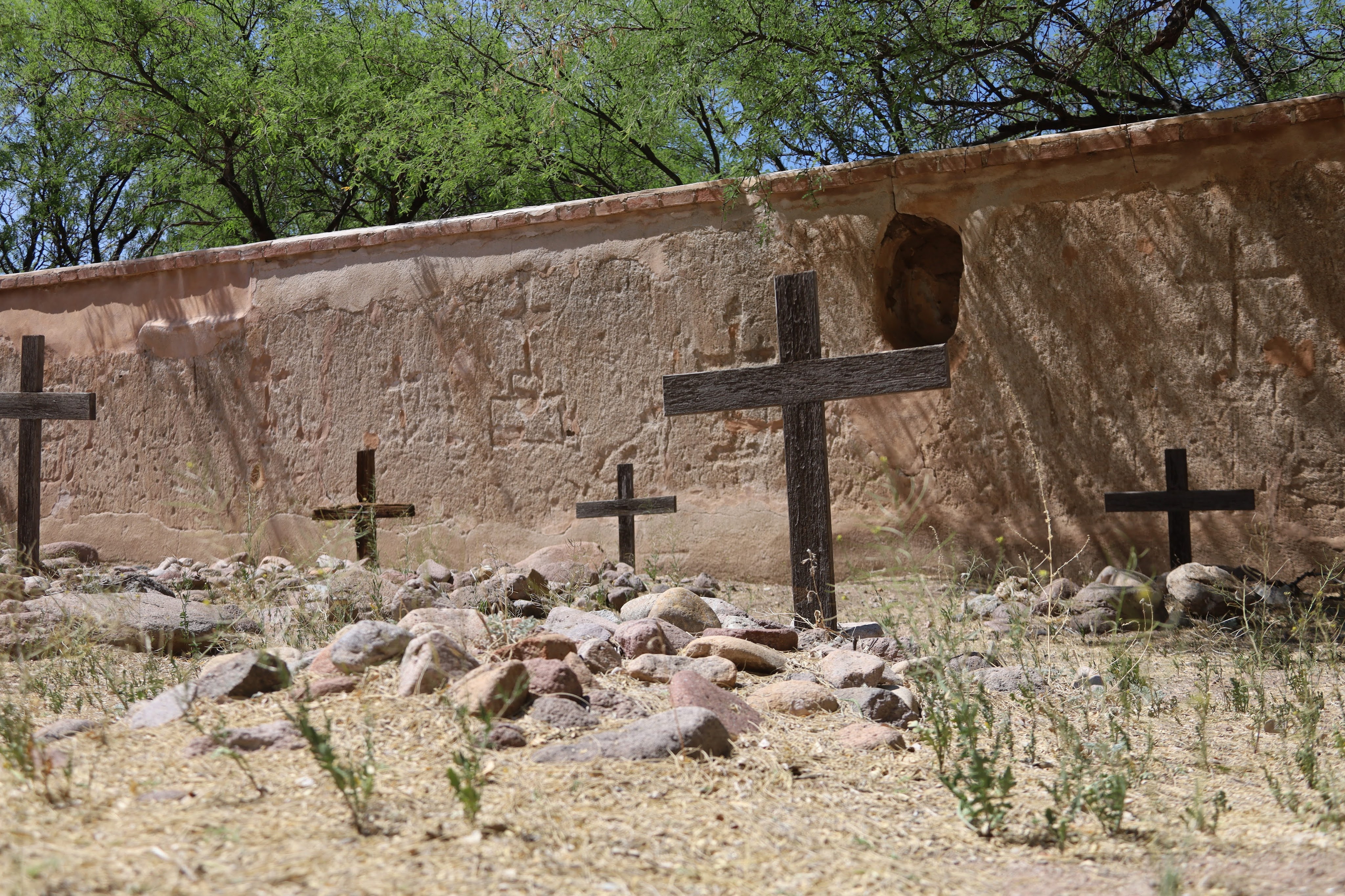
We drove so far south to reach this site that we could have tossed a frisbee into Mexico. The mission at Tumacácori NHP was established long before that border existed. Even before 1700, Spanish missionaries roamed the Sonoran desert looking to establish Christianity and the Spanish way of life among the indigenous people. The building as it appears today wasn’t built until the early 1800s and was abandoned at the end of the US Mexican War, barely years 50 after construction started. The mission church was meant to be a grand structure in the European tradition, but like so many attempted imports of European culture, many compromises had to be made to account for local resources. Especially interesting to me was how they could not construct the normal frills of a Catholic church – side chapels, gilded décor, fancy high ceilings – so they painted them on instead. It is a laudable effort of compensation, even if from today’s perspective it seems so misguided.
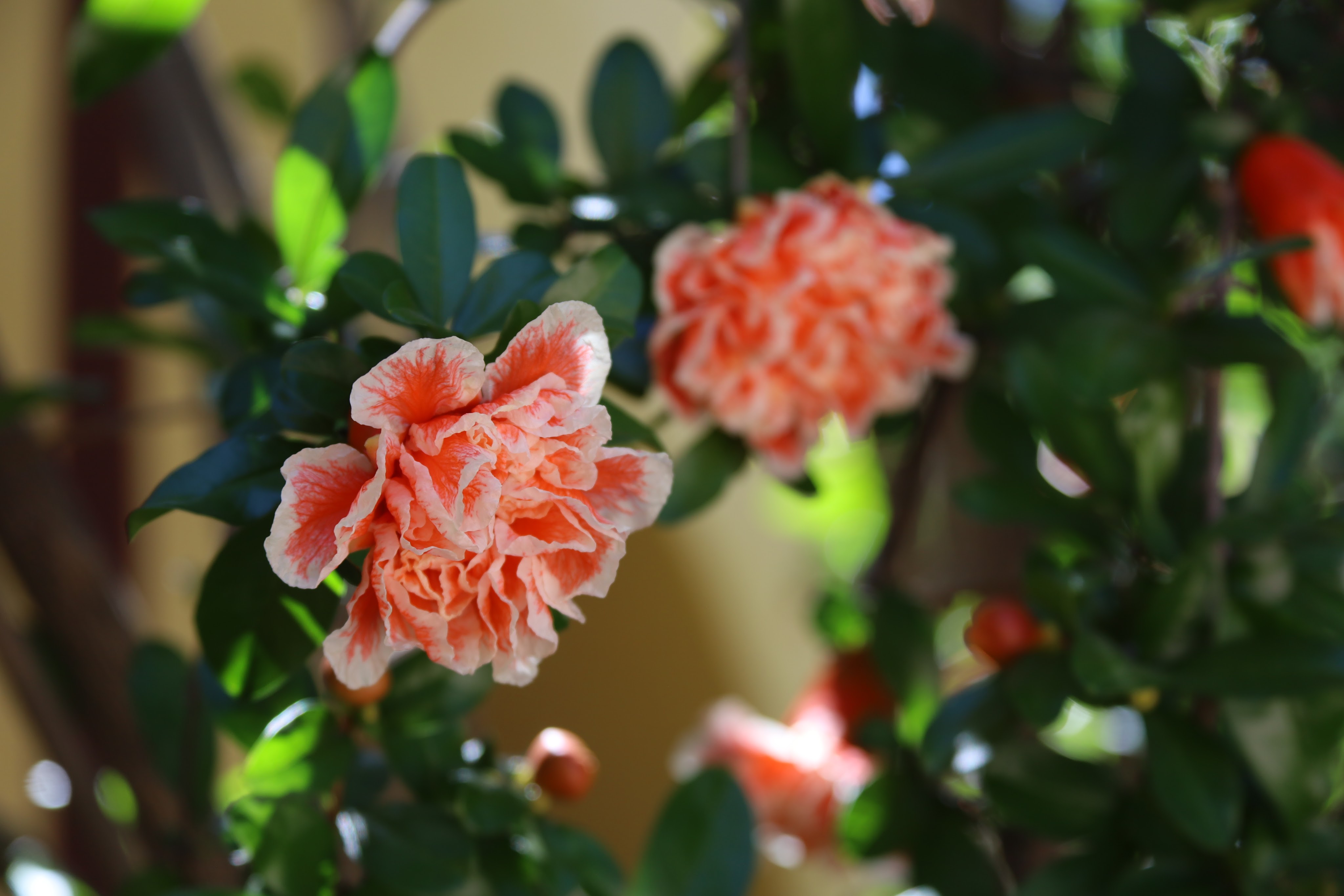
The pomegranate trees were in bloom. They are so beautiful.
 Thither & Yon